The Symptom
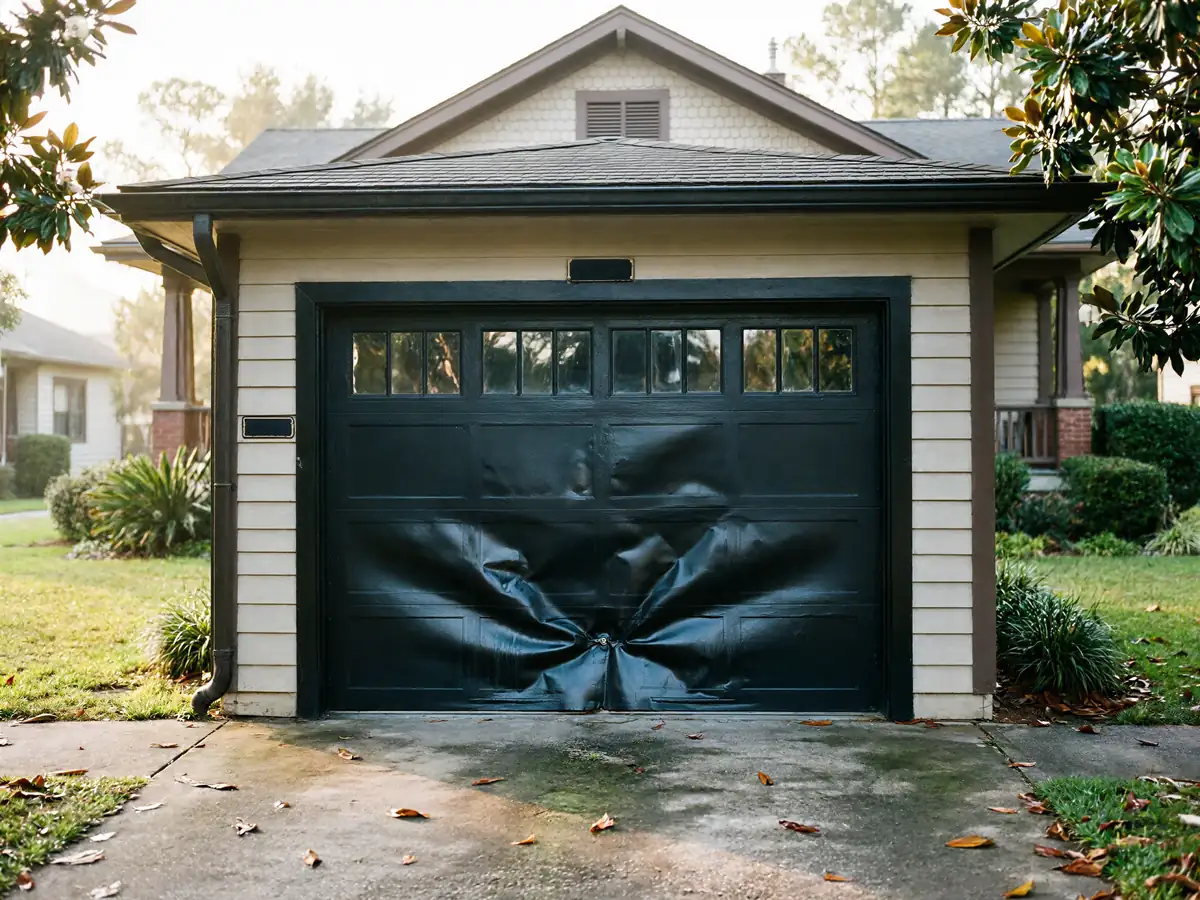
A door off track rarely comes off quietly. Usually it's a bang, a lopsided panel, or the door stopping halfway with one side hanging lower than the other. Sometimes a roller pops clean out of the track and you can see daylight between the wheel and the rail. Other times the whole track has pulled away from the jamb bracket and is bowed out at an angle.
The giveaway is usually visual before it's audible: one bottom corner of the door sits higher than the other when it's down, or the door binds and jerks partway through the cycle instead of gliding. If you keep hitting the opener button hoping it'll seat itself back in, you're more likely to bend the track further or snap a roller stem.
Some owners mistake this for an opener problem and start troubleshooting the wall switch or the remote. It isn't the opener. The opener is just trying to pull a door that's no longer running on a straight rail, and that's what burns out the motor or strips the gear if you let it keep trying.
What the Fix Involves
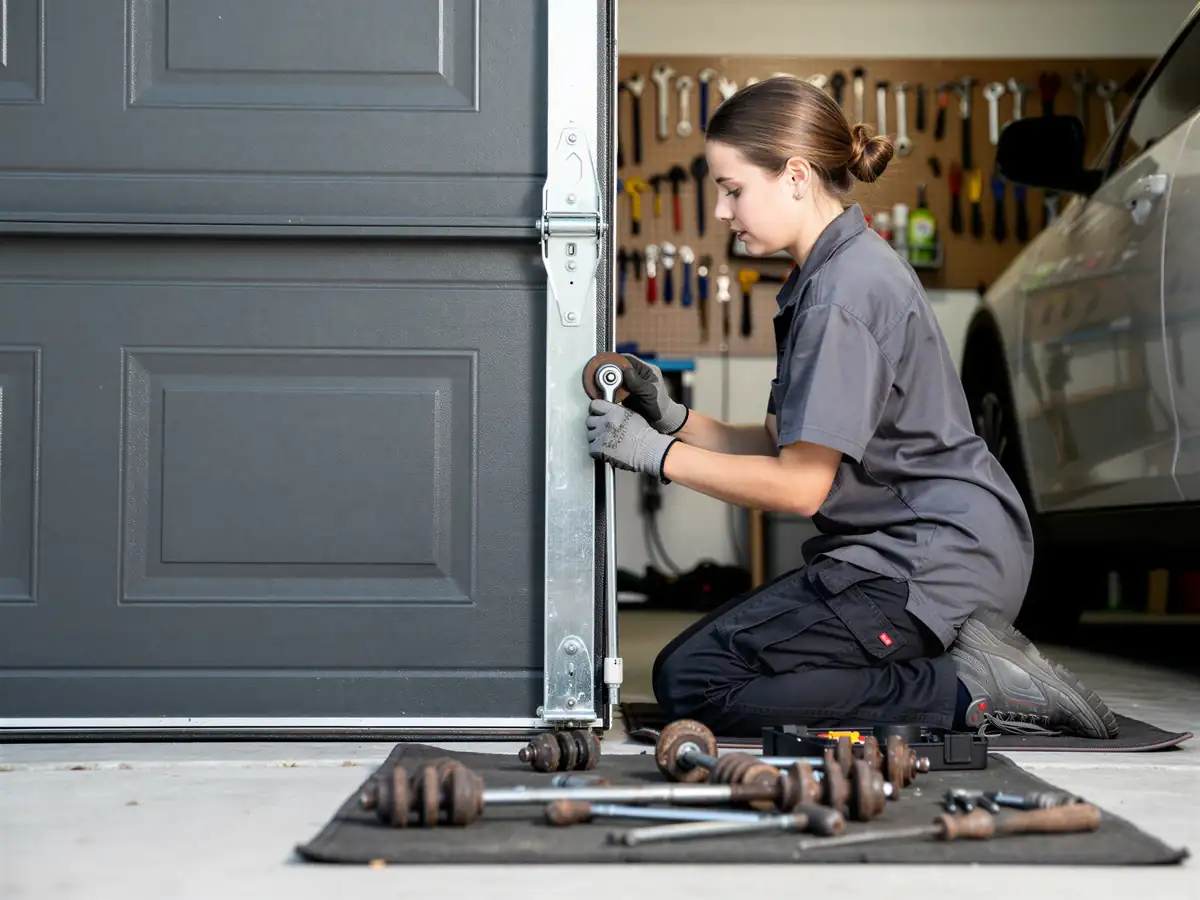
First step is figuring out why the door left the track, not just shoving it back in. We check whether a roller failed, a bracket pulled loose from the framing, or the track itself got bent - usually from someone backing into it or a slipped cable whipping it sideways. Each of those is a different repair.
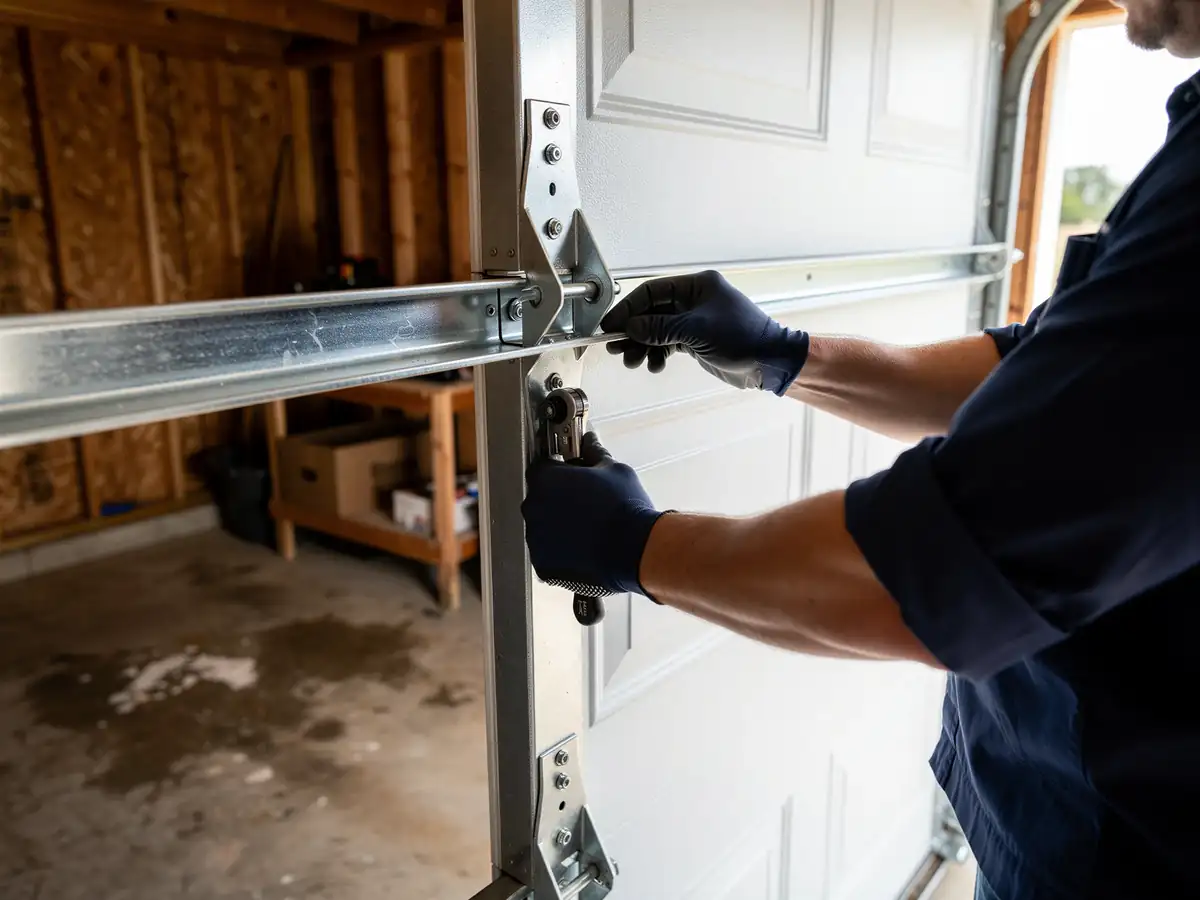
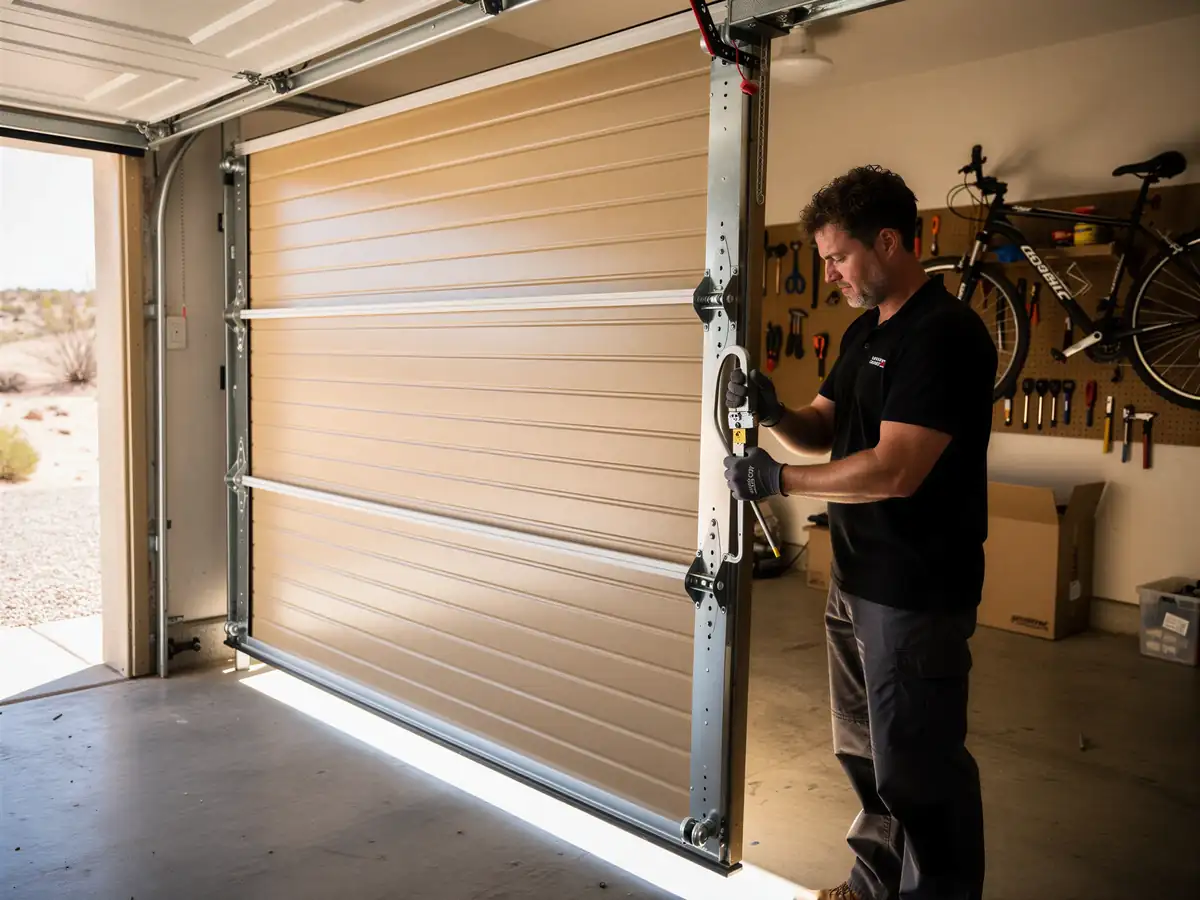
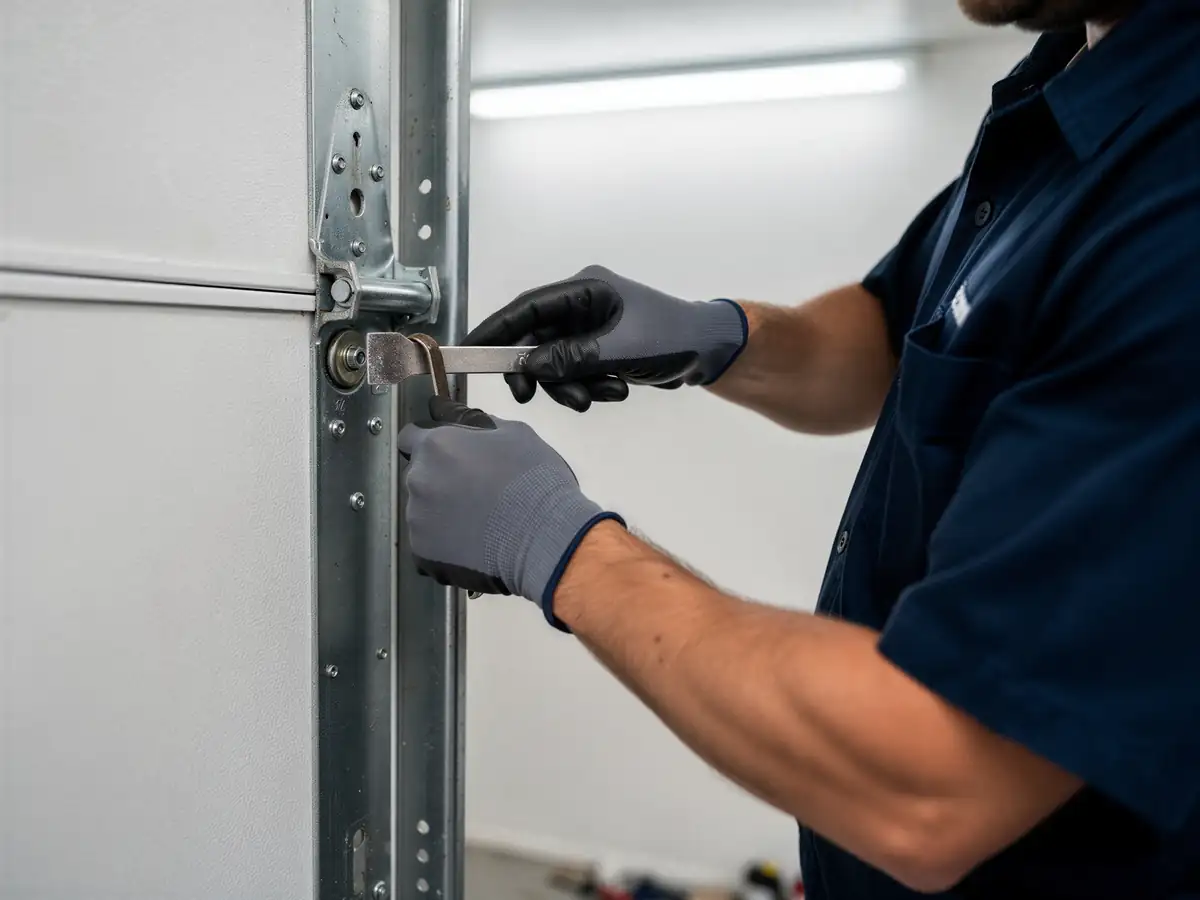
If the track is just knocked loose, it gets re-aligned, shimmed, and re-bolted to solid framing, then the door gets run through a full cycle to check it tracks straight top to bottom. If a roller sheared off or a stem bent, that roller gets replaced - we don't reuse a bent one, since it'll just walk the door off track again inside a few months.
Here's the limitation worth knowing up front: if the track itself is bent, not just loose, it does not get bent back straight and trusted. A track that's been kinked loses its shape permanently, even if you can wrestle it back into something close to true. We replace bent track sections rather than reshape them, because a repaired kink is the most common reason this same call comes back in a year.
Why It Happens Here
Most of the housing stock across the Newnan service area went up between 1964 and 2005
With the heaviest concentration from the 1980s and 90s, spread across a dozen named areas in and around town. A lot of garage doors out here are still running on the galvanized steel track and builder-grade hardware that shipped standard in that era, and after two or three decades the brackets holding that track to the jamb start to work loose from the wood they're screwed into.
Newnan sits in a cold-moderate climate band
Which means the service area gets freeze-thaw swings most winters - not the deep cold of further north, but enough cycling that it works slab anchors and track fasteners loose gradually, year over year, in a way a steadier climate wouldn't.
We cover the area from East Newnan, about two miles out, to Brooks and Union City closer to nineteen
And the failure pattern is consistent across that whole radius: older lag-screw track mounts, hardware that's never been re-torqued, and doors that get pulled by a stiffening opener instead of gliding free. The age of the house tells you more about why a door came off track than anything about how it's used.
Can You Do This Yourself
If a roller popped out but the track is still straight, some owners manage to walk it back in with the door manually lifted and the opener disconnected. That's about the ceiling of what's safe to do alone.
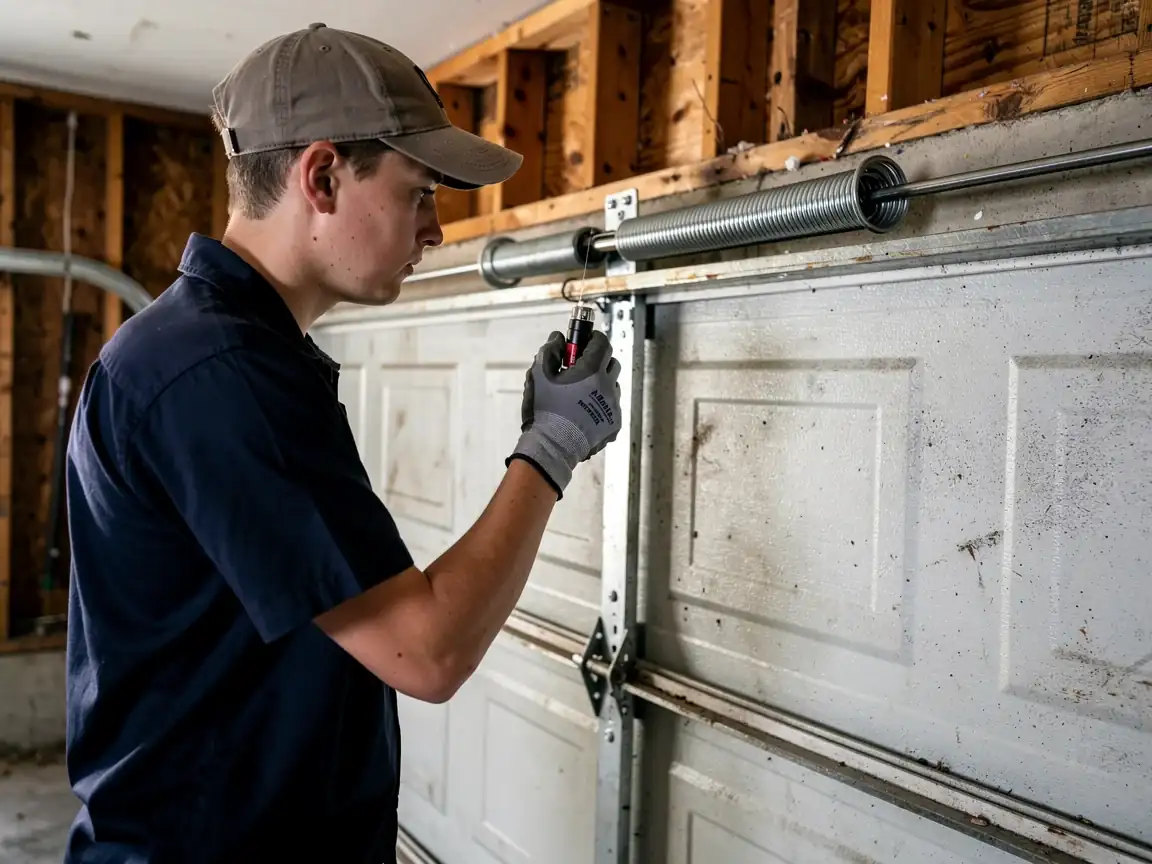
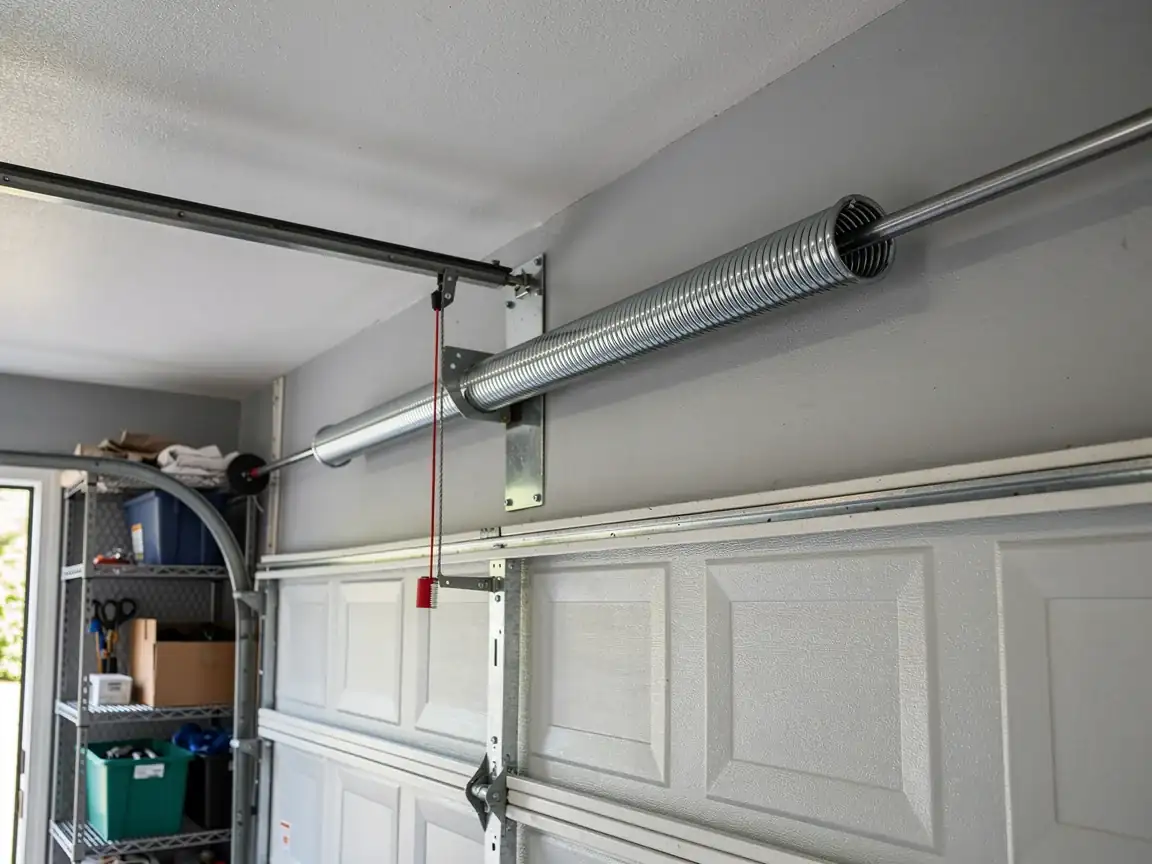
What you shouldn't attempt: touching anything near the torsion spring above the door, trying to muscle a bent track back into shape, or running the opener repeatedly to try to force the door back into the rail. A door under spring tension that's already off one track can drop or swing unpredictably, and that's how fingers and door panels both get hurt.
Median household income across the service area runs around $71,597, and most of the owners we hear from want the track fixed rather than paying for a full door replacement - which is usually the right call unless the bent section is too far gone to trust. If you're not sure which situation you're in, that's the actual judgment call worth having someone look at in person rather than guessing from the driveway.