The Symptom
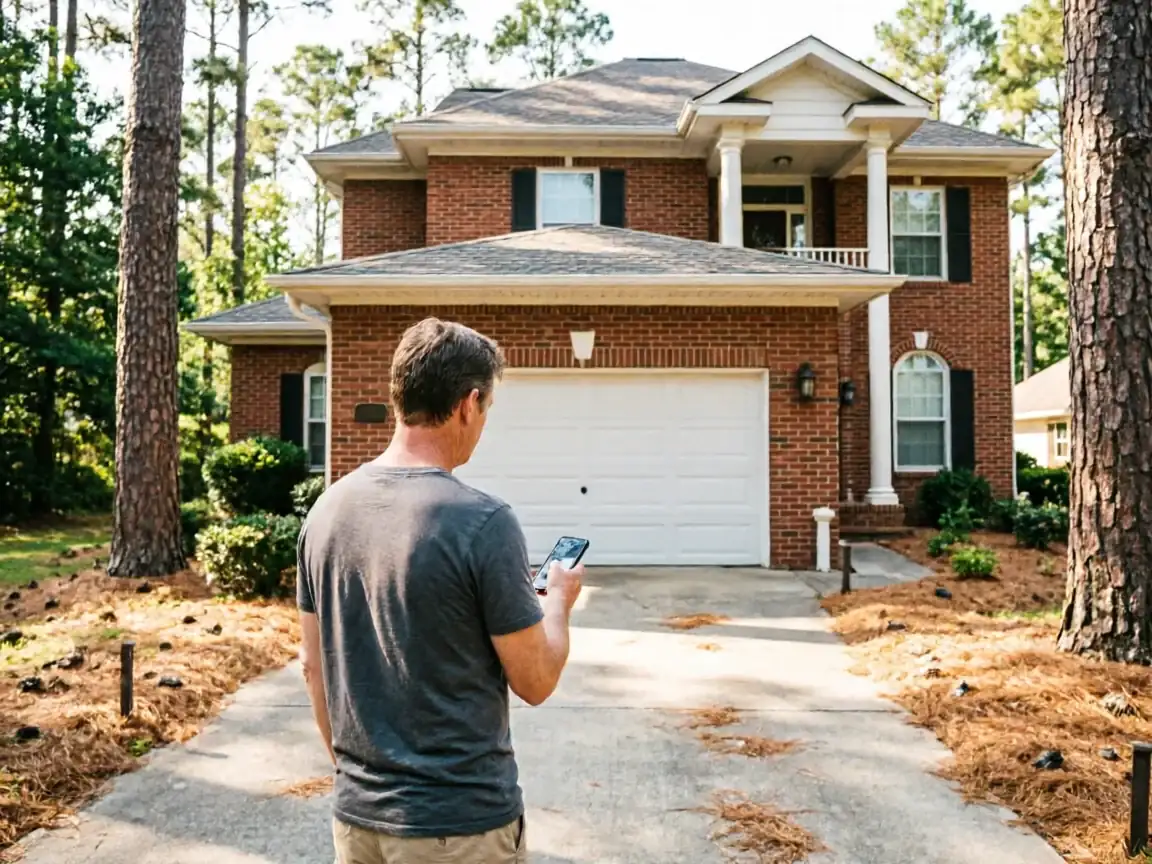
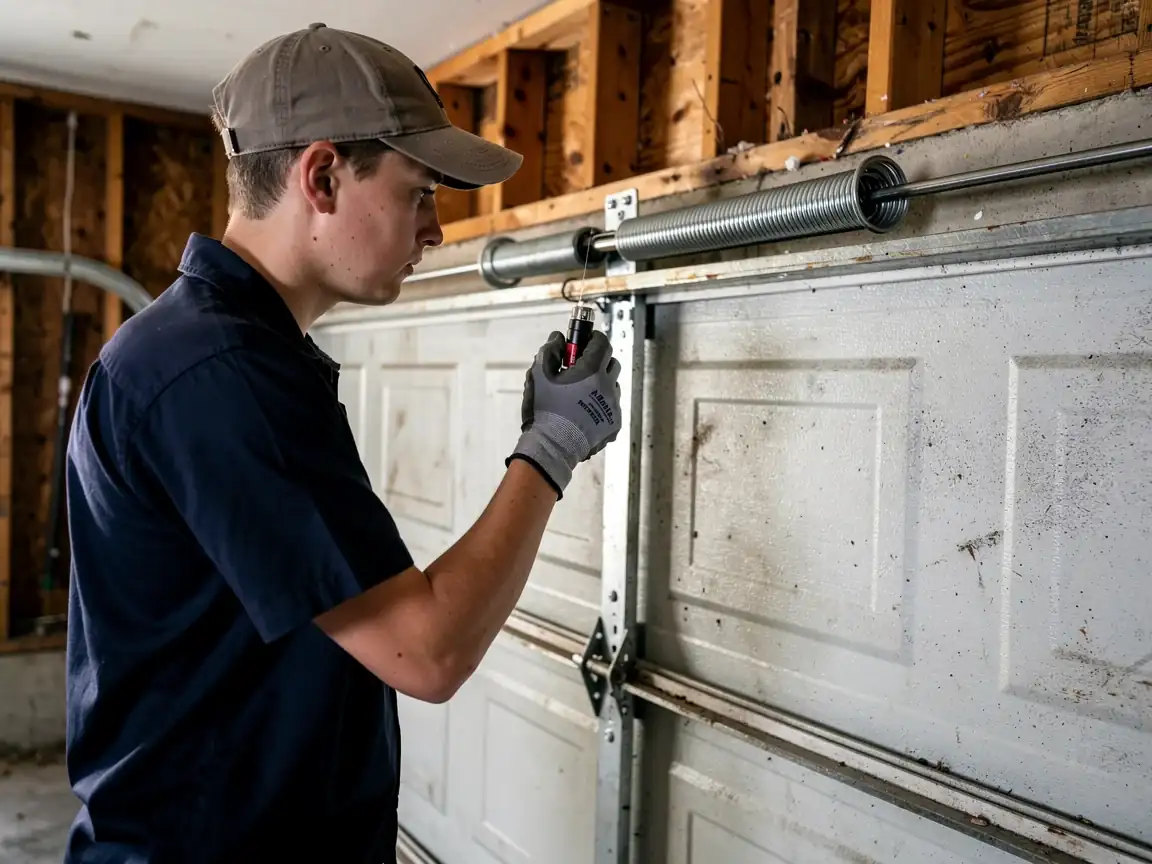
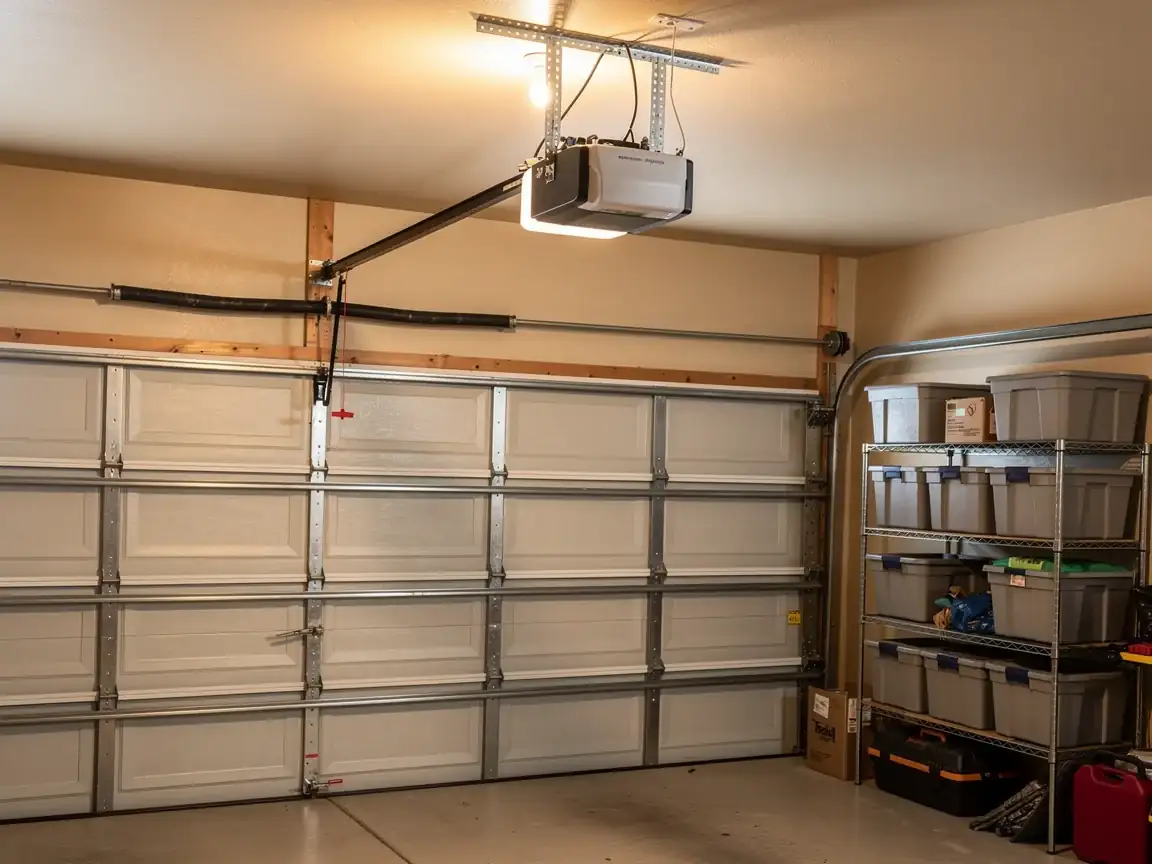
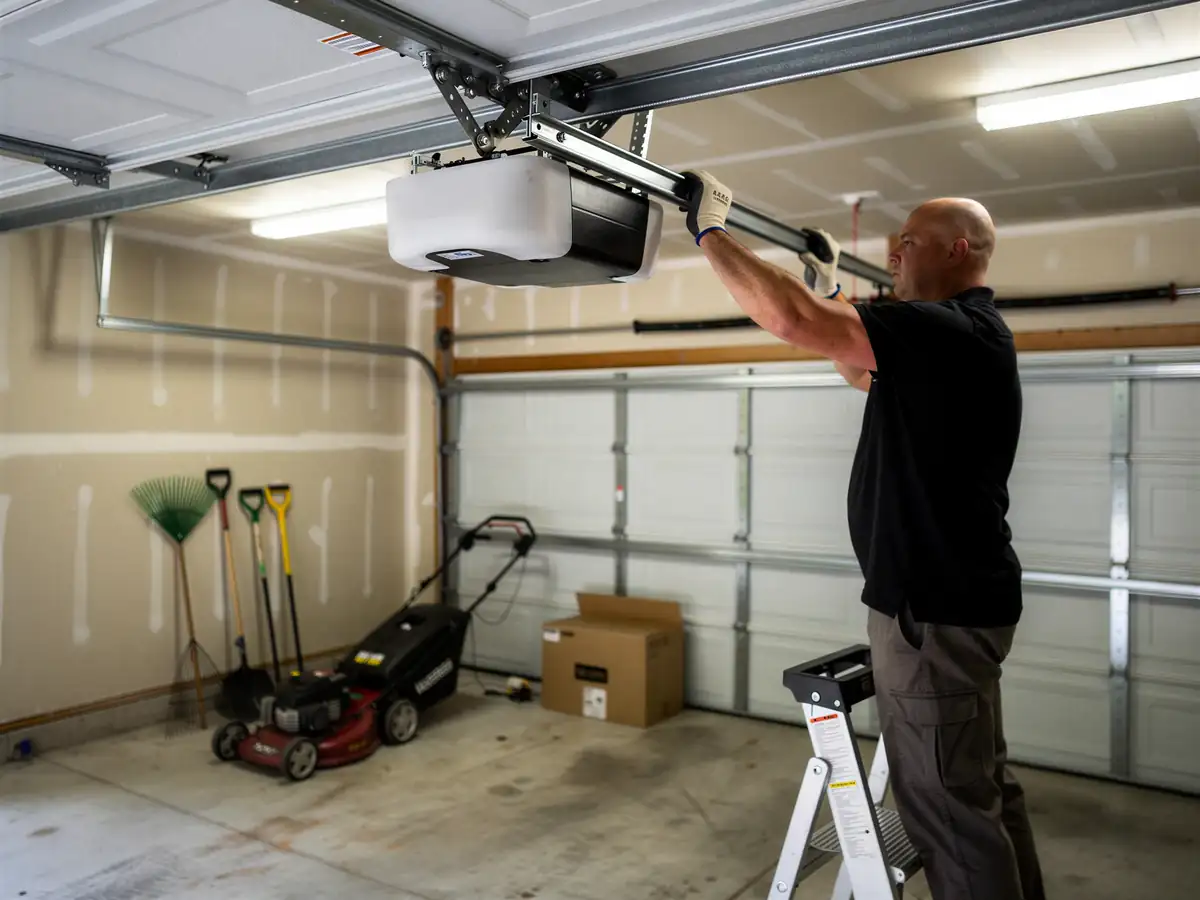
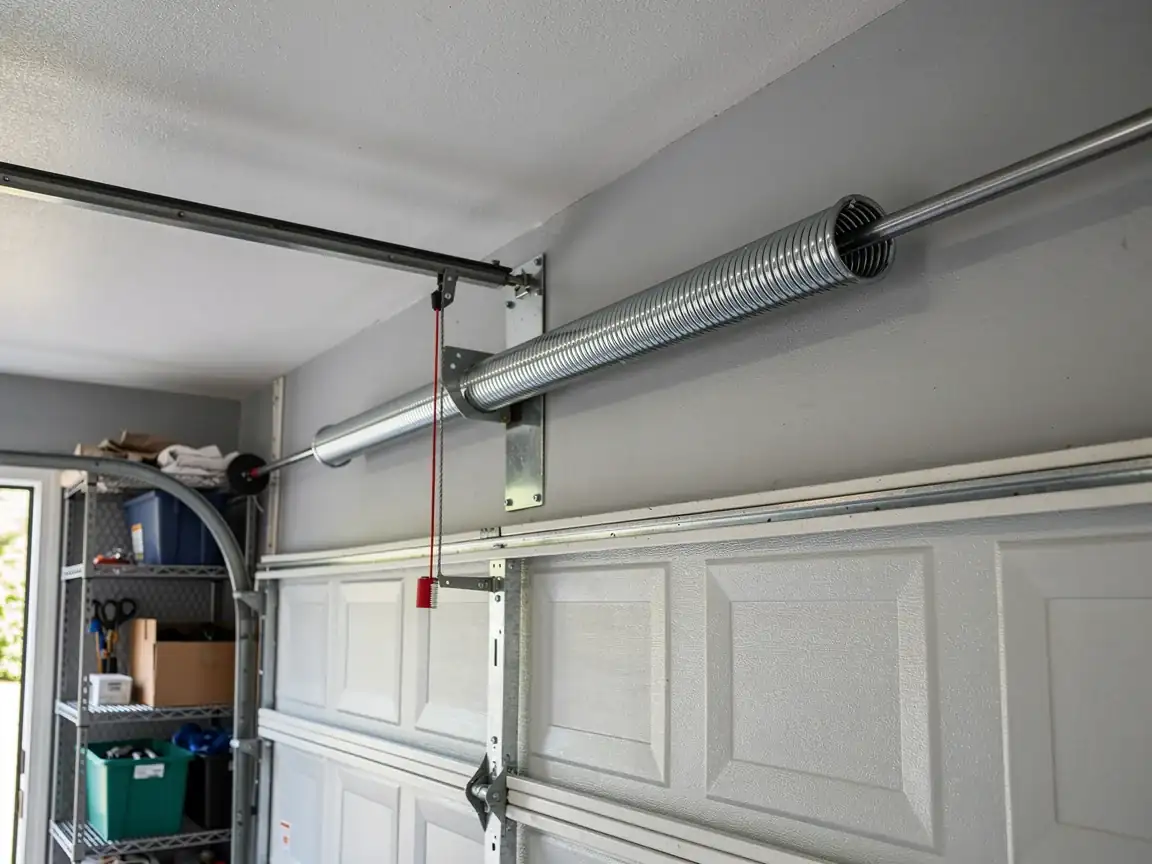
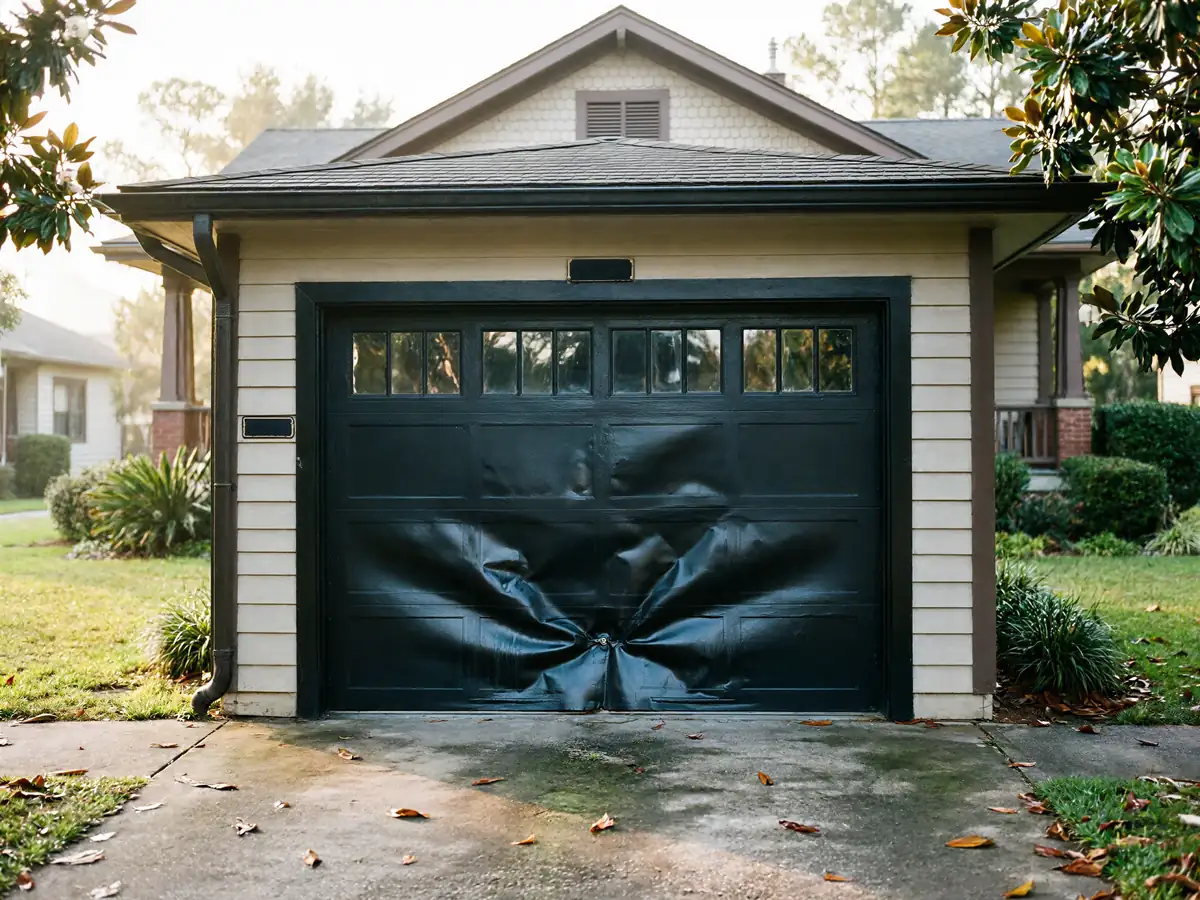
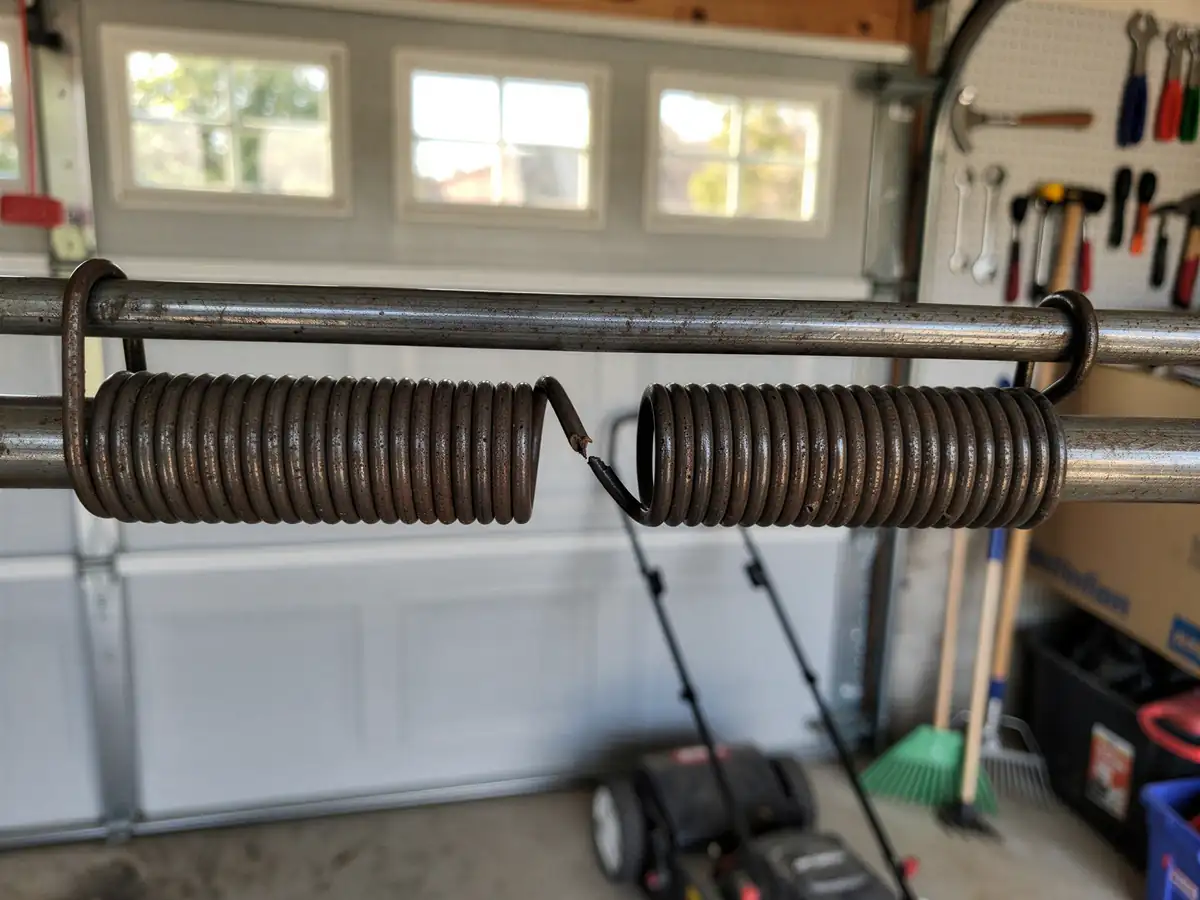
The door won't budge, or it feels like it weighs three hundred pounds the second the opener tries to lift it. Sometimes there's a loud bang from the garage first - that's the spring itself letting go, not the opener. Other times it's quieter: the door creeps up a few inches and stalls, or one side lifts faster than the other and the door racks sideways in the track. If you look up at the shaft above the door and see a gap in the coil, or one side of a two-spring setup sitting slack while the other is still wound tight, that's a broken torsion spring. On older sectional doors you'll sometimes find a single center spring instead of two side-mounted ones - same failure, different hardware. Either way, the opener is not built to lift a door without spring assistance. Running it anyway strips the gears inside the opener head, and that turns a spring call into a spring-and-opener call.
What the Fix Involves
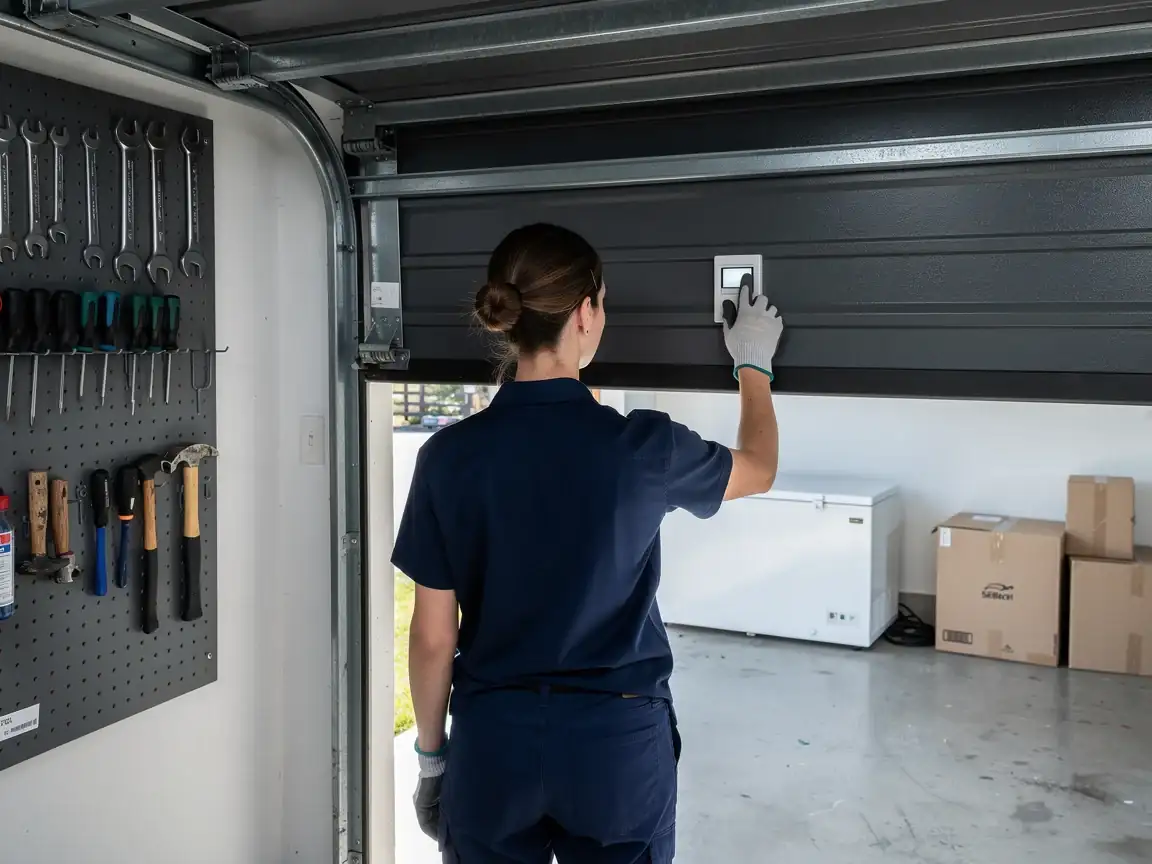
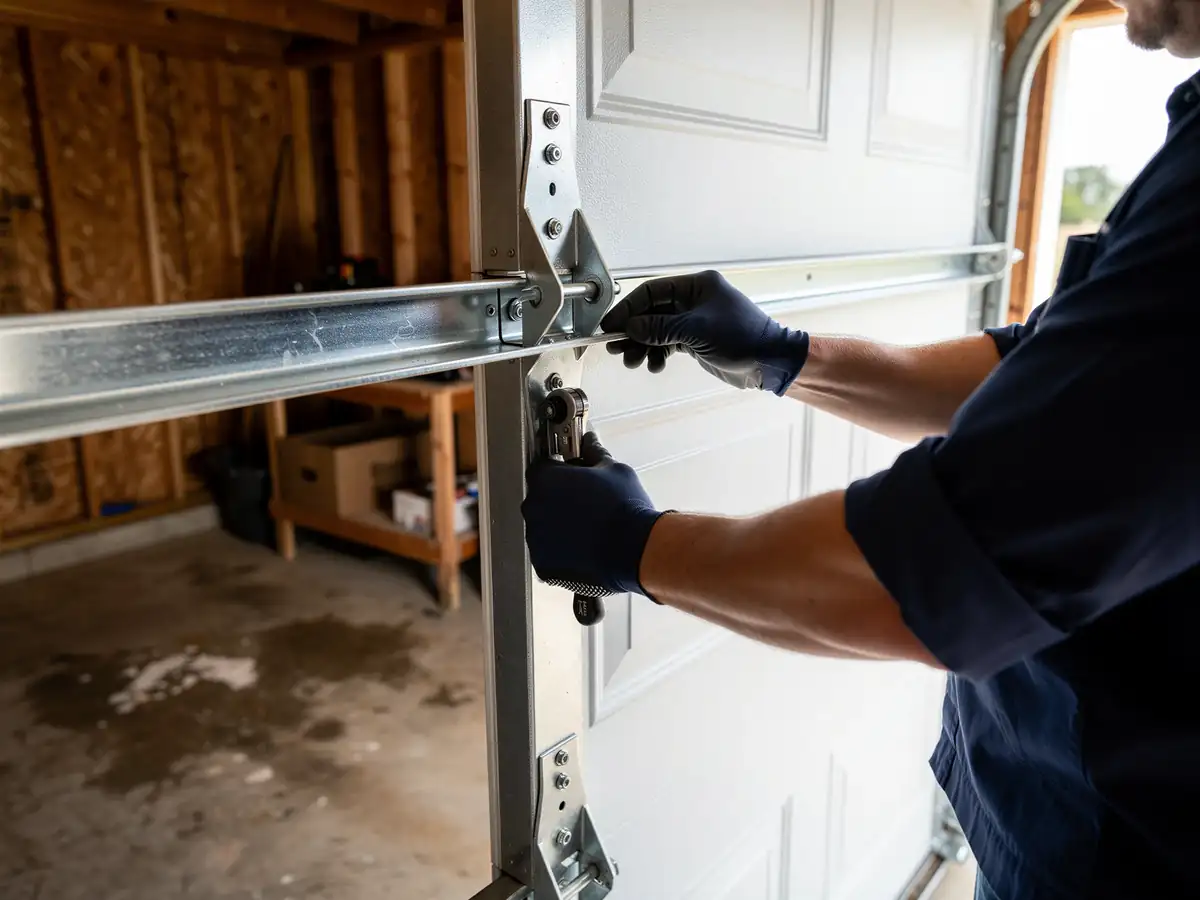
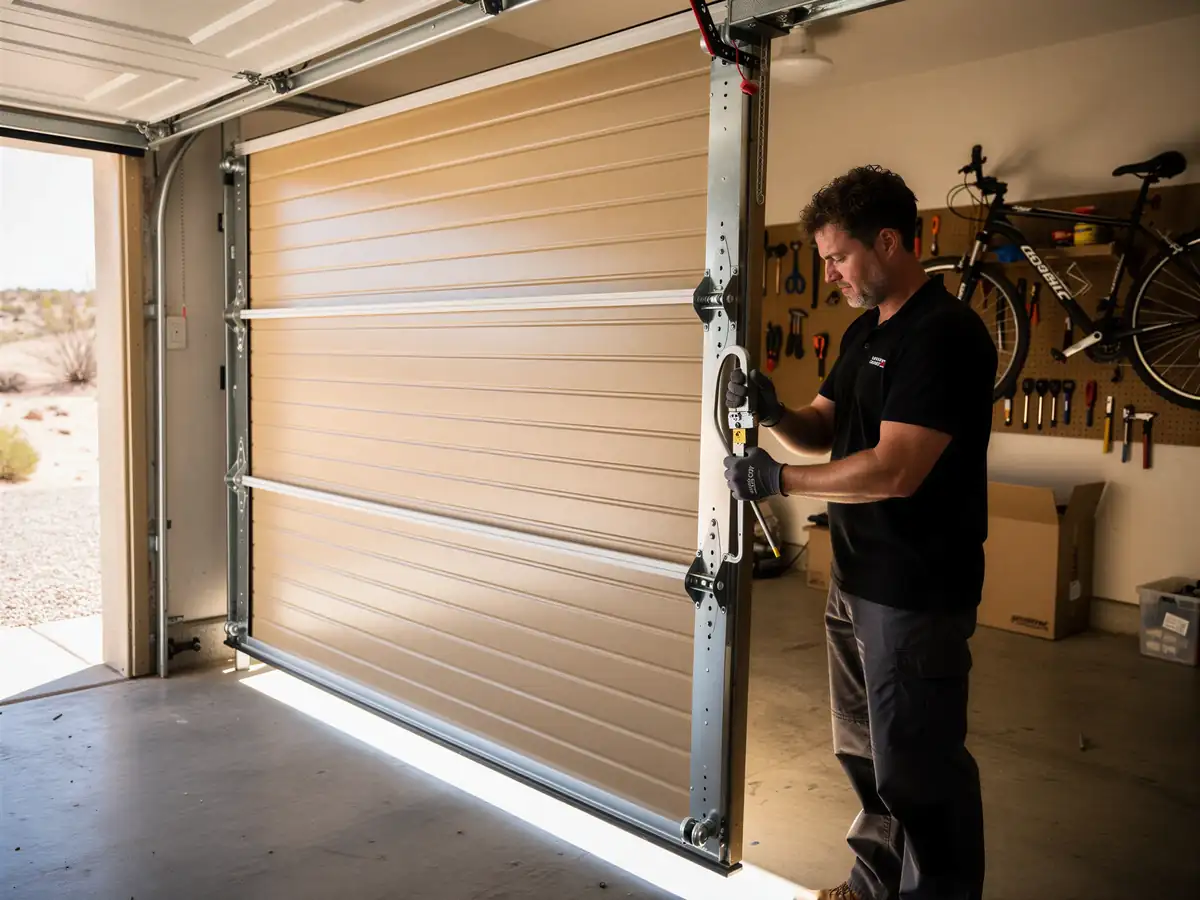
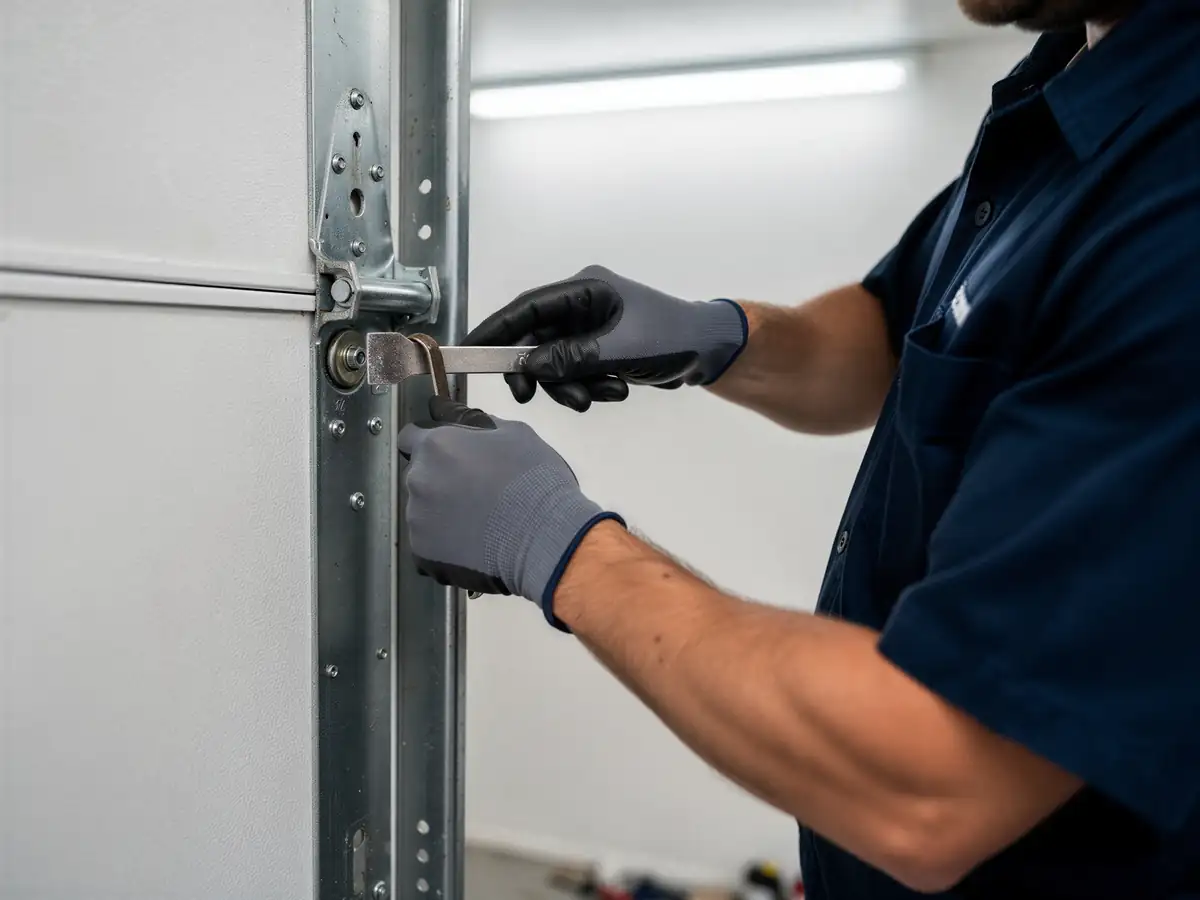
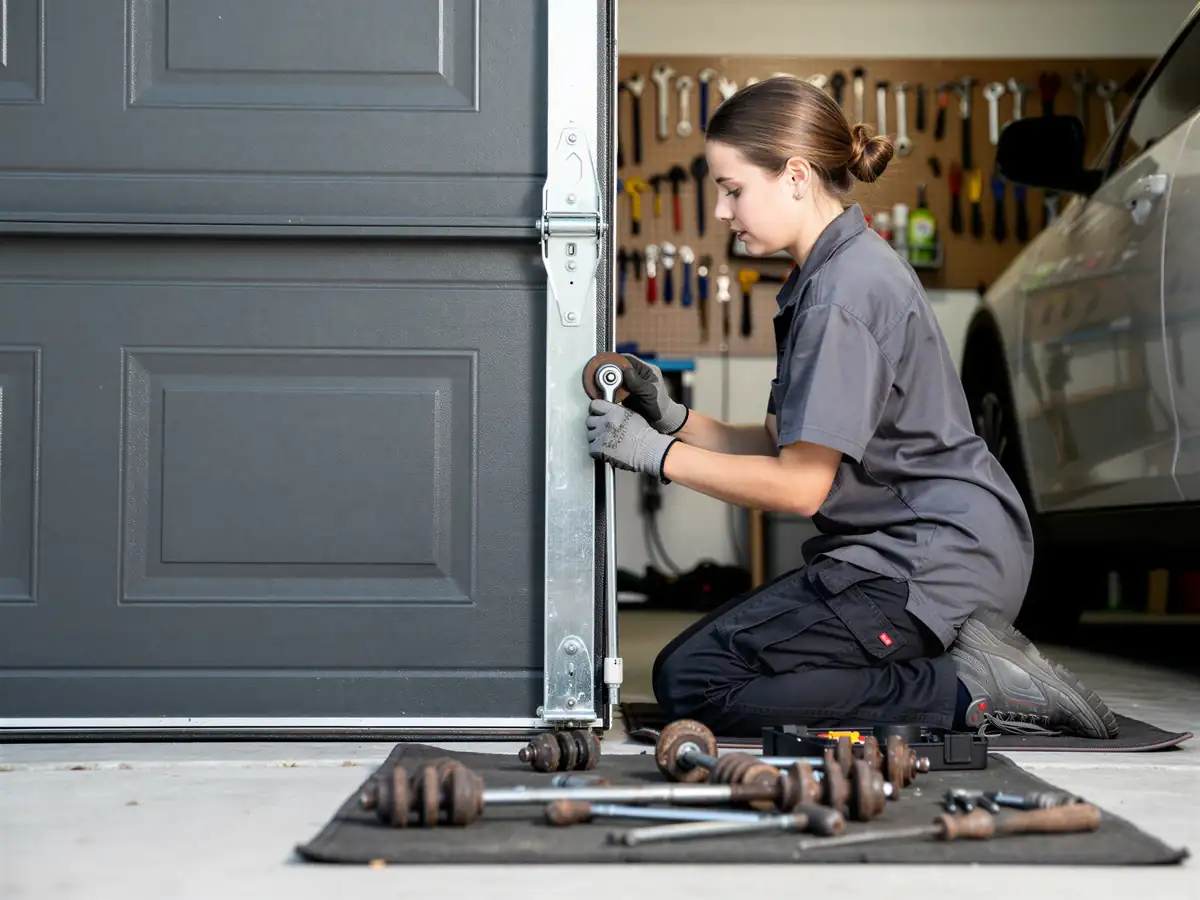
A torsion spring job means unloading the tension safely with winding bars, pulling the old spring off the shaft, and setting a new one matched to the door's weight, height, and drum size. Wire gauge and wind length both have to match the original spec - a spring that's close but not right either overloads the opener or fails again inside a year. Most double doors run two springs; if one goes, the shop should check the other, since they're almost always original equipment of the same age and close to the same number of lift cycles. Cables, rollers, and the bottom bracket hardware get a look too, since a snapped spring sometimes damages a cable on its way down. The door gets balanced afterward - set the opener aside, lift it by hand, and it should hold at about chest height on its own. If it doesn't, the spring tension still isn't right, and that's on the installer to fix, not something you live with.
Can You Do This Yourself
Torsion springs are under enough tension to break a wrist or worse if the winding bars slip, and the tools for it aren't something most garages have lying around. This isn't a project to learn on your own door. What you can do yourself: check that the door is actually unbalanced (lift it by hand with the opener disconnected) rather than assuming it's the spring when it might be a worn roller or a bent track. You can also look at the spring coils for a visible gap before calling anyone, so you know what you're asking for on the phone. With roughly 27,616 households and 12,392 owner-occupied houses in this service area, spring failure is one of the most common calls this company takes, and most of them are routine once someone's actually on site with the right-size spring in hand. The honest limit here: if the opener's been run against a broken spring for more than a day or two, expect to need gear or motor work too, and that's a separate diagnosis from the spring itself.