This Area's Housing
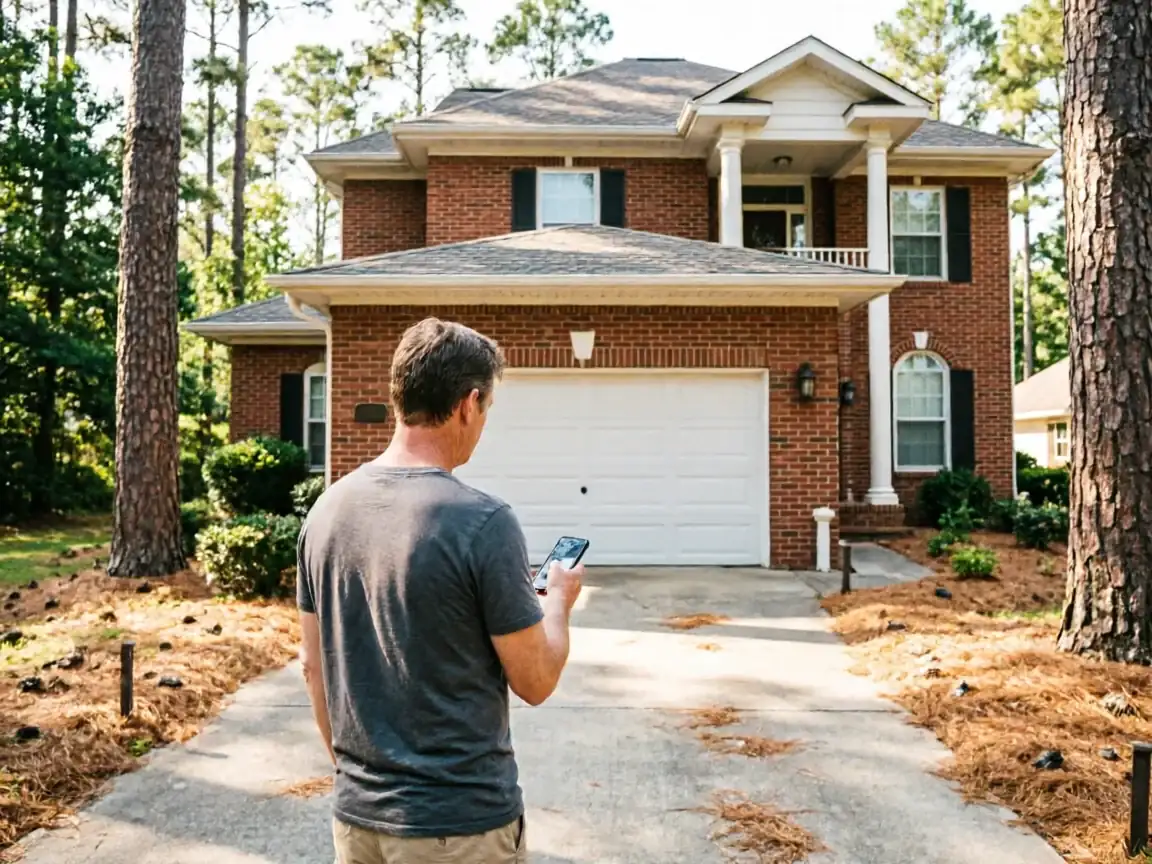
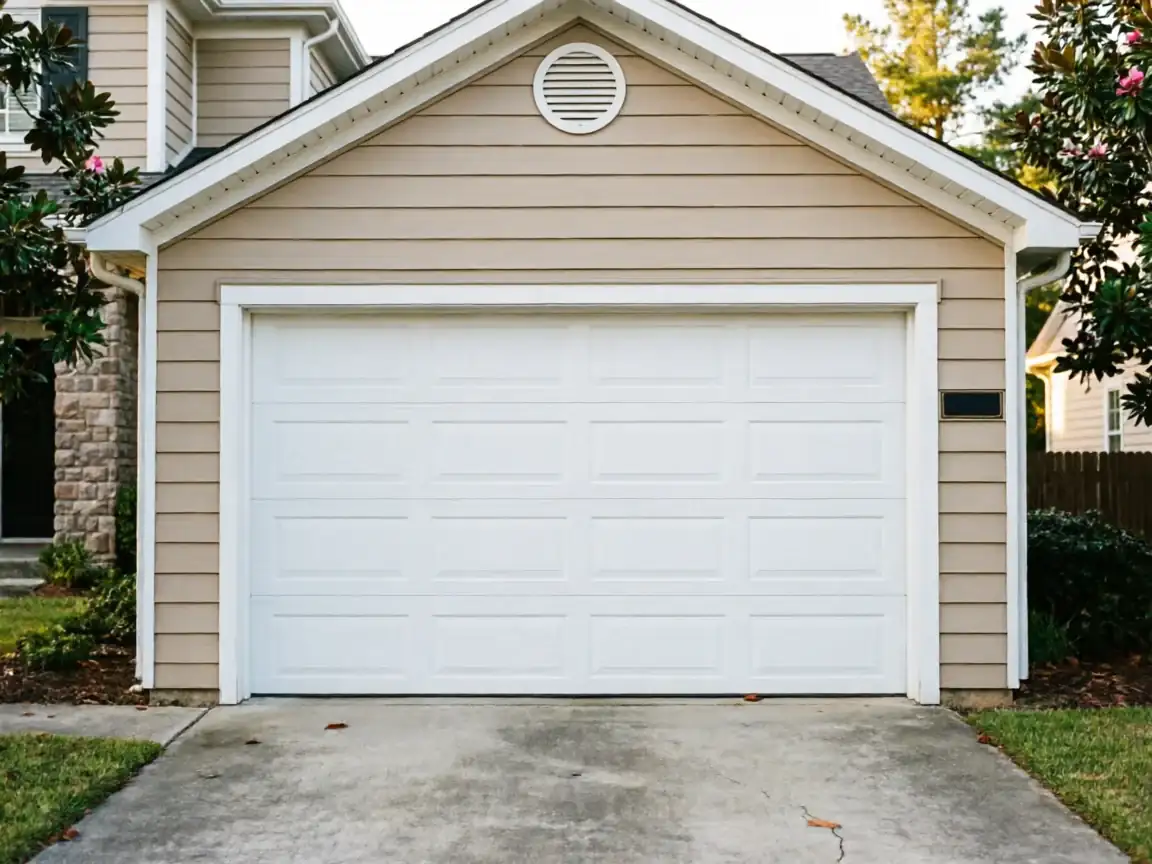
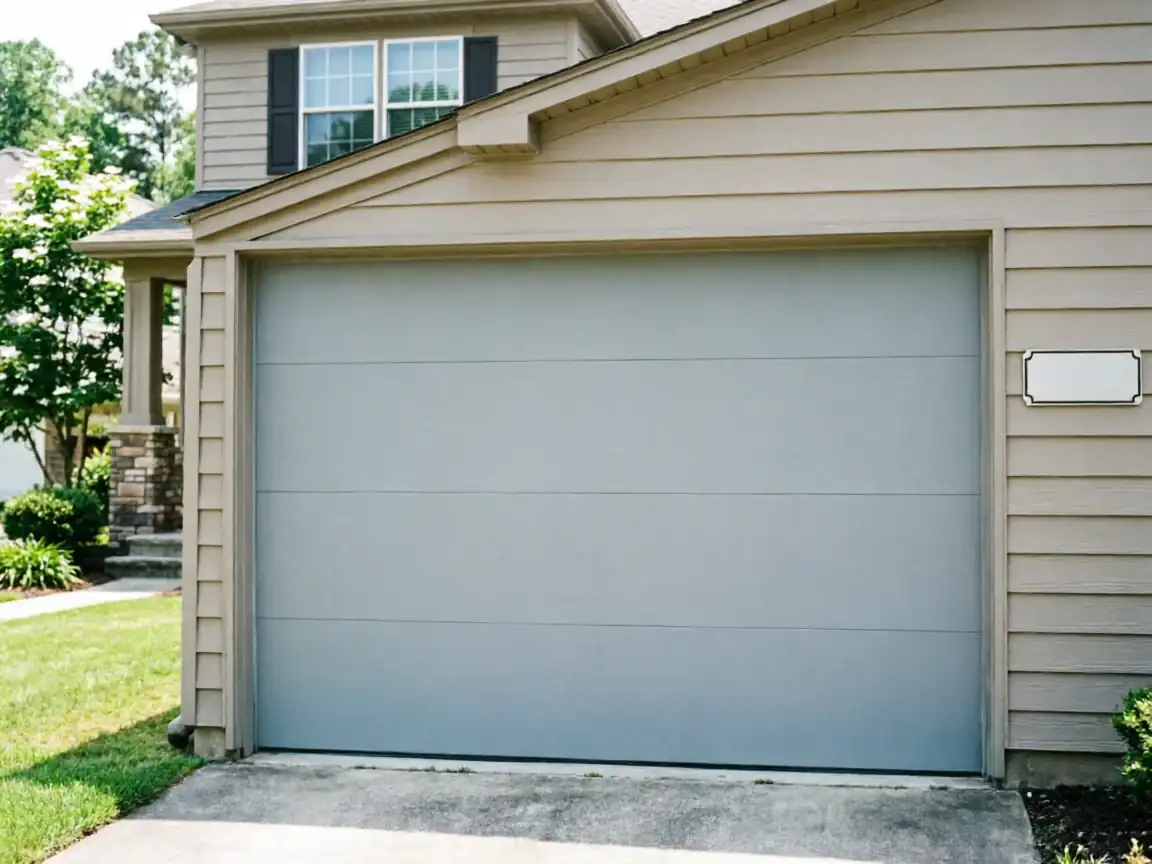
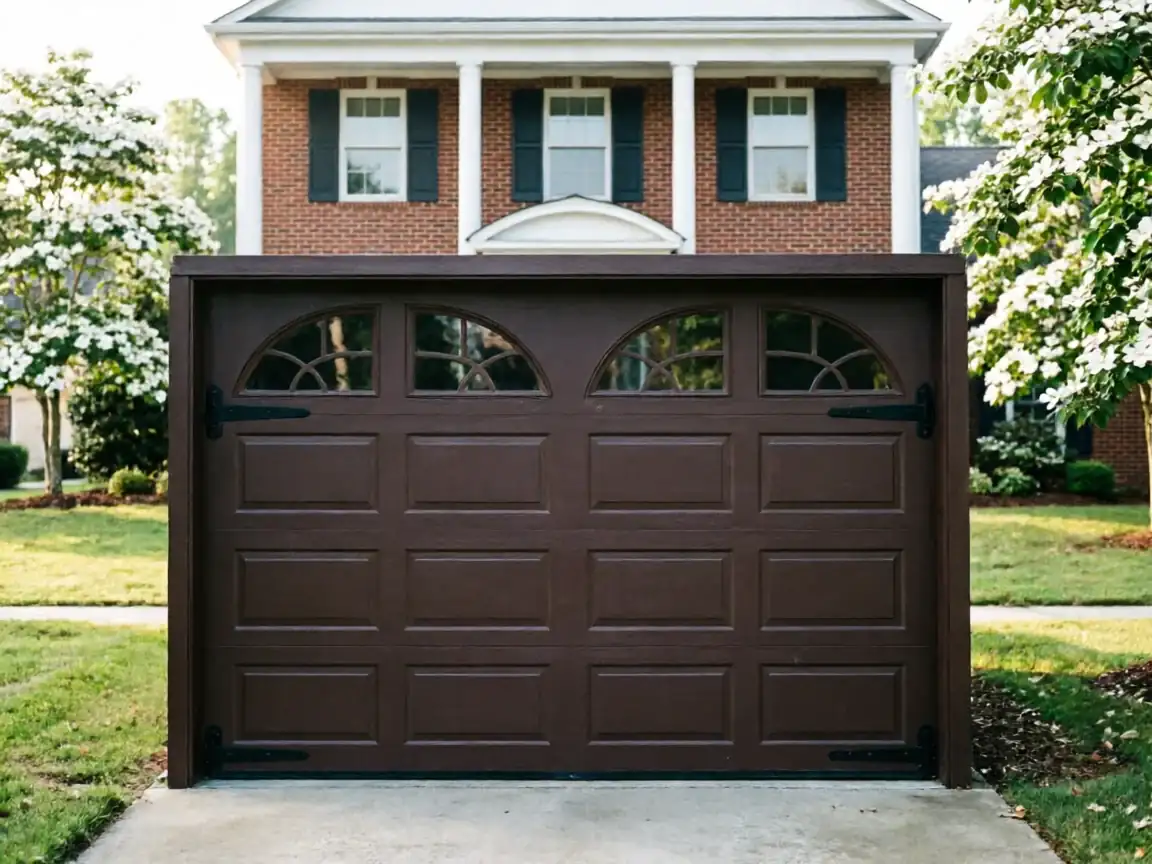
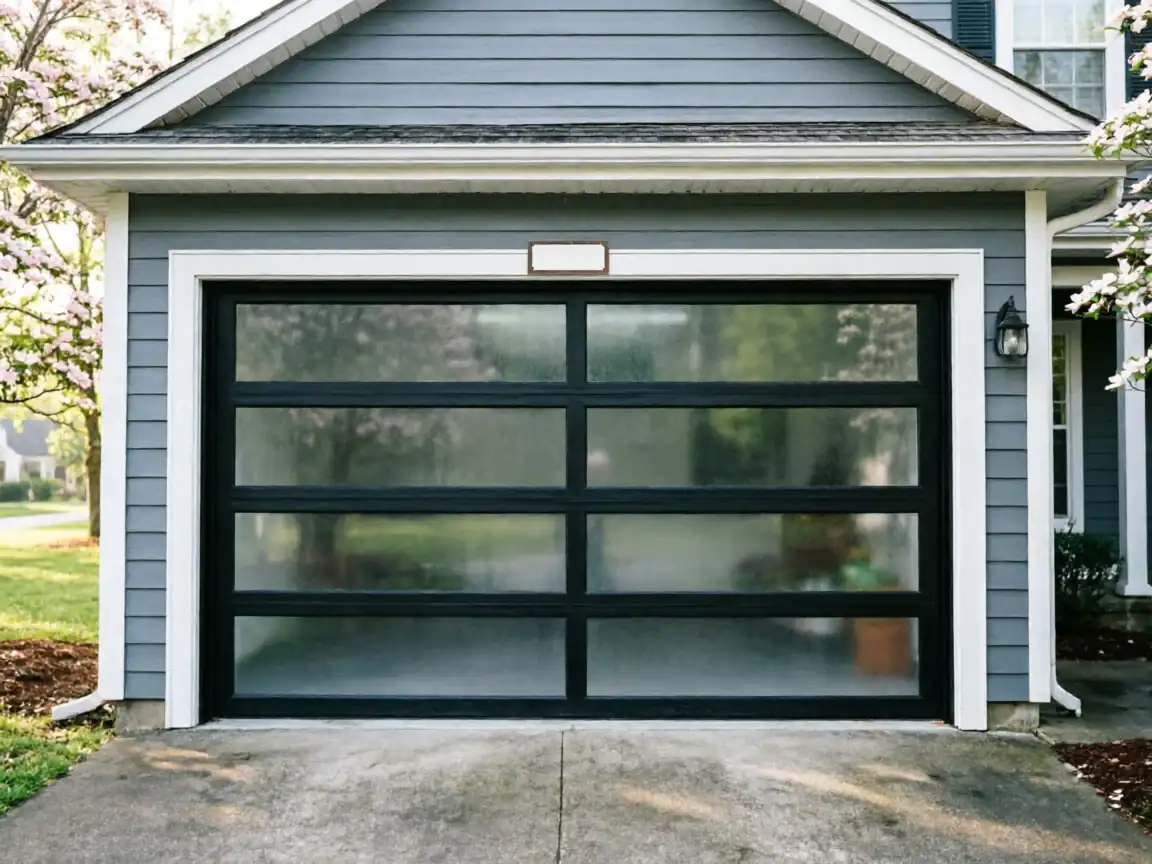
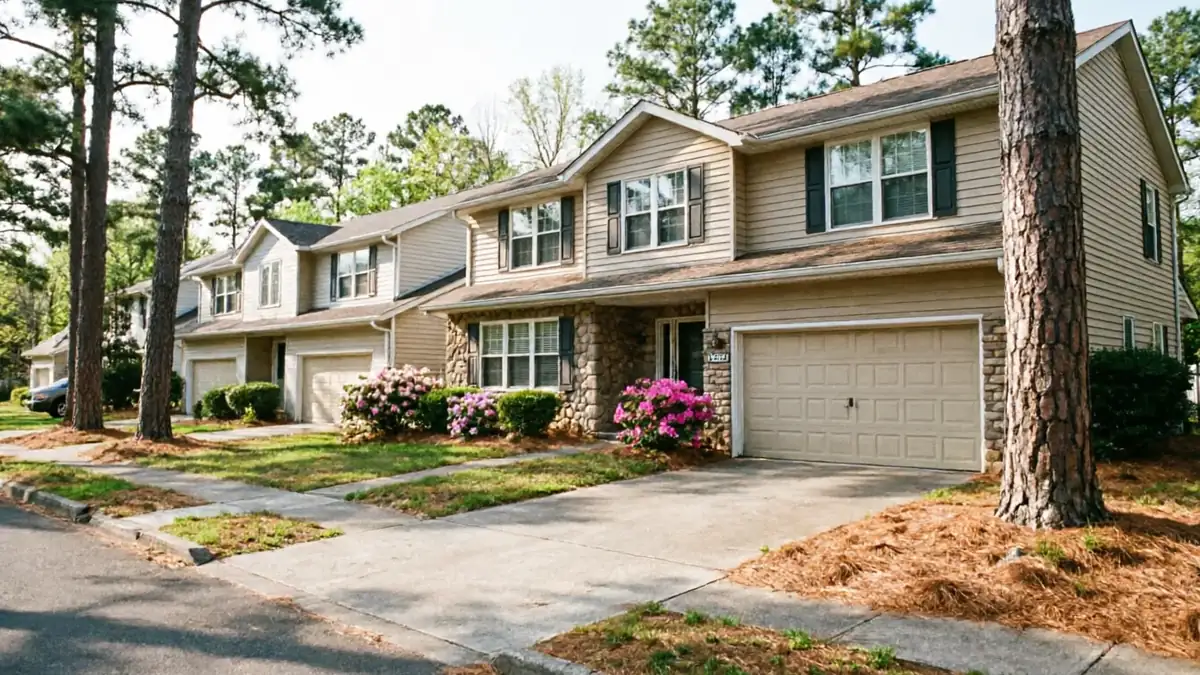
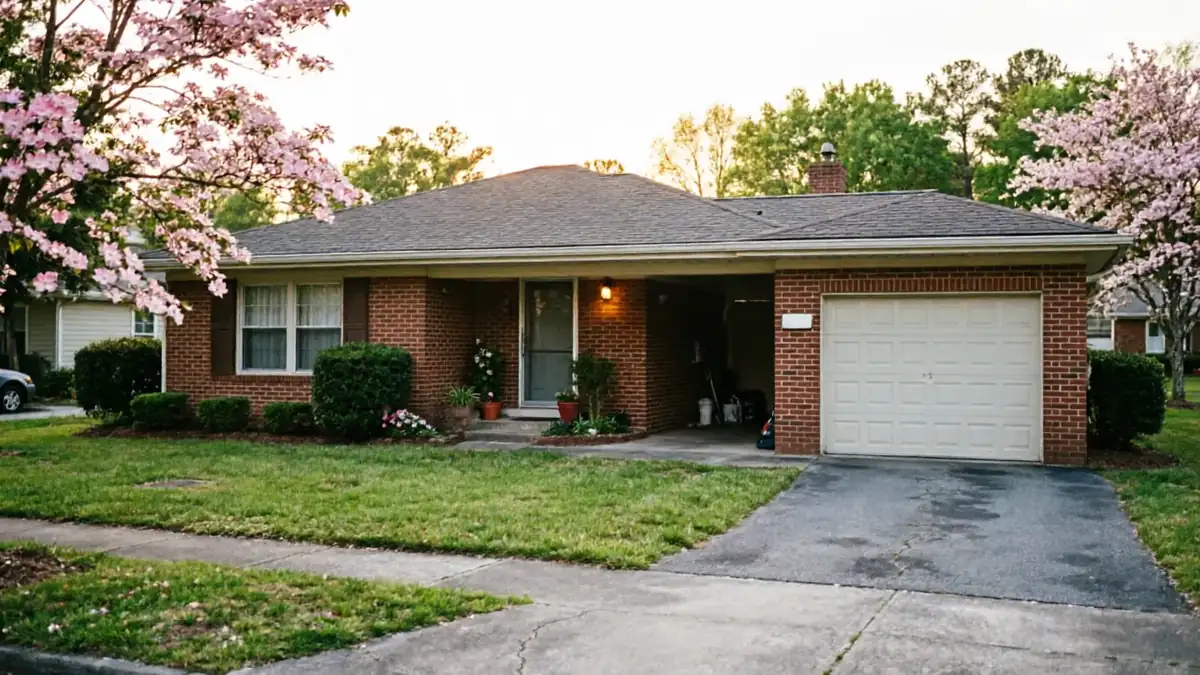
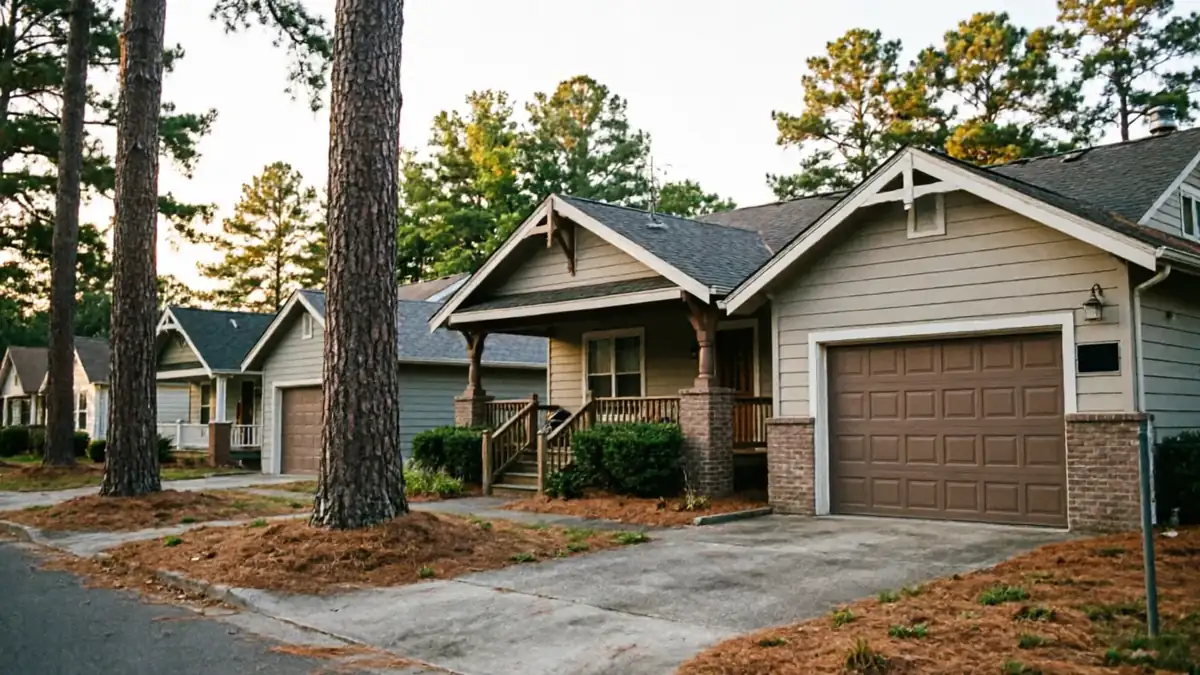
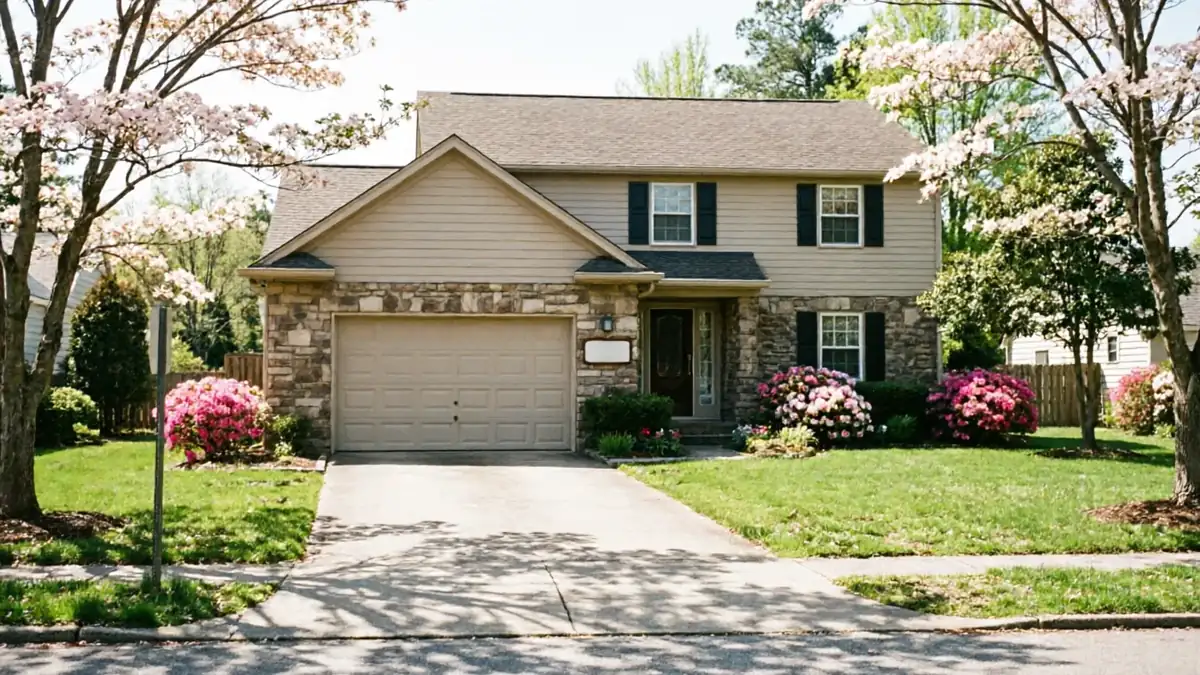
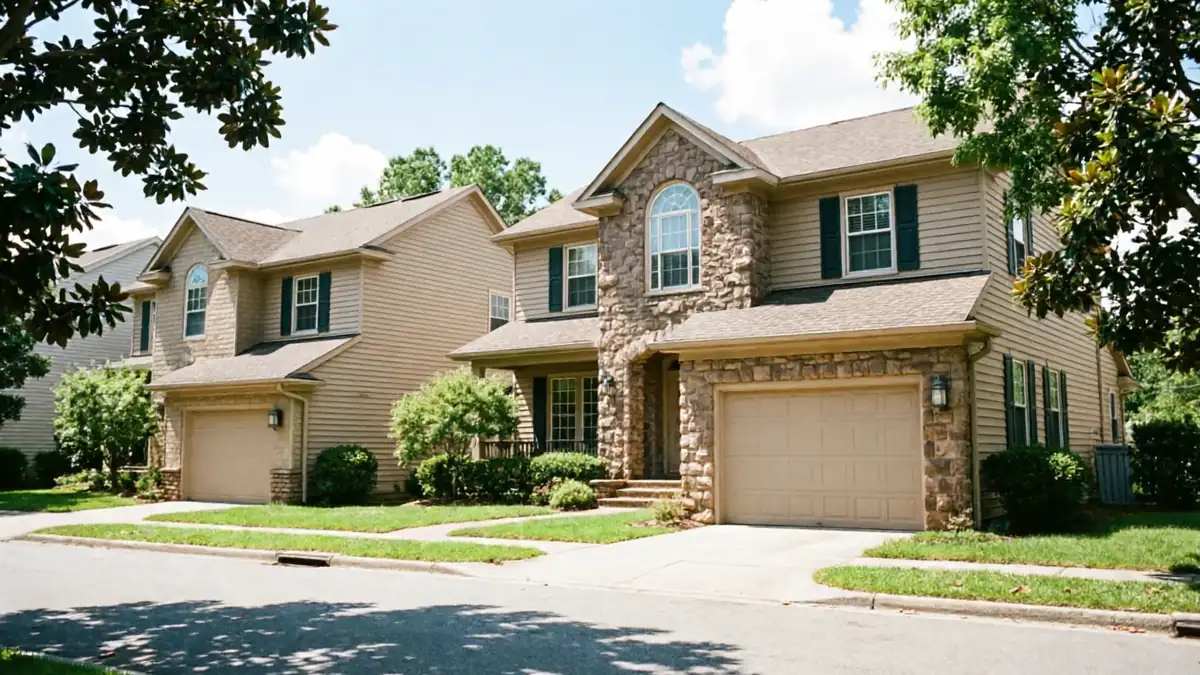
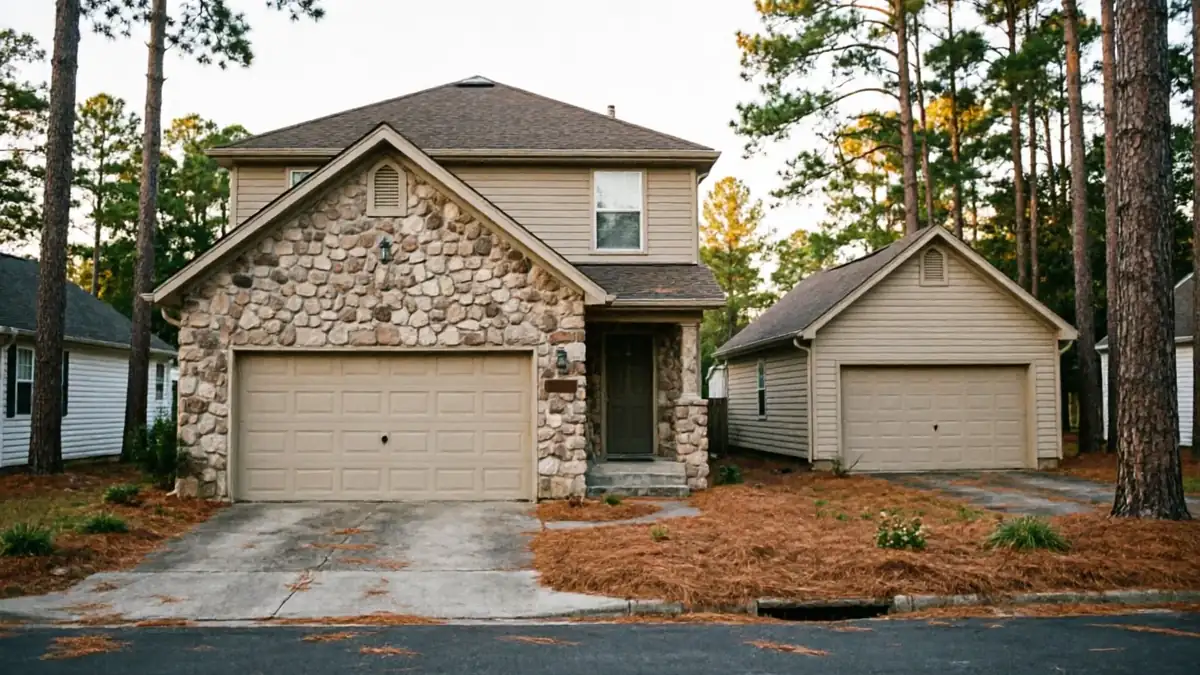
Senoia sits about 13 miles from our shop in Newnan, and the houses out here skew newer than most of the service area. Across the wider territory, homes were built anywhere from 1964 to 2005, with a median around 1994. Senoia's median build year lands right at 2005, the late edge of that range. That's not a small gap. A door installed in 1994 and one installed in 2005 can use completely different spring systems, different track gauges, and different opener mounting styles. With roughly 1,921 households in this area and a median income near $121,505, the newer-construction pattern tracks with what we'd expect: builder-grade steel doors on standard torsion springs, most of them still on their original hardware because the houses simply haven't aged into their first big repair cycle yet.
That said, "newer" doesn't mean "problem-free." A door that's 15-20 years old is exactly the age where torsion springs start failing and nylon rollers start cracking. If your house here was built in the early 2000s, you're in the window where a spring replacement is a reasonable, expected call - not a sign anything was done wrong.
Older vs Newer Streets
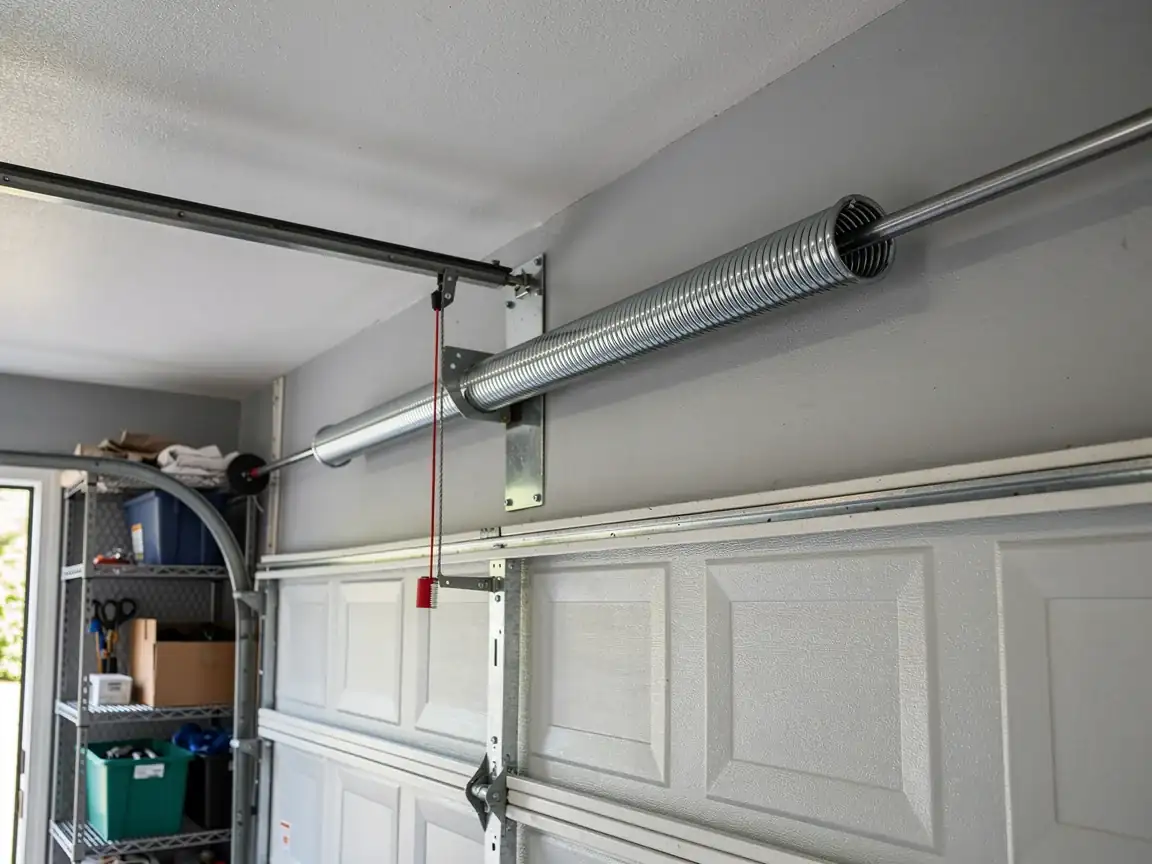
Walk a few blocks in this area and you'll notice the age split is narrower than in older parts of the territory, but it still matters. Streets built closer to the late 1990s often have extension-spring setups mounted along the horizontal track, a design that was common before torsion systems became the standard on new construction. Streets built after 2000 are far more likely to have torsion springs on a center shaft above the door, which is now the dominant setup across the service area.
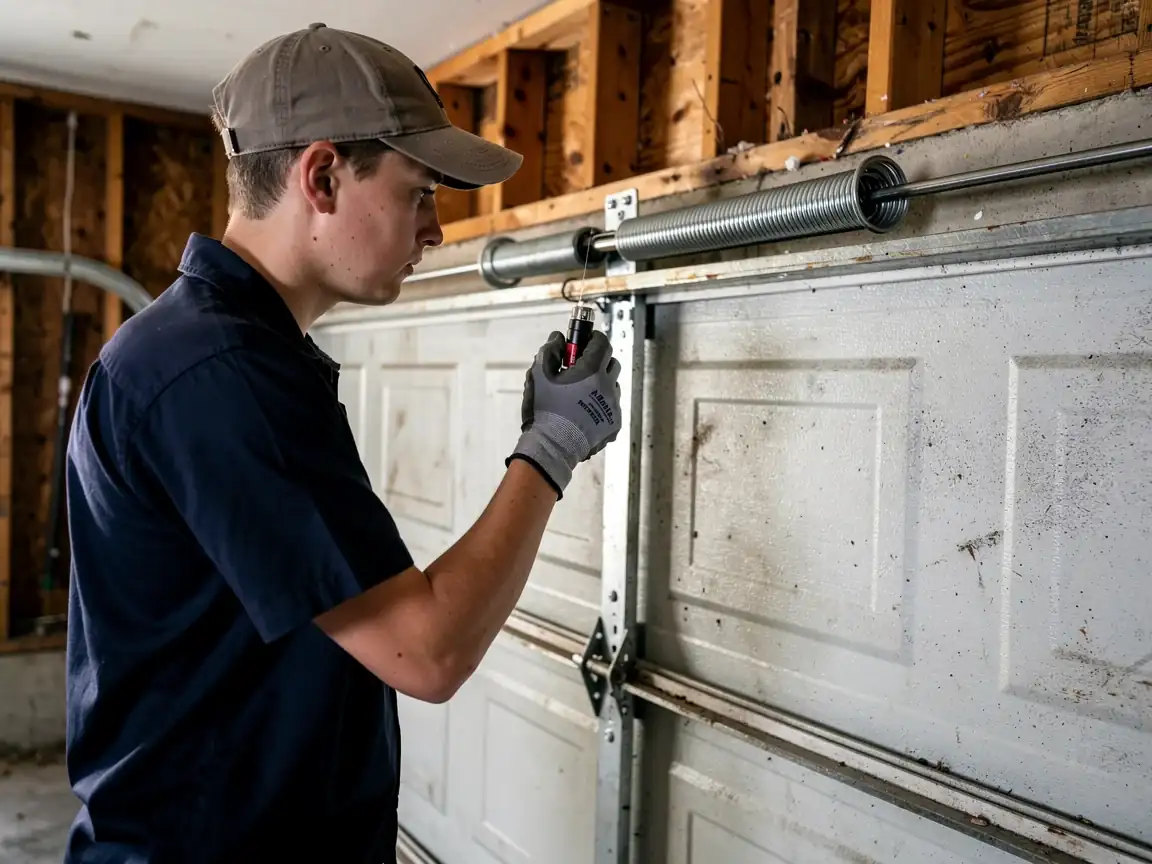
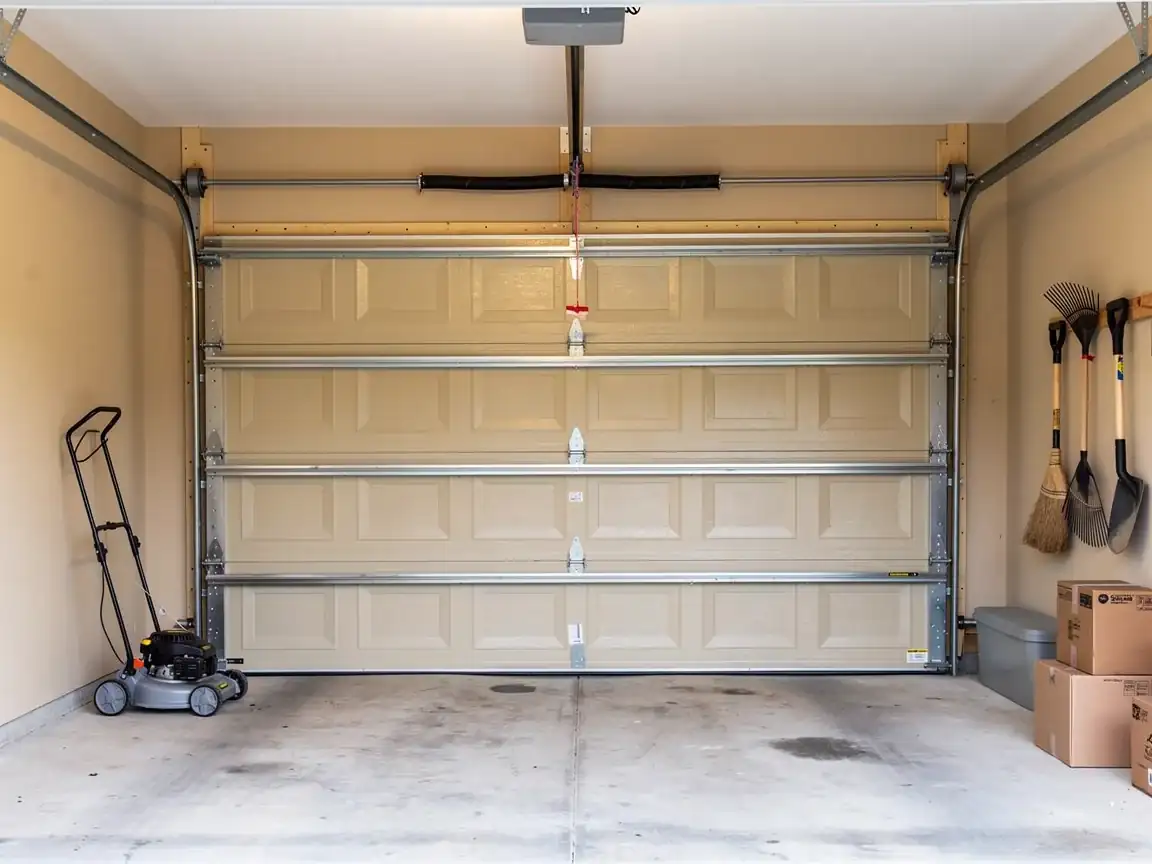
The practical difference: extension spring systems use safety cables that need to be checked, and the springs themselves are cheaper but wear out on a shorter cycle. Torsion systems last longer but need a specific spring size matched to door weight - guess wrong and the door either won't stay open or slams down hard. When we come out to this area, the first thing we check is which system is actually on the door, not what the build year on paper suggests, because retrofits happen and not every house matches its decade.
What the Housing Means for Your Door
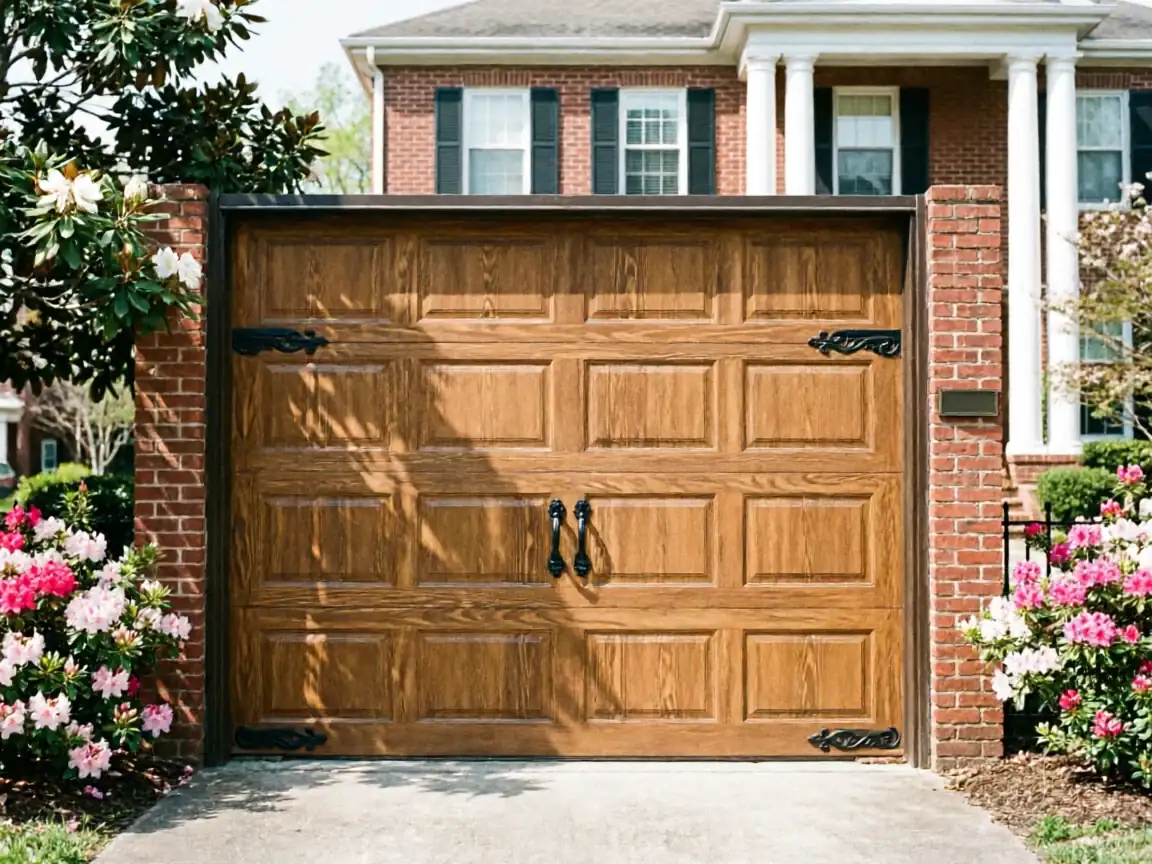
Given that most houses here were built close to 2005, the doors you're dealing with are mostly steel sectional doors on torsion springs, with chain or belt-drive openers from the early-to-mid 2000s. Parts for that generation are still widely available, which is good news - unlike older housing stock elsewhere in the territory, you're not usually hunting for a discontinued spring size or an obsolete opener logic board.
The service area sits in a moderate cold climate band, which matters for steel doors: panels can stiffen and seals can shrink in winter cold snaps, and that's when a borderline spring or a dry track tends to finally give out. If your opener is original to a 2003-2007 build, it's getting close to the age where the motor capacitor or the logic board starts acting up before anything mechanical fails outright.
One honest limit: if a door's torsion spring has already snapped and the opener's gears have stripped from fighting it, sometimes the math says replace the door assembly instead of patching two failures separately. We'll tell you straight when that's the case instead of running up a repair bill on a door that's already decided to retire.