The Symptom
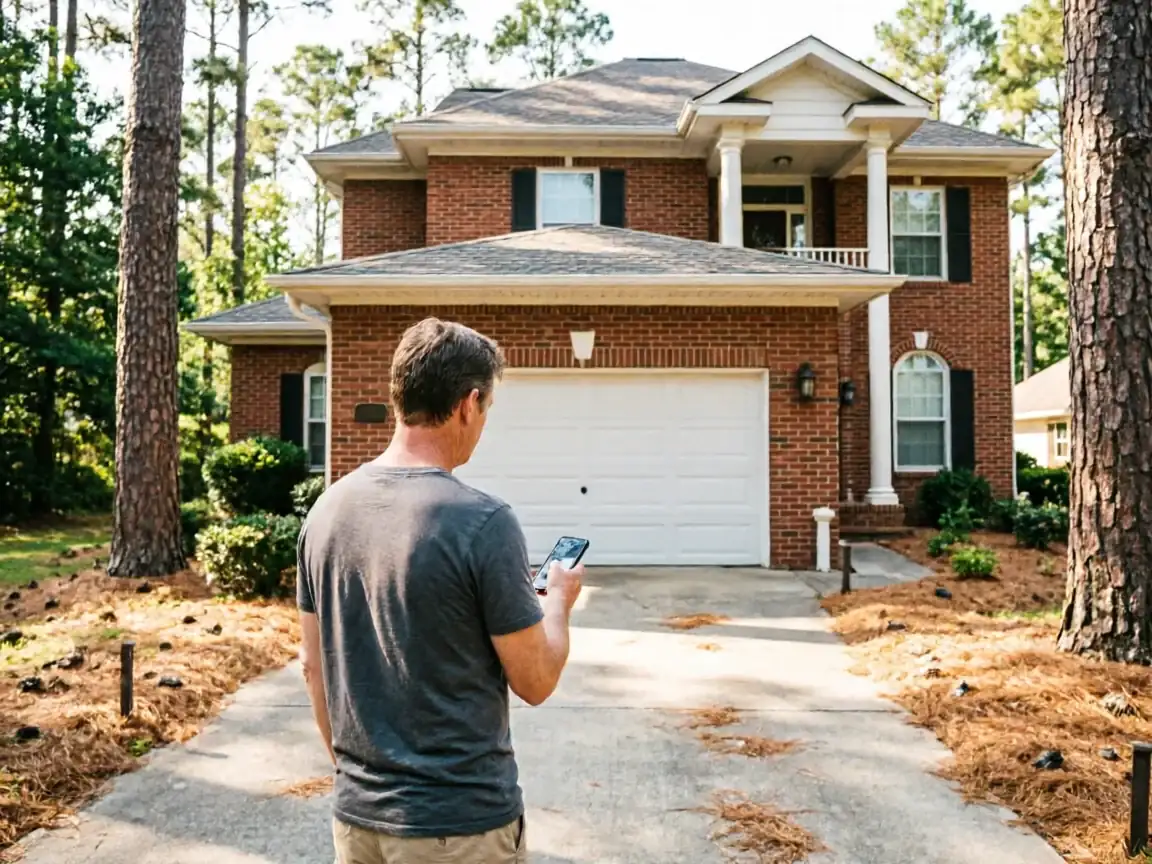
The opener hums but the door doesn't move. It opens six inches and reverses. The remote works from the driveway but not from inside the car. The wall button does nothing until you hit it four or five times. Sometimes it's a grinding noise right before the belt or chain catches, sometimes it's dead silence and a blinking light on the motor unit that nobody's ever looked at closely.
These aren't random. Across the service area - homes built anywhere from 1964 up through 2005, with the heaviest concentration from the 1980s and '90s - the openers installed when those houses went up are now old enough that the plastic gears, the circuit boards, and the safety sensors are all reaching the end of their working life around the same time. A chain-drive unit from a 1988 build and a belt-drive from a 1998 build fail for different reasons, but they fail in the same decade of the house's life, which is often right about now.
If the door only misbehaves in certain weather, that's worth noting before you call - cold mornings and hot afternoons both stress an opener differently, and it helps us narrow down whether we're looking at a sensor, a gear, or a board before the truck even leaves.
What the Fix Involves
First we rule out the cheap stuff: safety sensor alignment, a weak remote battery, a logic board that's lost its memory after a power blip, limit switches that have drifted out of adjustment. None of that needs a new opener, and we're not going to sell you one if a ten-minute adjustment solves it.
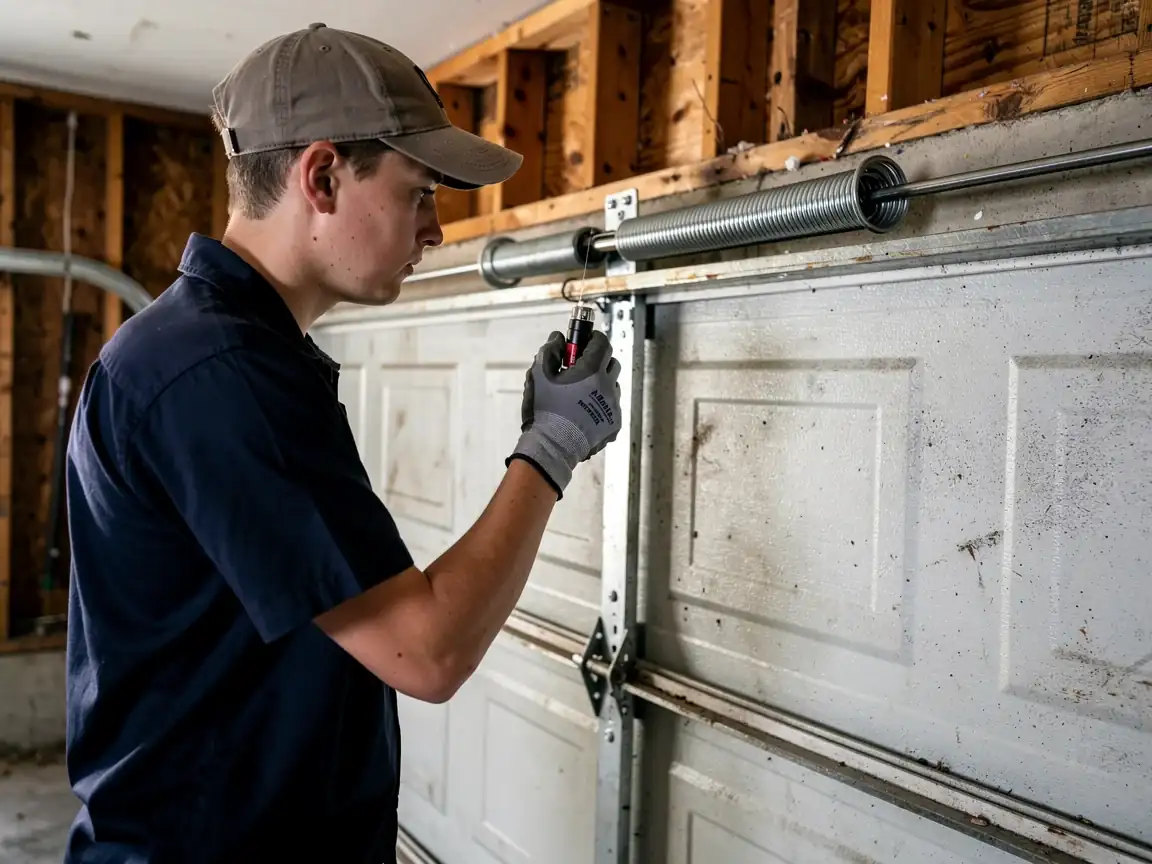
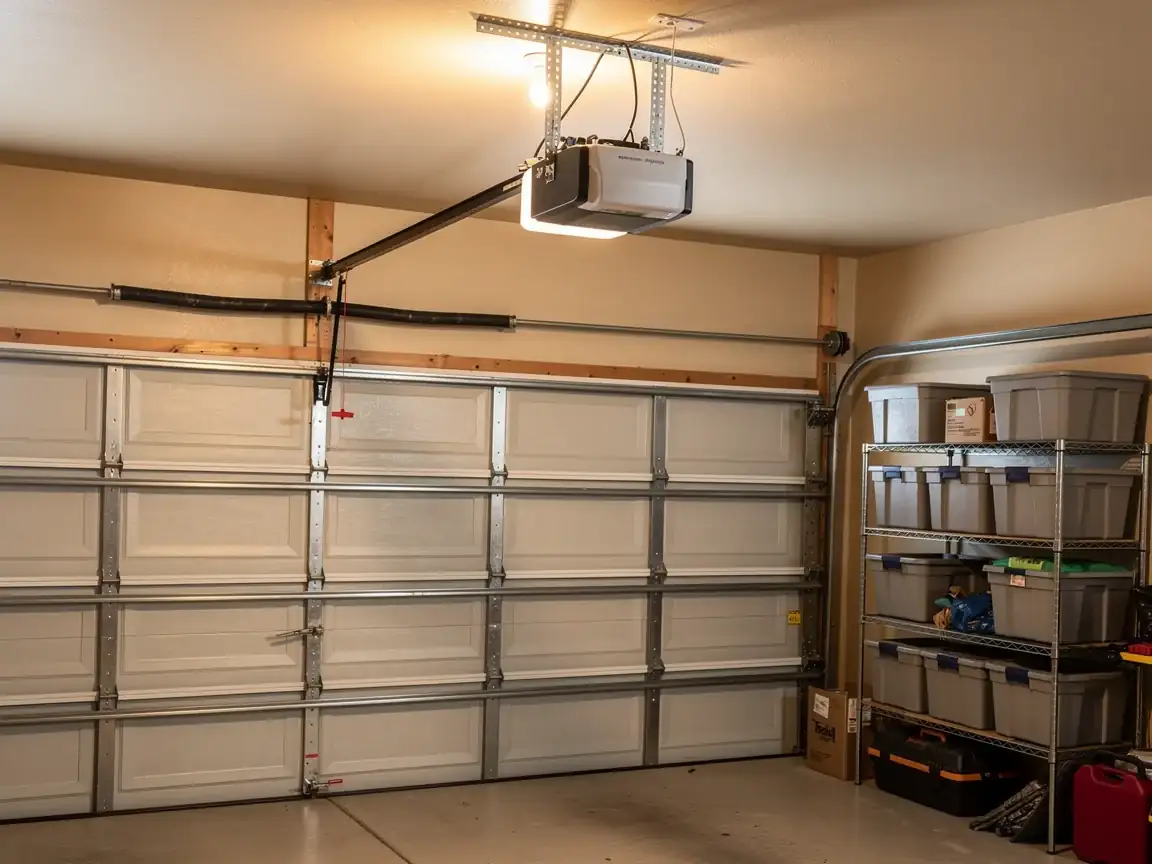
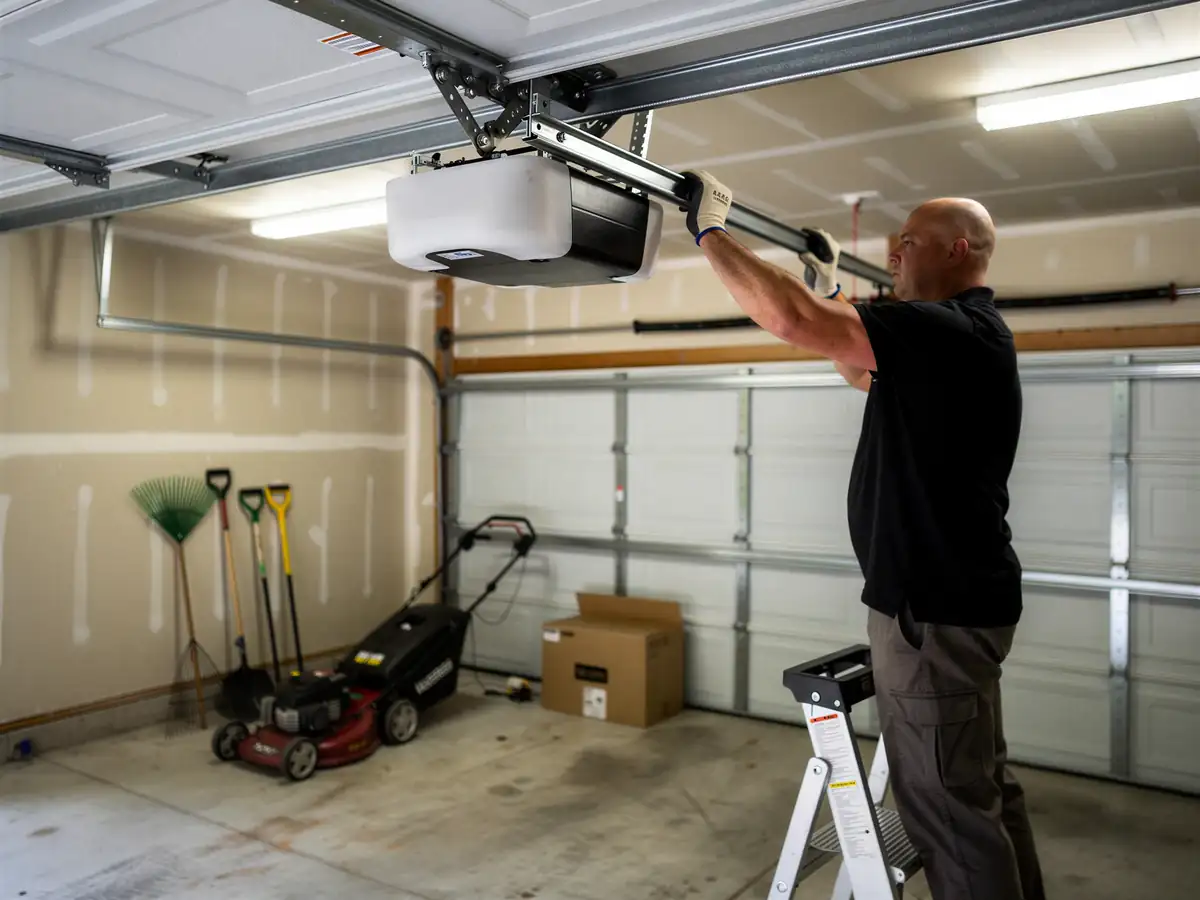
Past that, we're looking at the drive mechanism - the gear and sprocket assembly on chain and belt units, the drive screw on older screw-drive models - and the circuit board that controls travel limits, force settings, and the safety reversal system. Stripped plastic gears are probably the single most common failure we open up and find. They're a wear part by design, meant to be the thing that breaks instead of something more expensive, but on an opener that's 20-plus years old, the gear is usually not the only thing showing its age.
We also check the capacitor on the motor itself, since a weak capacitor looks exactly like a dying motor until you test it properly, and swapping the wrong part on a guess wastes your money. Where the opener is original to the house and the board, motor, and gear are all going at once, we'll tell you straight that repair isn't the better math - more on that below.
Why It Happens Here
Most of the opener failures we see trace back to houses built between 1964 and 2005
With the bulk of that stock going up in the 1980s and '90s. That means a lot of openers out there are original or close to it - installed when the subdivision was new, now pushing 25 to 45 years of service. Manufacturers didn't design these units to run that long, and the plastic gears, belt materials, and circuit boards all have a working life shorter than the house around them.
- 45 years
The climate here doesn't help
This is a cold-moderate band - not brutal winters, but enough freeze-thaw swing through the year that nylon gear teeth get brittle in the cold months and then expand again in summer heat, which accelerates the stripping we mentioned above. A unit that might limp along another five years in a milder, steadier climate tends to show cracking and gear failure here on a shorter timeline.
Across the wider service area
From East Newnan two miles out to Grantville and Whitesburg ten and eleven miles off, Turin at nine, and out past Senoia and Fairburn - the pattern holds because the housing era and the climate band are the same everywhere in that radius. It's the age of the stock plus the weather doing the work, not the brand of opener someone happened to buy.
Can You Do This Yourself
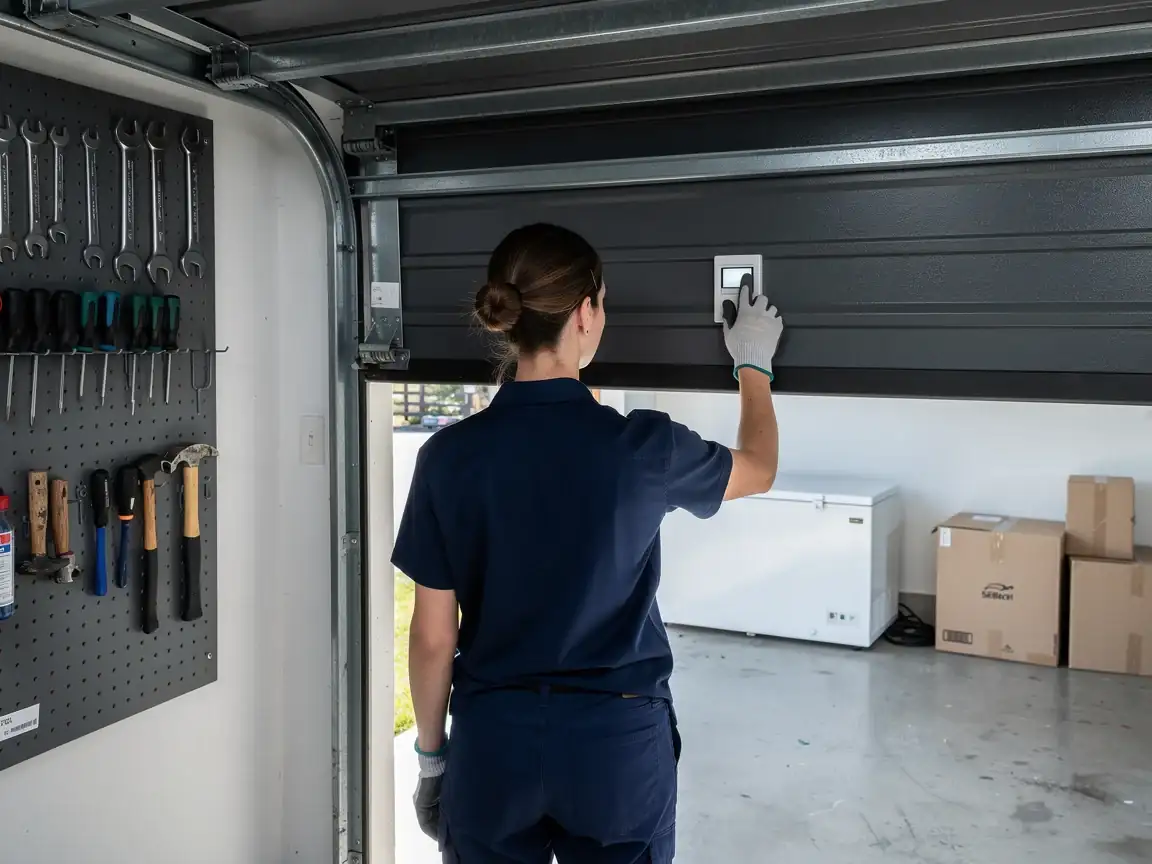
Some of it, yes. Check the remote batteries first - it sounds obvious, but it's the actual fix more often than you'd think. Wipe the safety sensor lenses and make sure nothing's nudged them out of alignment; a sensor that's even slightly off-angle will stop the door from closing and most people never think to check it. Test the wall button's wiring connection while you're up there, since a loose screw terminal mimics a dead logic board.
What you shouldn't do yourself: open the motor housing to replace a capacitor or logic board, or try to re-time a belt or chain drive without the right tension gauge. Those carry real shock risk, and getting the travel limits wrong on reassembly can damage the door itself, not just the opener.
Here's the honest limit on our end too - if your opener is original to a 1980s or '90s build and the board, motor, and gear are all failing together, we won't spend an hour chasing parts for a unit that age when a new opener costs about the same as the repair and comes with a fresh warranty. With a median household income of $71,597 across the service area, most owners want that repair-versus-replace math laid out plainly before any tools come out, and that's what we'll give you.