Why It Happens Here
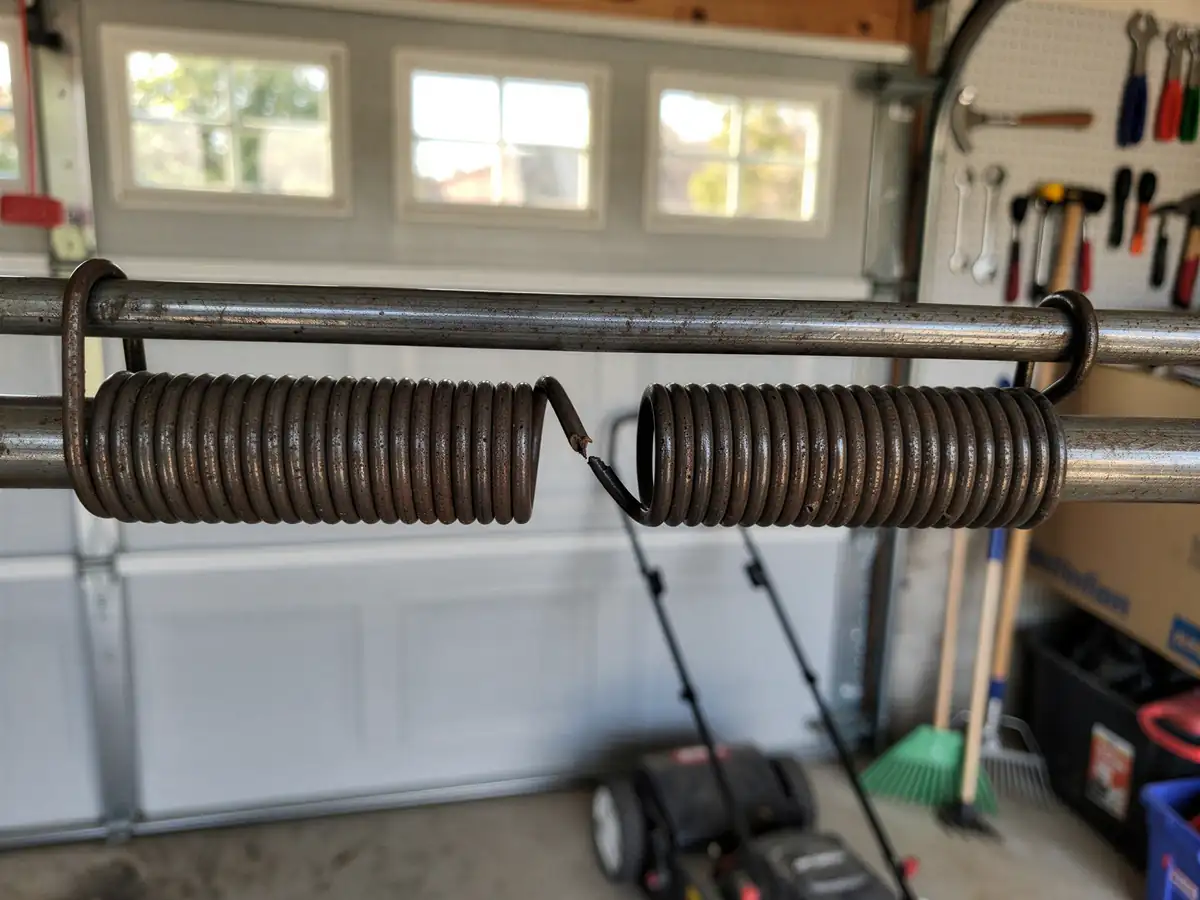
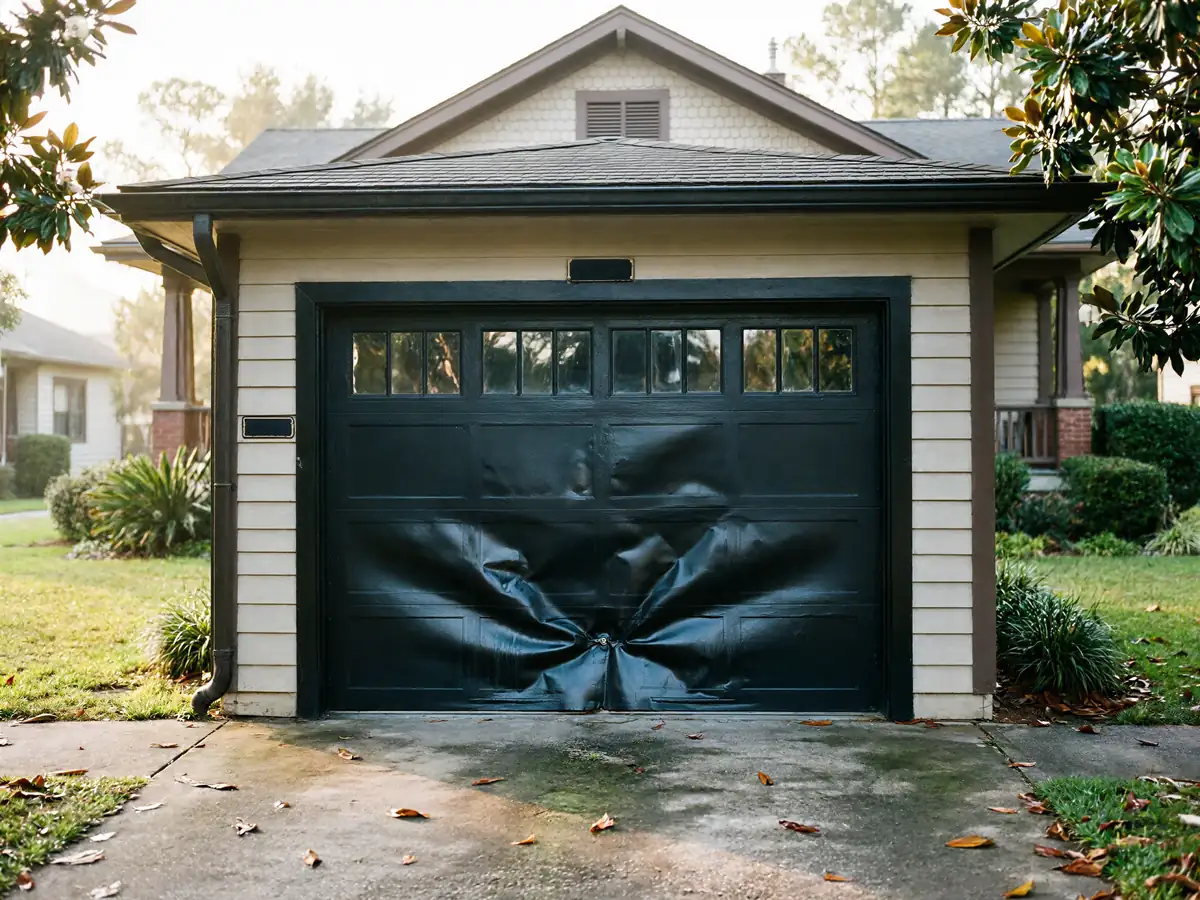
Union City runs about 11,533 households, smaller than the broader Newnan service area's 27,616, which matters for how we plan the day: fewer jobs per street means we're not clustering calls the way we can closer to Newnan, but it also means the fault pattern is more uniform. Most of this town's housing went up after 2002, well past the 1964-2005 window that covers the wider area and later than the 1994 median year built across Newnan's older neighborhoods. That gap shows up on the service calls. Newer builds here mostly run factory steel doors on lighter torsion springs with sensor-equipped openers already wired in, so the common failure isn't a seized 1980s extension spring setup - it's a worn drum, a misaligned photo-eye, or a circuit board that's finally hit end of life after two decades of daily cycles. We're still in the same cold-moderate climate band as the rest of the area, so freeze-swell on concrete slabs and track bolts loosening over winter show up the same way they do anywhere nearby. The income profile here, with median household income around $47,635, also shapes what we recommend - we lean toward fixing the part that failed rather than pushing a full door swap unless the door itself is actually compromised.
Booking a Visit
We work out of Newnan, and Union City sits about 19 miles out, so a visit here gets scheduled as a routed trip rather than a drop-in. Tell us the symptom when you call - door won't close, opener runs but nothing moves, spring snapped with a bang - and we bring the right parts the first time instead of guessing. Because of the distance, we ask for a bit more lead time than we'd need for calls closer to the shop. If your opener is newer than your house's 2002-era build might suggest, say so; a lot of these systems have been replaced once already and that changes which board or sensor we stock on the truck for your visit.
What Is on the Truck
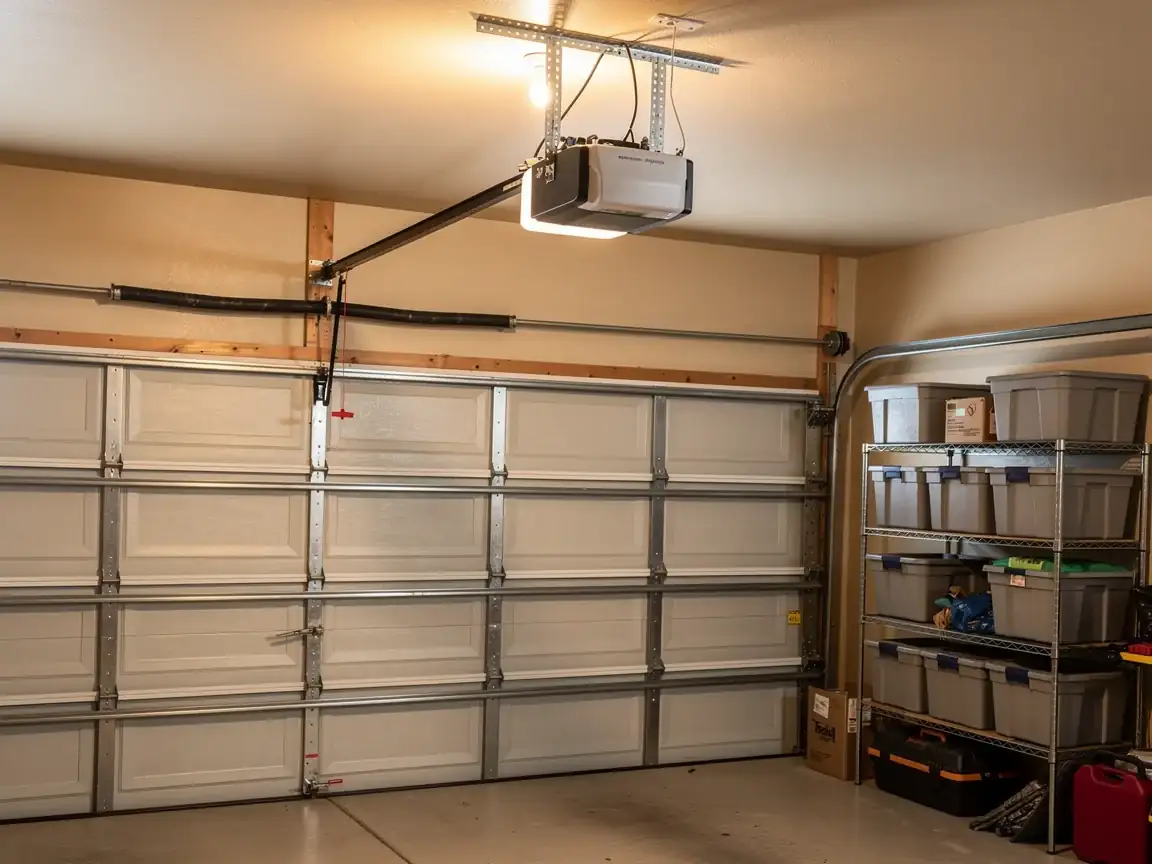
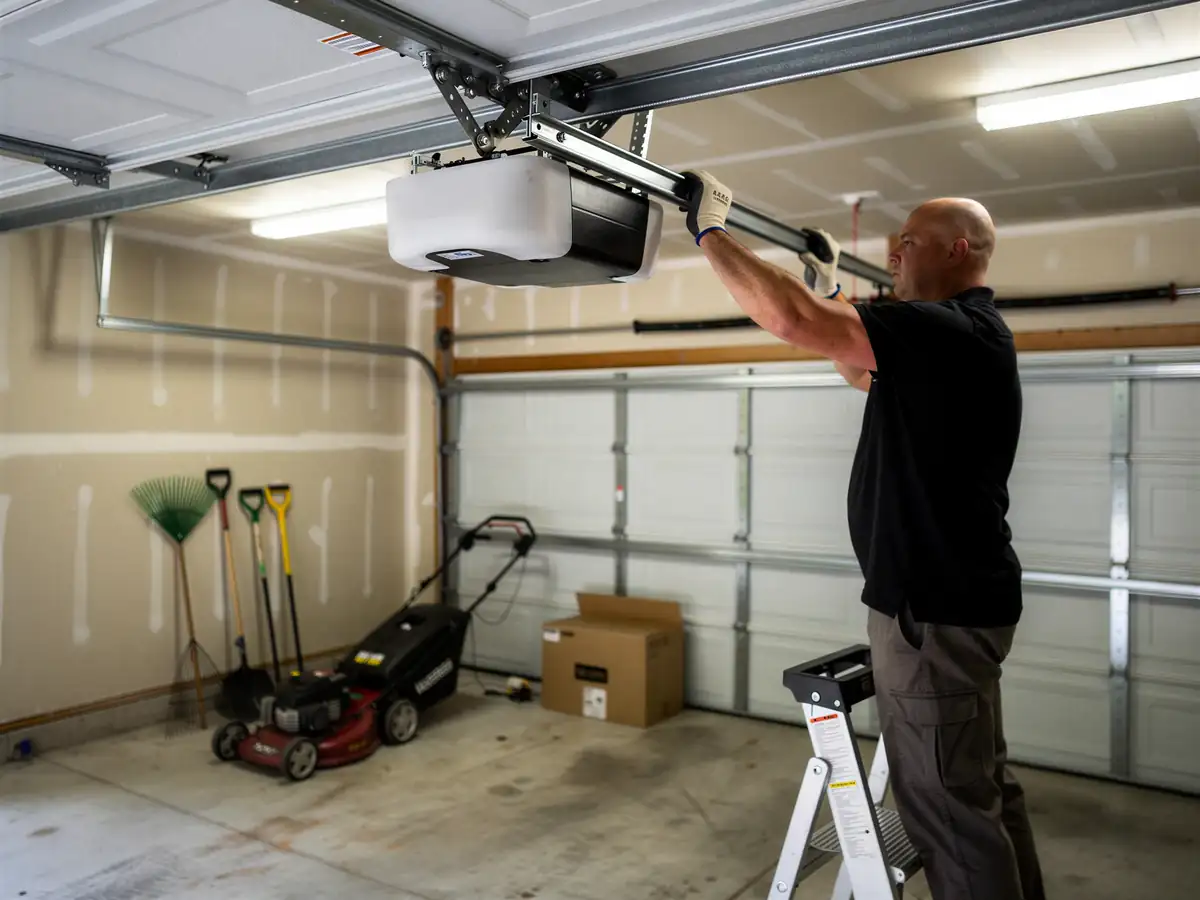
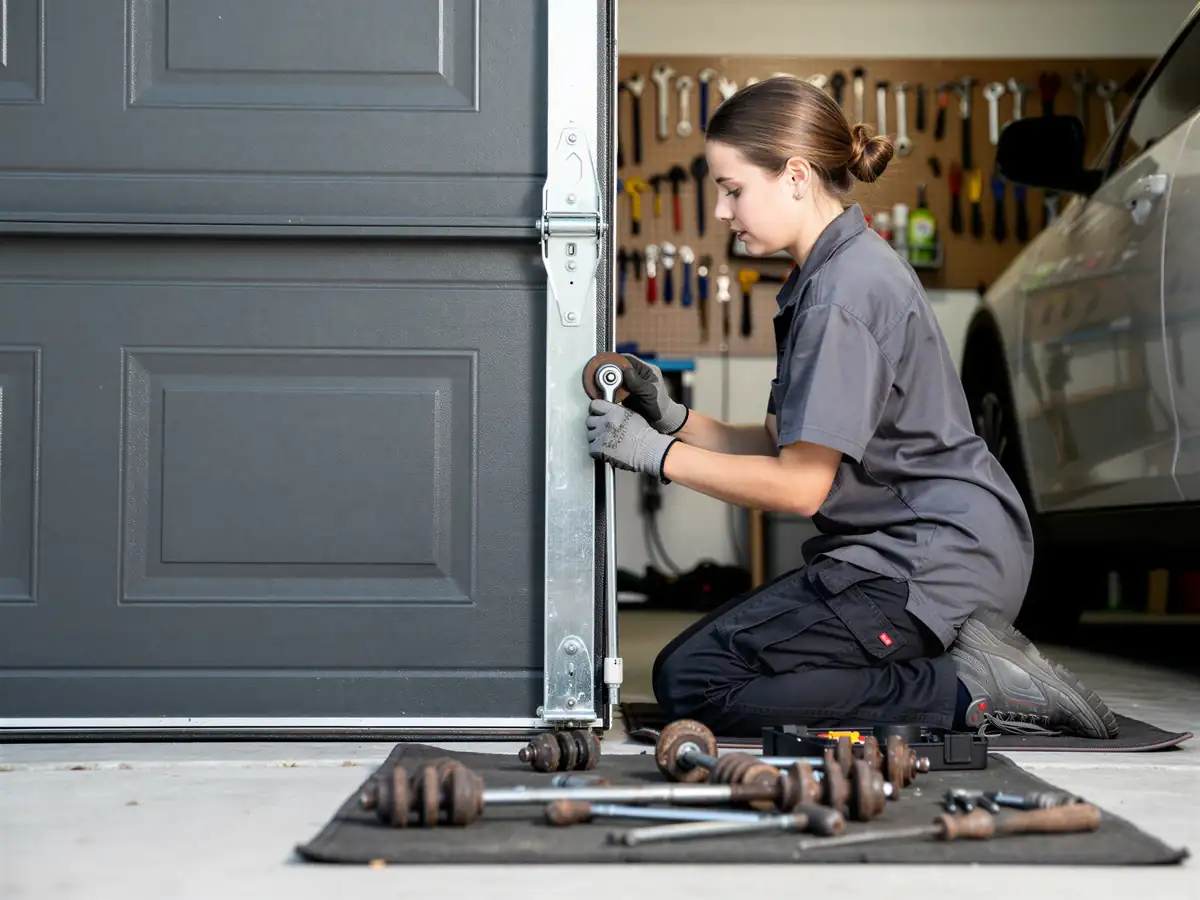
For a town built mostly after 2002, the truck gets loaded differently than it would for an older section of the service area. We carry steel torsion springs sized for lighter, newer doors, standard photo-eye sensor pairs, and circuit boards for the mainstream opener brands that shipped with this era of home construction. We also carry weatherstrip and bottom seal stock, since cold-moderate winters here still crack vinyl seals on schedule regardless of how new the door is. What we don't carry as standard stock is obsolete hardware for pre-1990s doors - that's a different parts bin, and if your house turns out to be one of the older outliers in Union City, we may need to source that piece rather than have it on hand.
What the Fix Involves
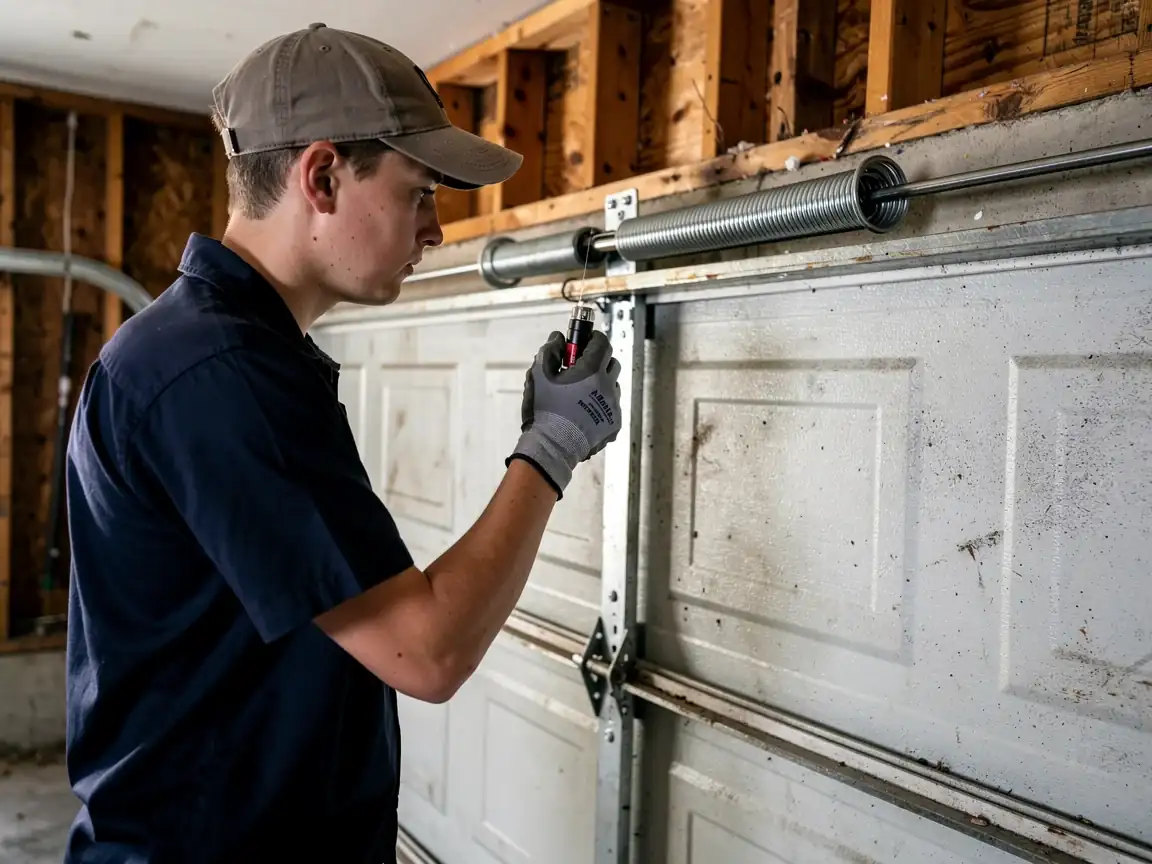
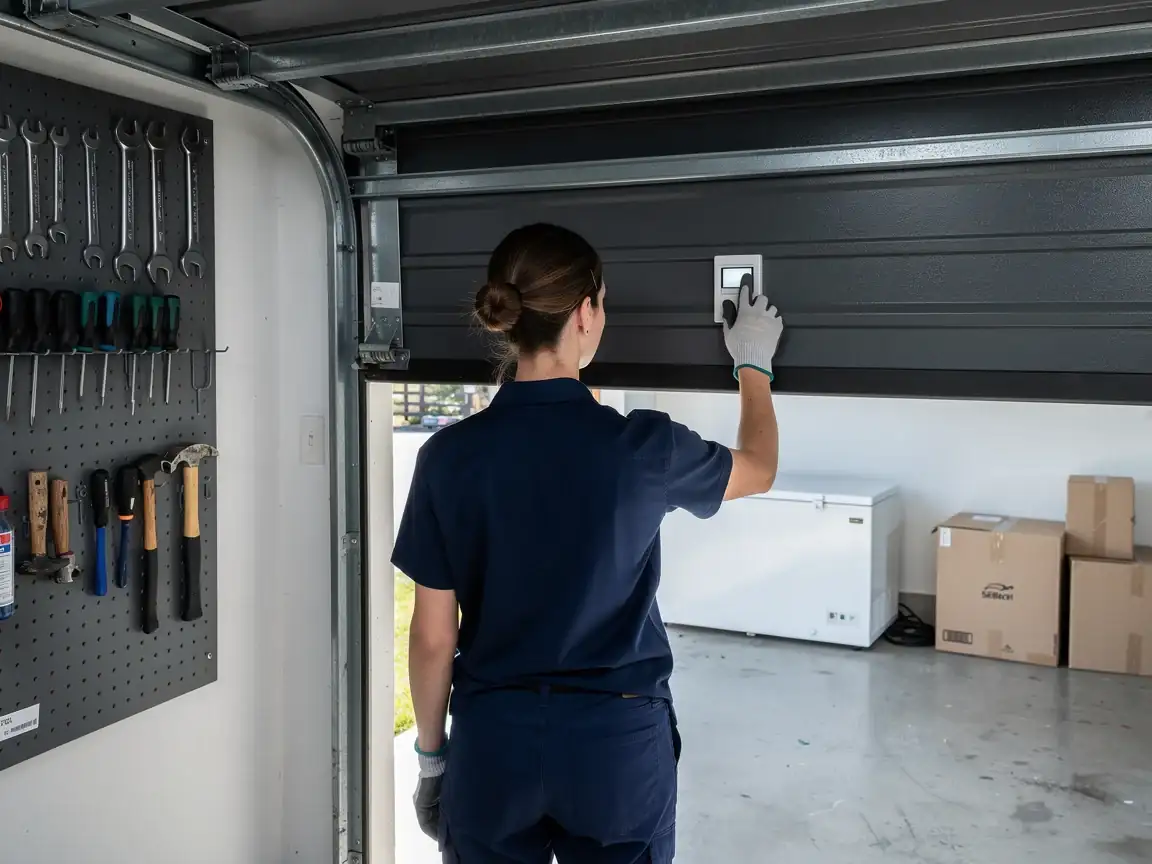
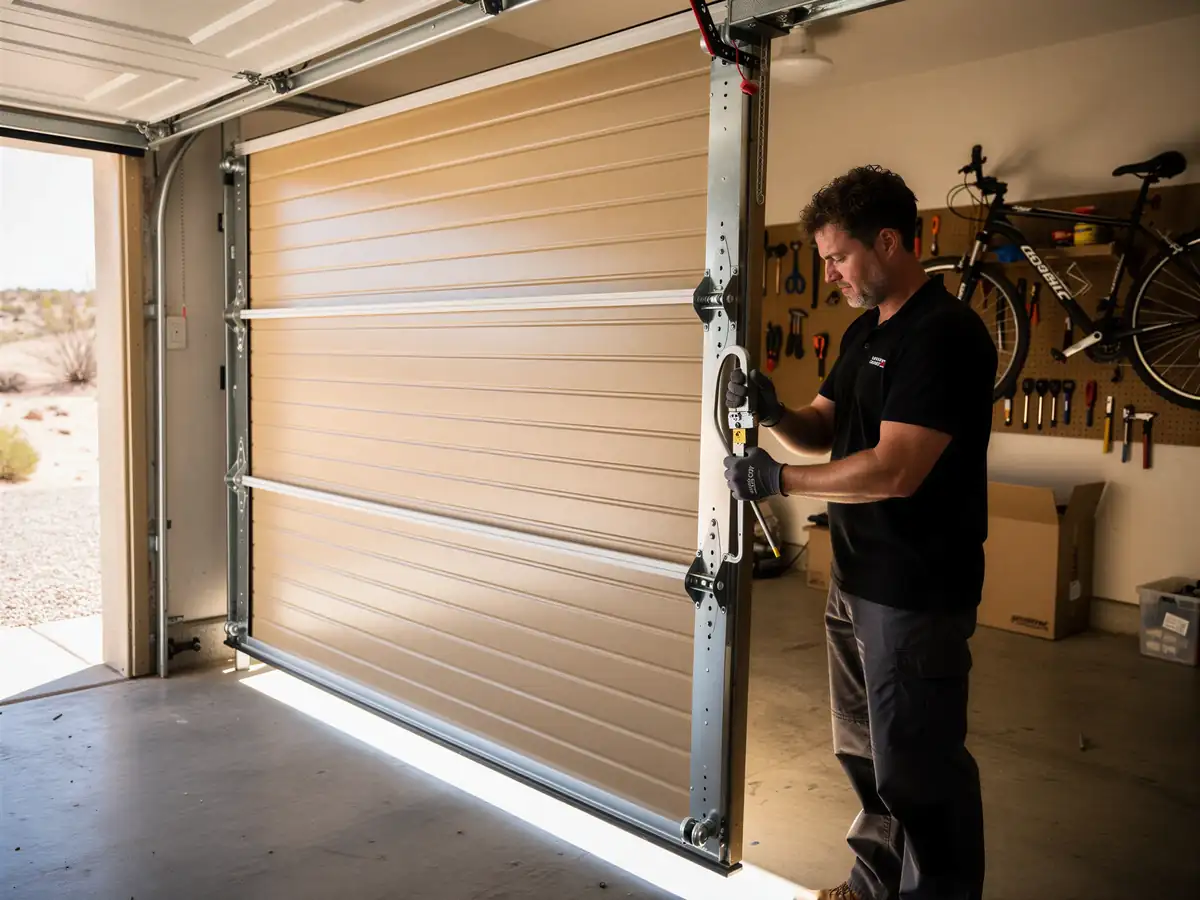
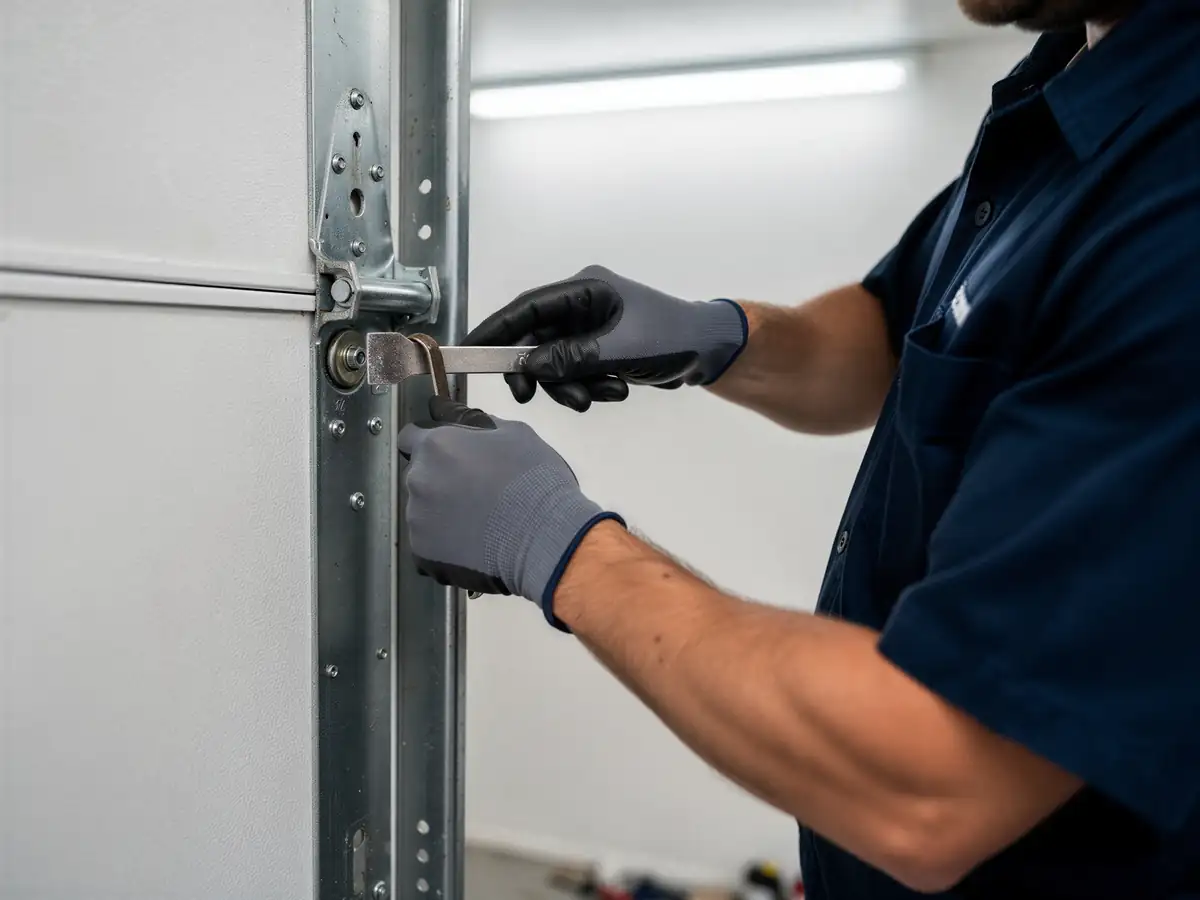
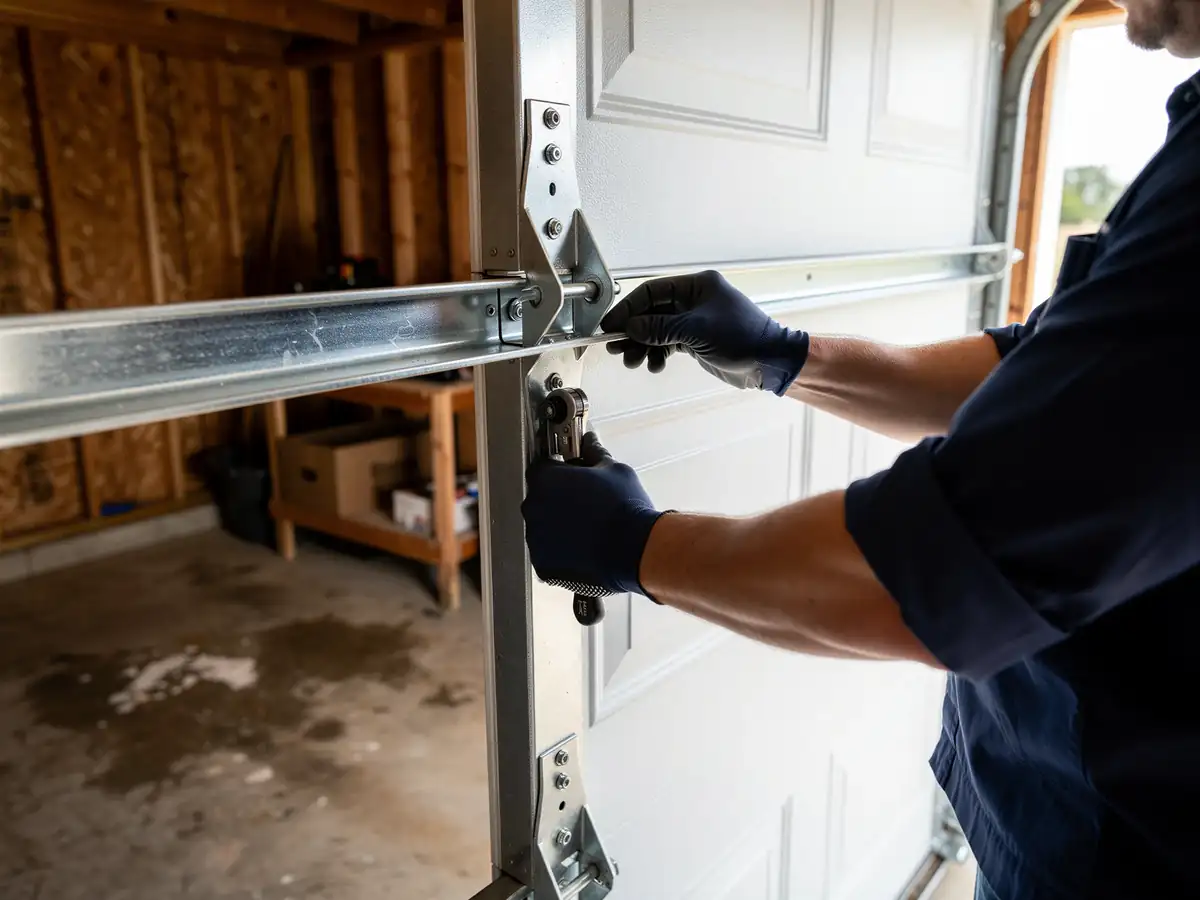
Spring jobs on this stock usually mean unwinding and replacing a single torsion spring rated for a lighter steel door, then checking cable tension on both sides - newer doors flex less, so an uneven cable shows up faster as noise or a crooked close. Opener calls are often a sensor realignment or a board swap rather than a full unit replacement, since most of these systems are still within a reasonable service life. Track work is usually a case of resetting bent rail rather than rebuilding, because galvanized track on 2000s-era construction holds up better than the steel used decades earlier. We test the full cycle twice before we leave - once under power, once manually - and we'll tell you plainly if a repair isn't worth the cost against a straight replacement, which does happen on doors that have been patched more than once already.