Why It Happens Here
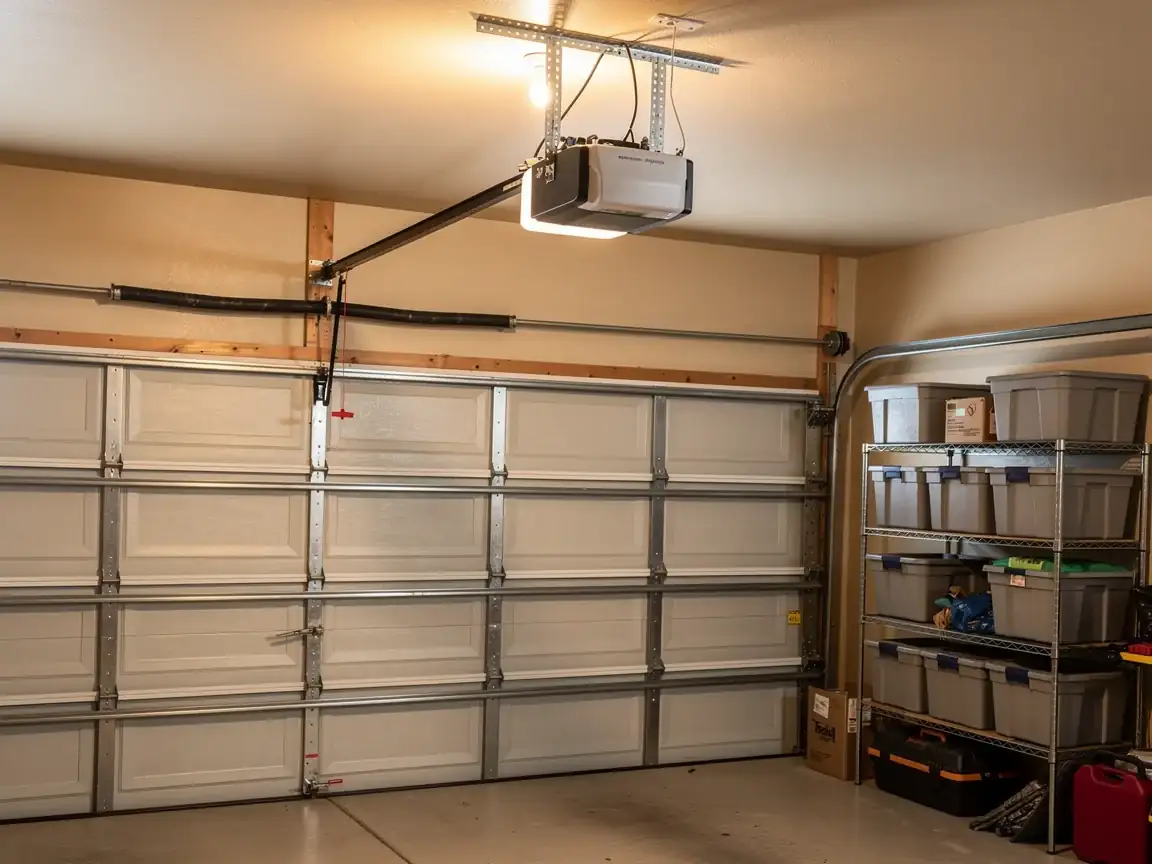
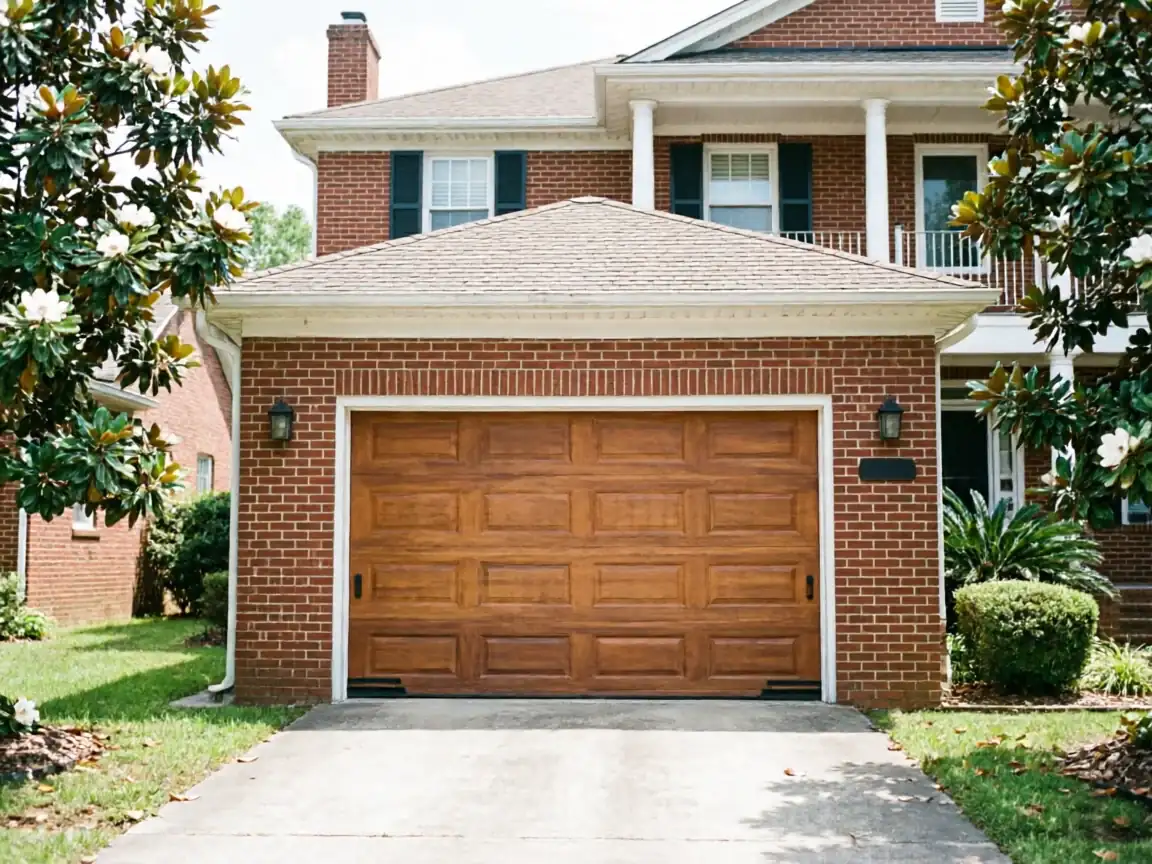
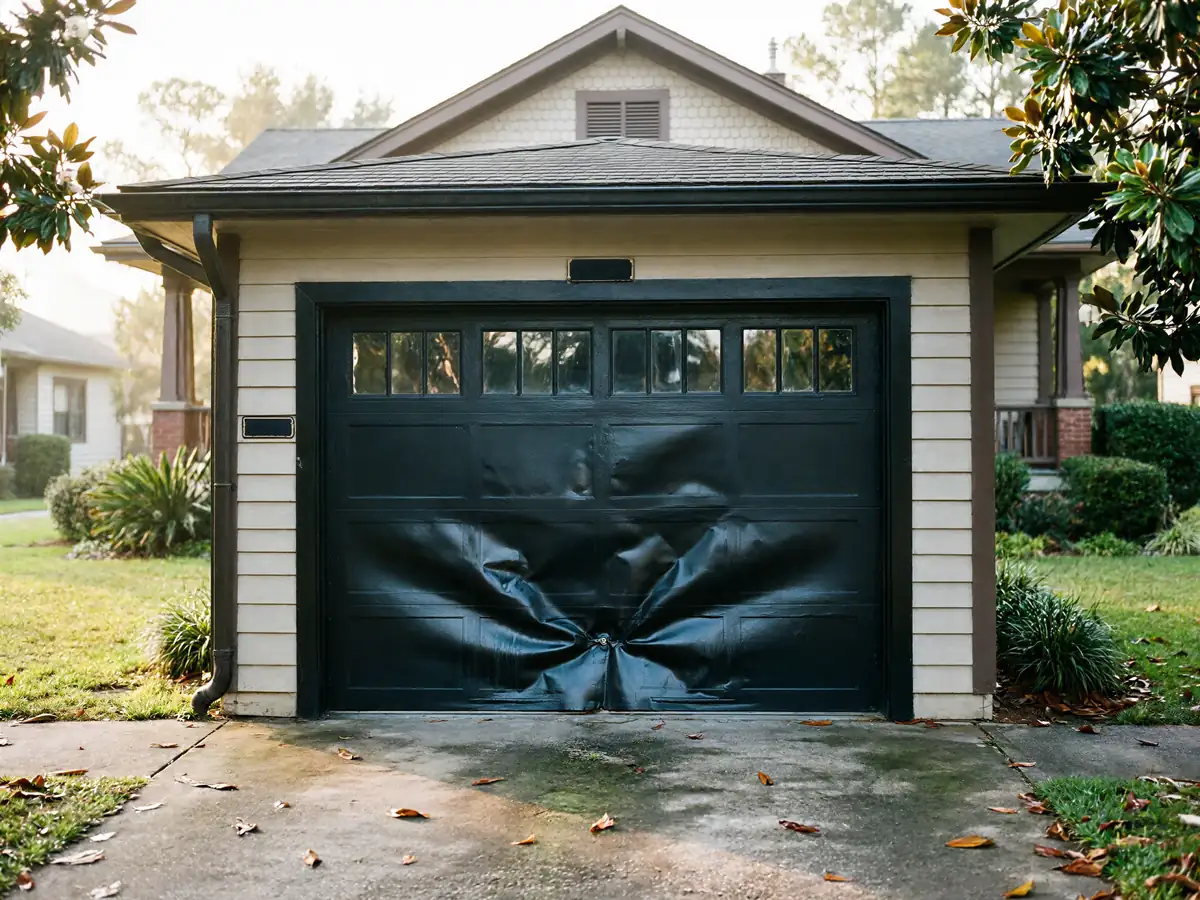
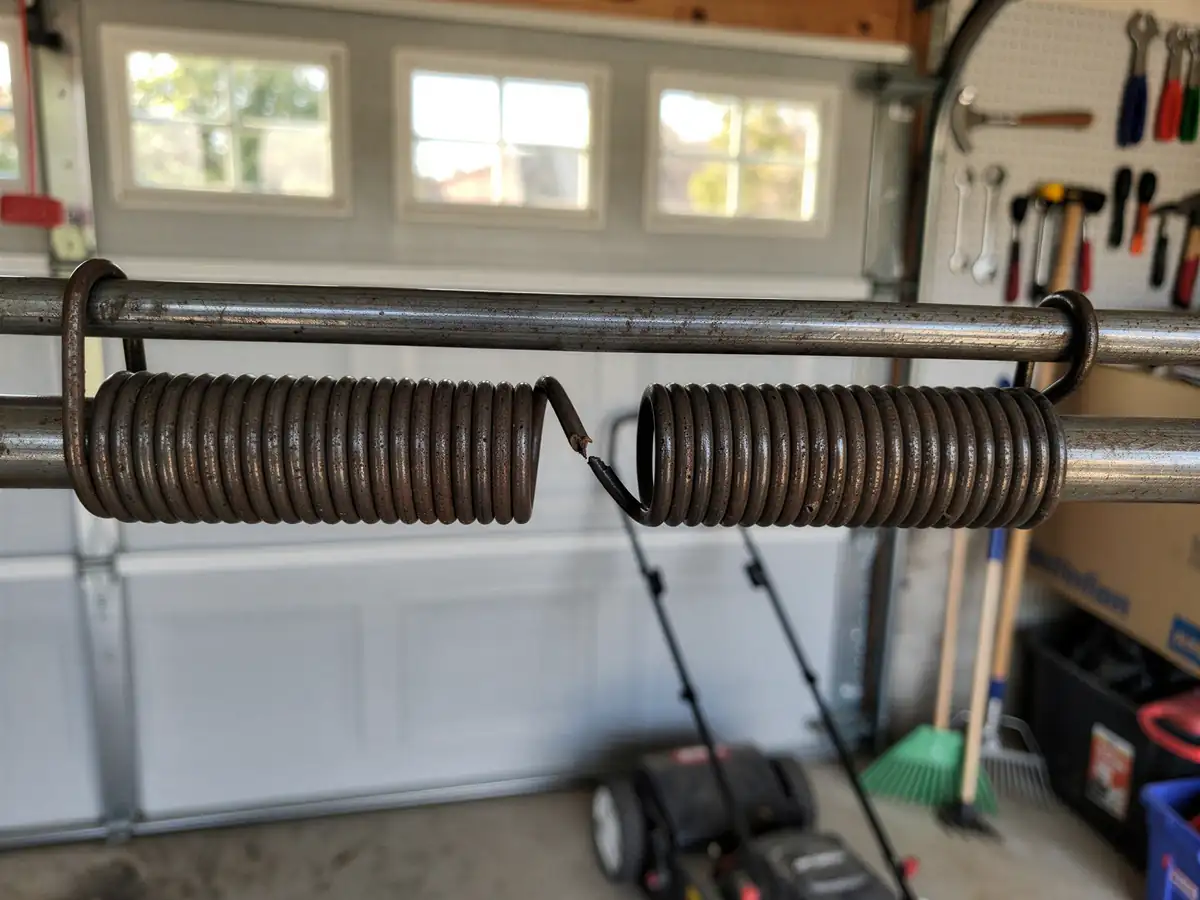
Union City sits 19 miles out from our shop in Newnan, and that drive shapes how we schedule the day - a spring call here gets bundled with other stops along that stretch rather than squeezed in as a quick add-on. The houses themselves are newer than a lot of what we see closer to home. Across the wider service area the housing stock runs from 1964 up through 2005, with a lot of it dating to the 80s and 90s, but Union City's own median build year lands around 2002. That matters because newer construction mostly came with torsion springs and heavier insulated doors from the builder, not the older extension-spring setups you'll still find on pre-1980 garages elsewhere. Torsion springs carry more tension and fail harder - when one goes, the door often won't budge at all rather than just sagging on one side. The cold-moderate climate here doesn't baby the steel either; temperature swings through the winter months stiffen the coil and speed up metal fatigue on a spring that's already near the end of its cycle count. With 11,533 households in Union City, we're seeing a good number of these same builder-grade torsion springs hit their wear limit around the same age.
Booking a Visit
Because Union City is 19 miles from our shop, we ask for a little more lead time than we would on a job five minutes down the road. Tell us the door's age and whether it's a single or double - on newer construction like most of what's in Union City, that's almost always a double torsion setup, and knowing that before we load the truck means we show up with the right spring already in hand instead of guessing. We book the visit, then drive out. There's no branch or depot in Union City itself; every job here starts with the trip from Newnan, and we plan the route around it rather than pretending otherwise.
What Is on the Truck
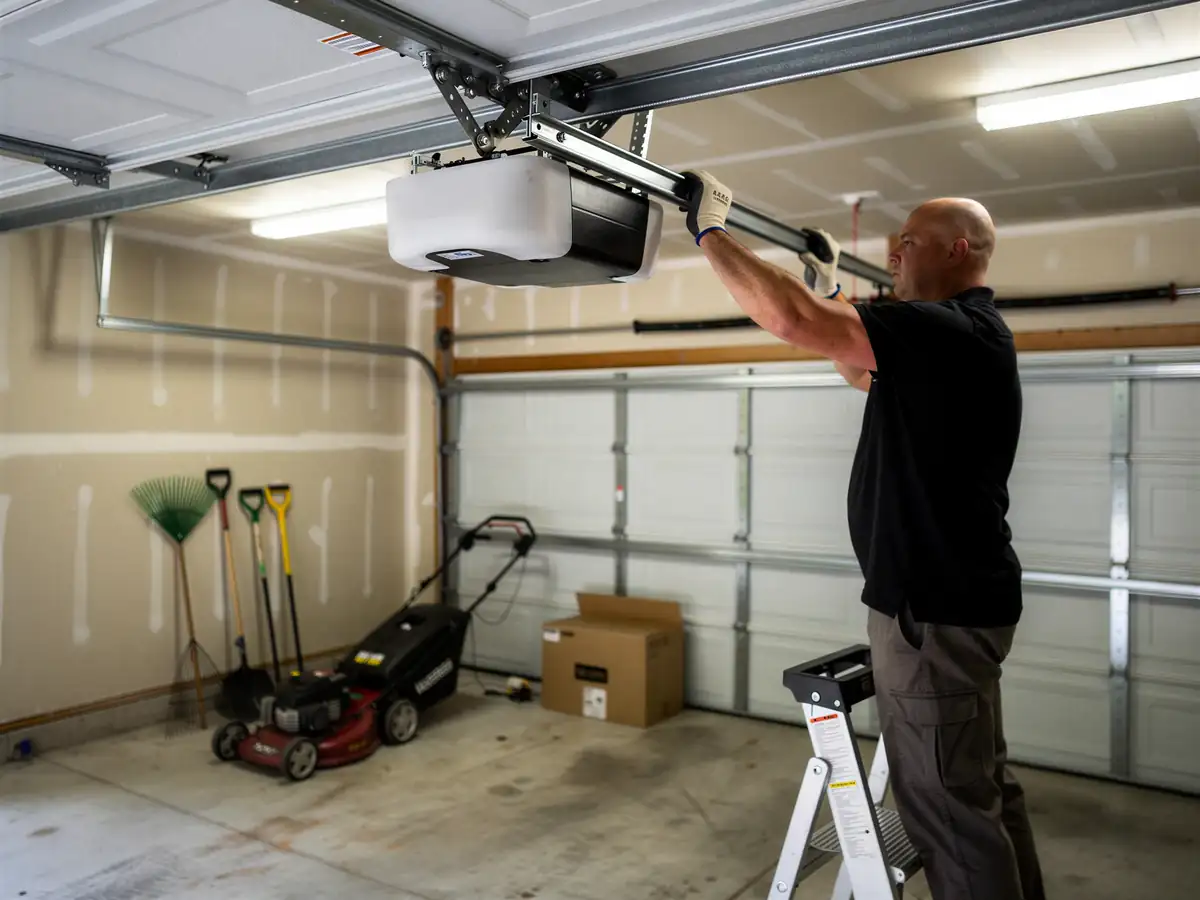
We stock torsion springs in the sizes that match newer construction, since that's most of what we run into out toward Union City - pairs sized for insulated double doors rather than the lighter single-door extension springs you'd carry for an older neighborhood. We also carry standard cable, rollers, and center brackets, because a broken spring on a door built around 2002 sometimes takes a cable or bracket with it when it snaps. What we don't stock is every custom or oversized spring on the market - if a door's been upgraded to something heavier than standard builder spec, we may need to order that one in rather than pull it off the truck.
What the Fix Involves
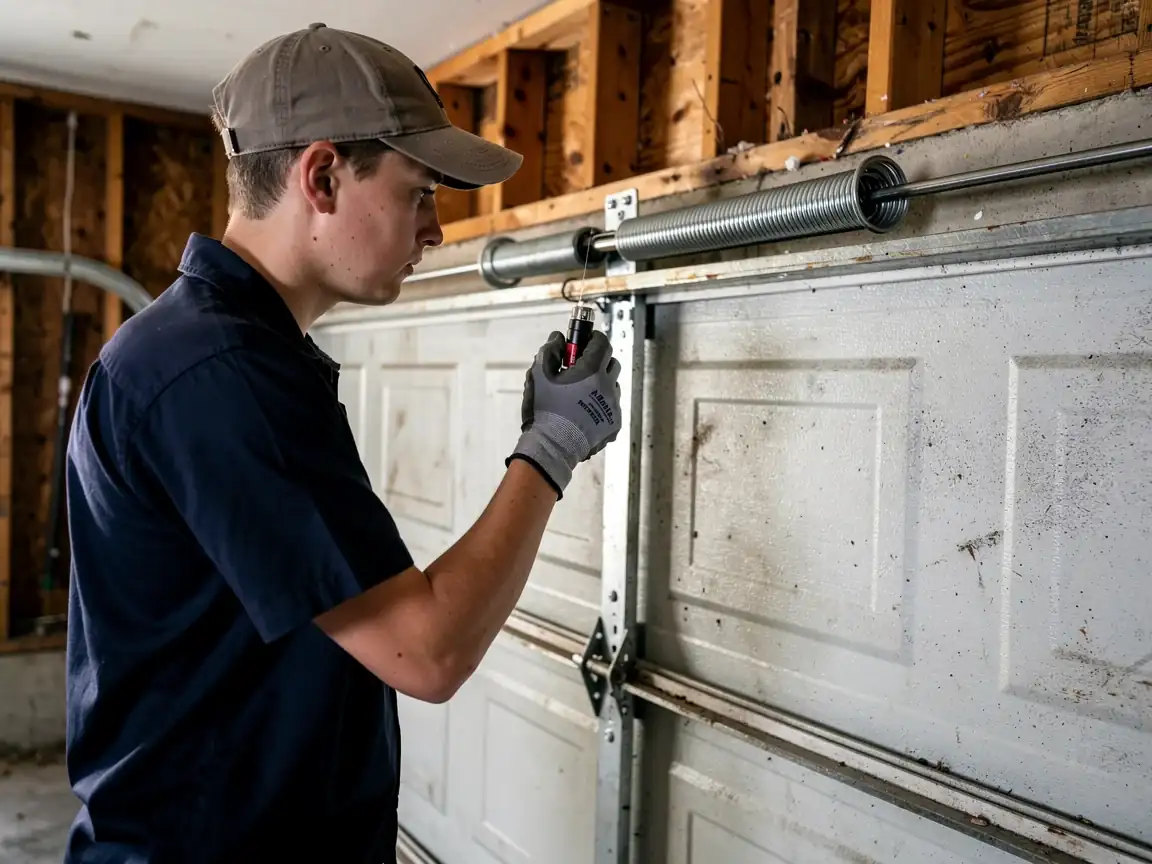
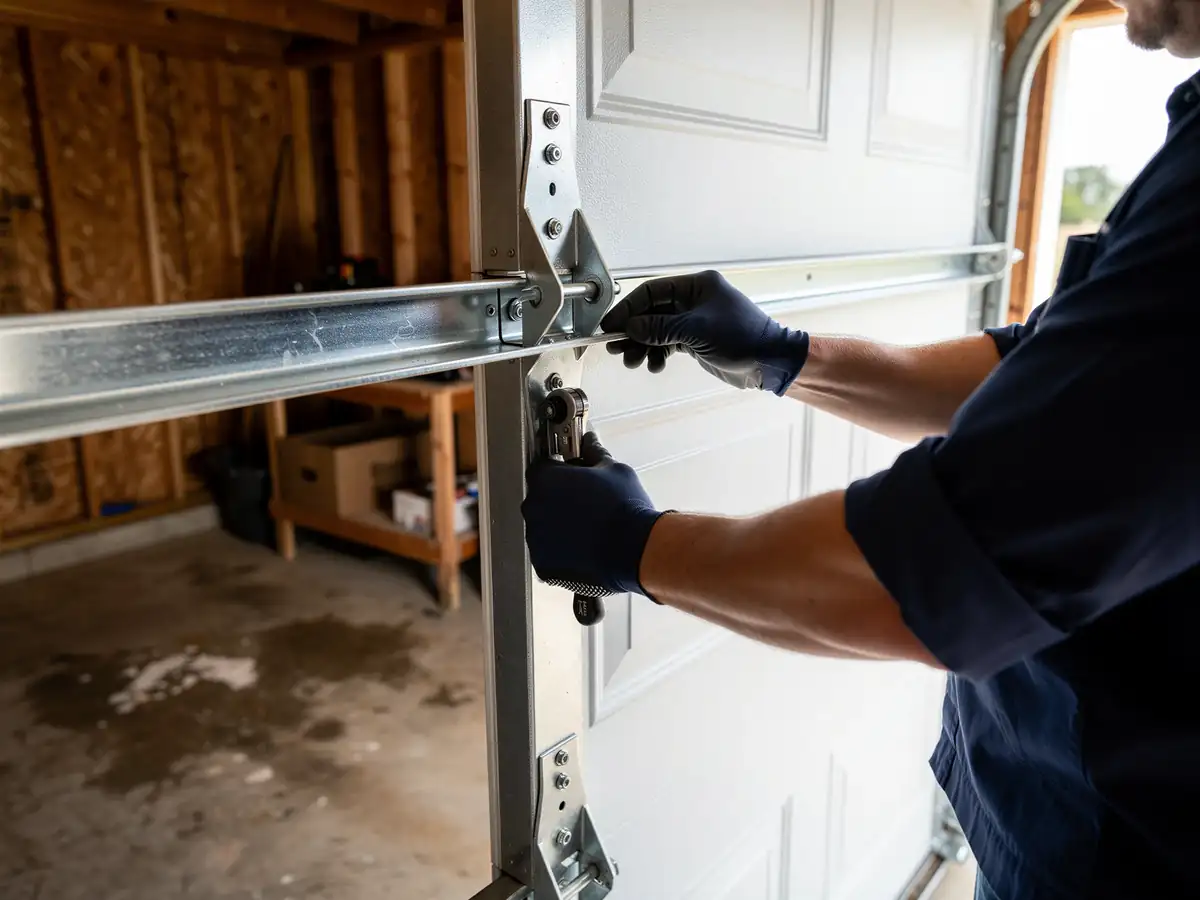
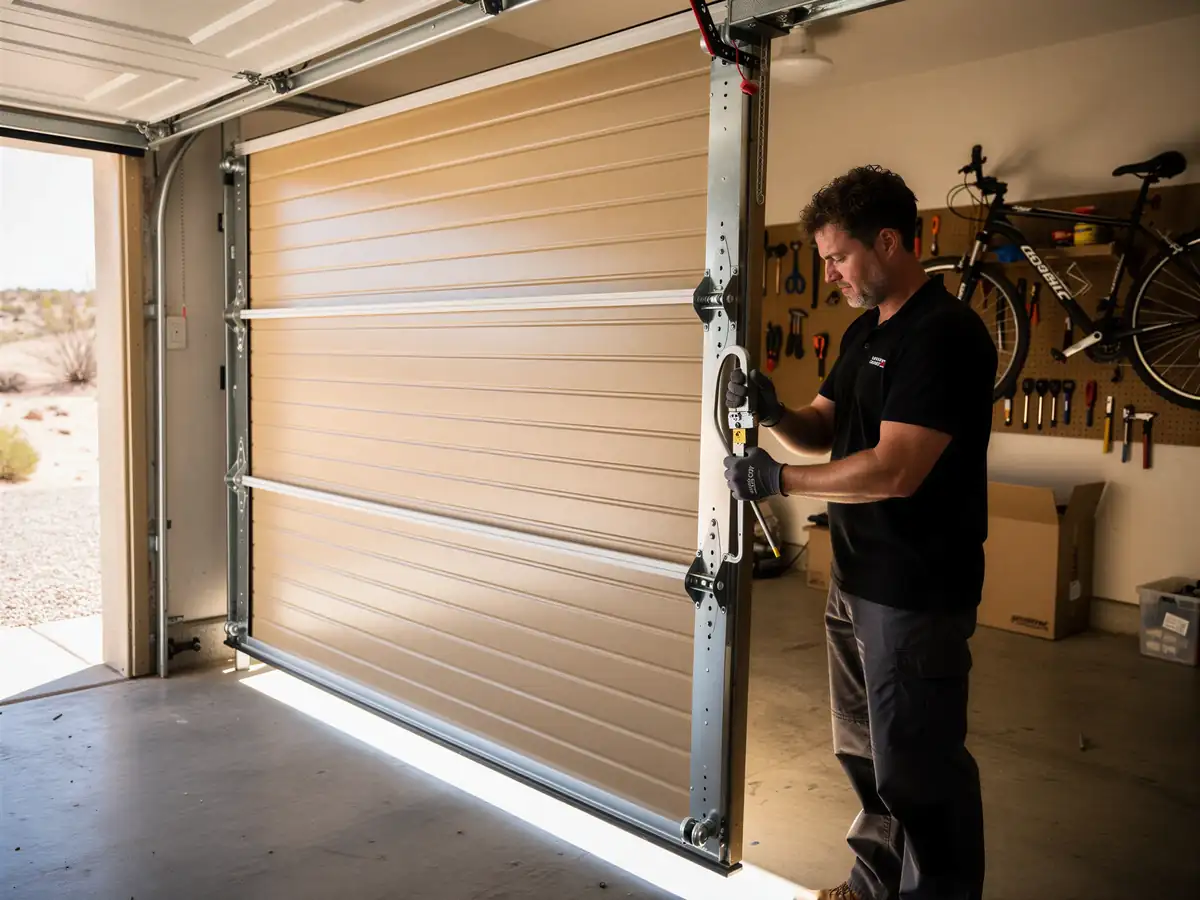
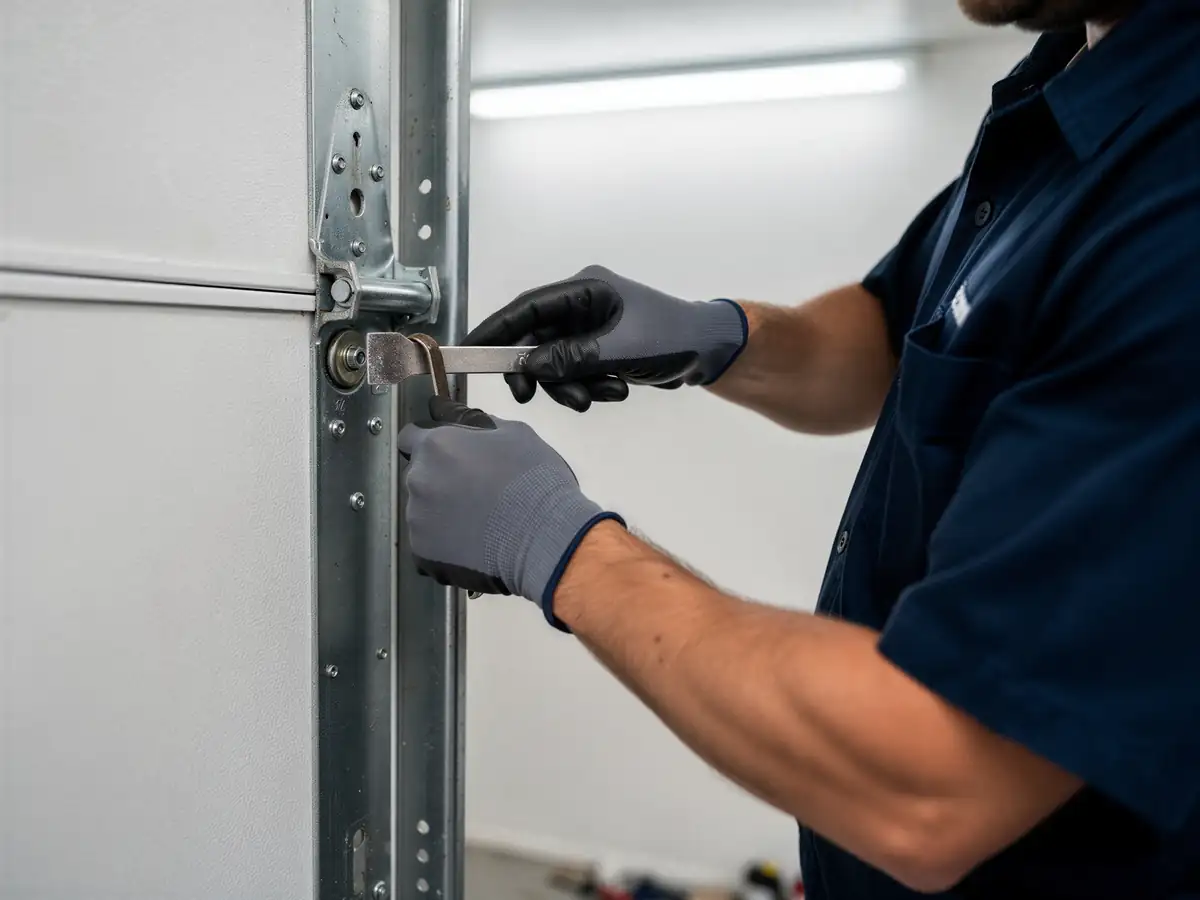
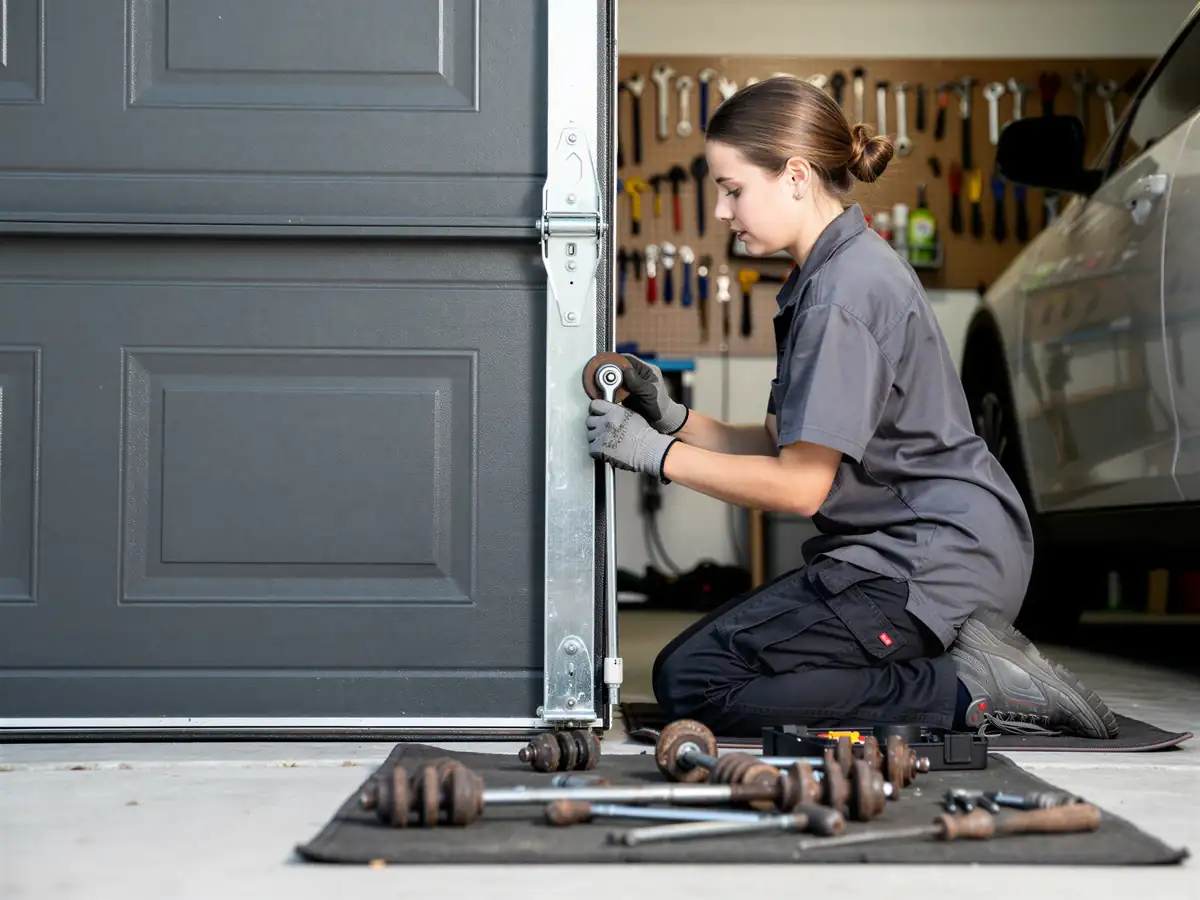
On a torsion system, the job is winding down what's left of the broken spring safely, pulling both springs as a set - we don't replace just one side of a pair, even if only one broke, because mismatched tension wears the new one out fast - and setting the new springs to the door's actual weight before testing the balance by hand. For a door built in the early 2000s, that balance check matters more than people think; insulated panels from that era are heavier than the uninsulated steel doors on older homes, so the spring has to be wound to the right number of turns for that weight, not just swapped in and bolted down. We finish by running the opener through a few full cycles and checking the auto-reverse, since a spring job on a heavier door can expose an opener that was already struggling to lift it.