Why It Happens Here
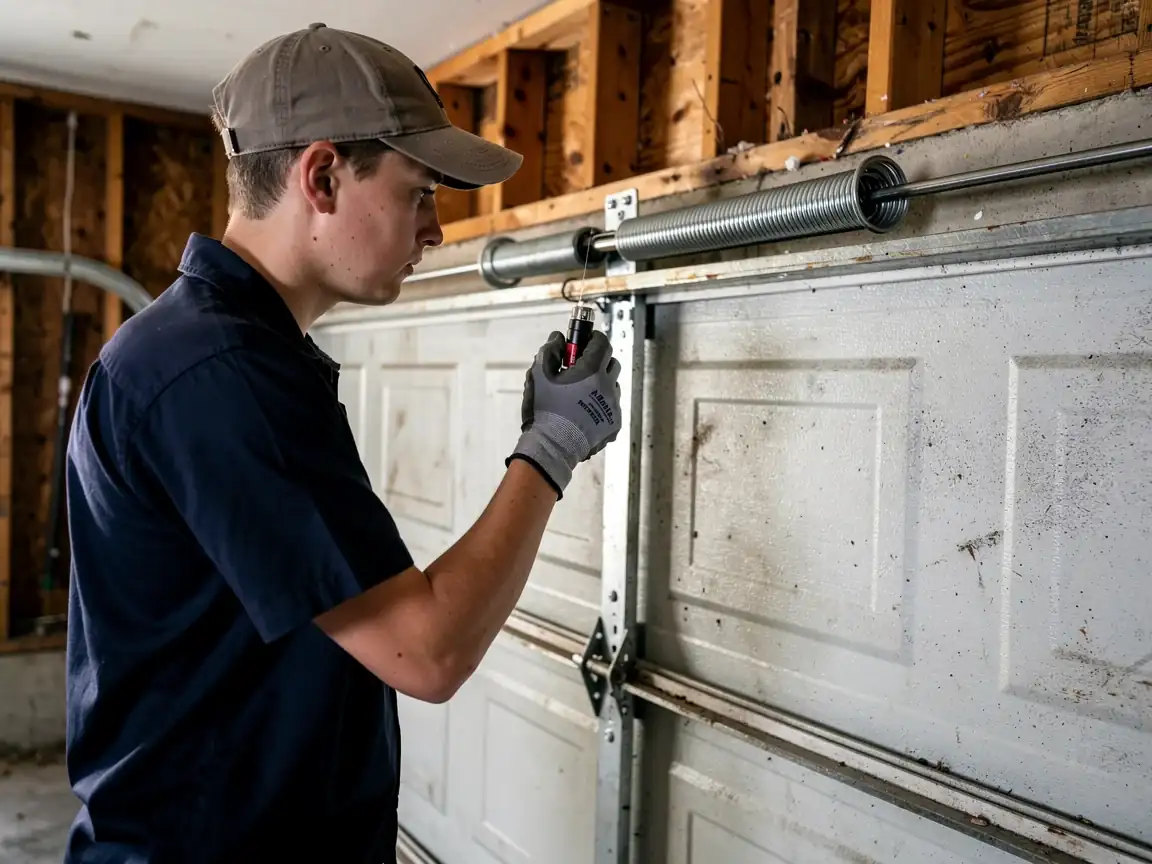
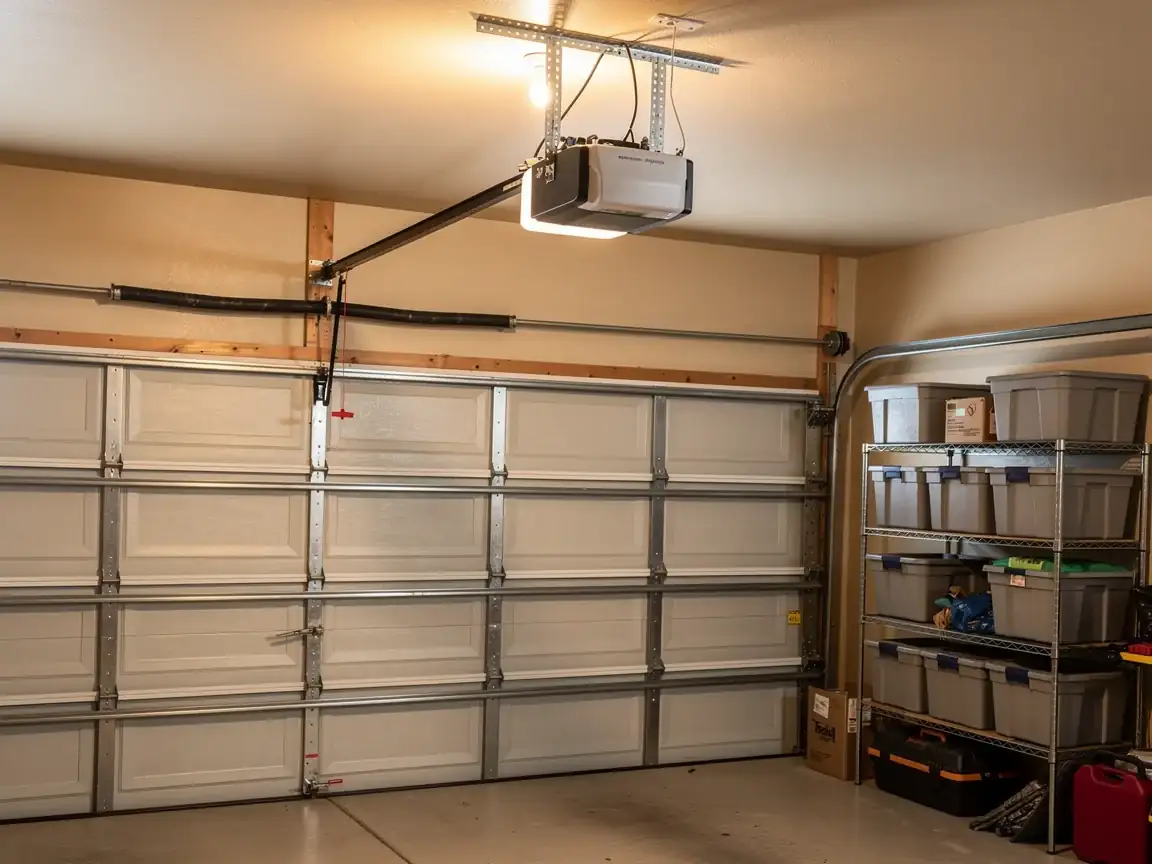
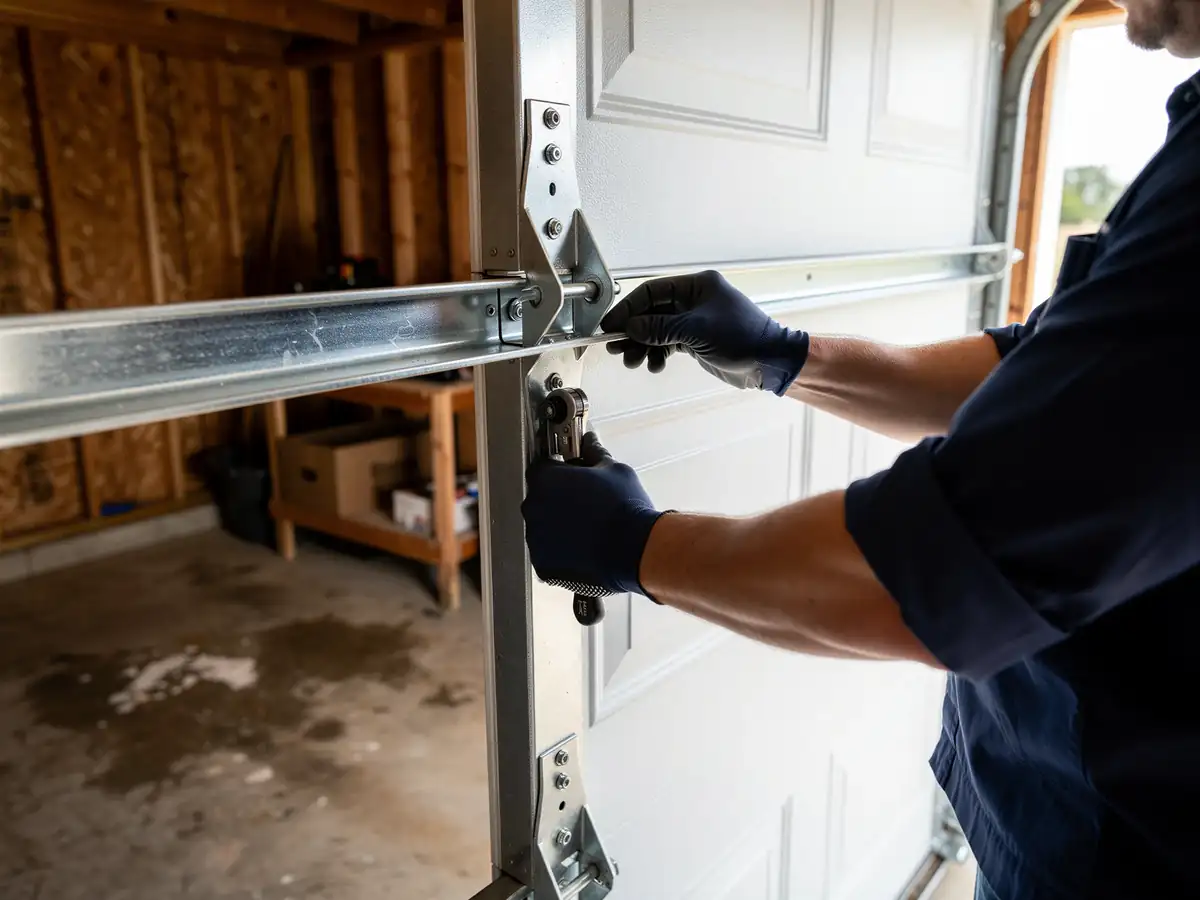
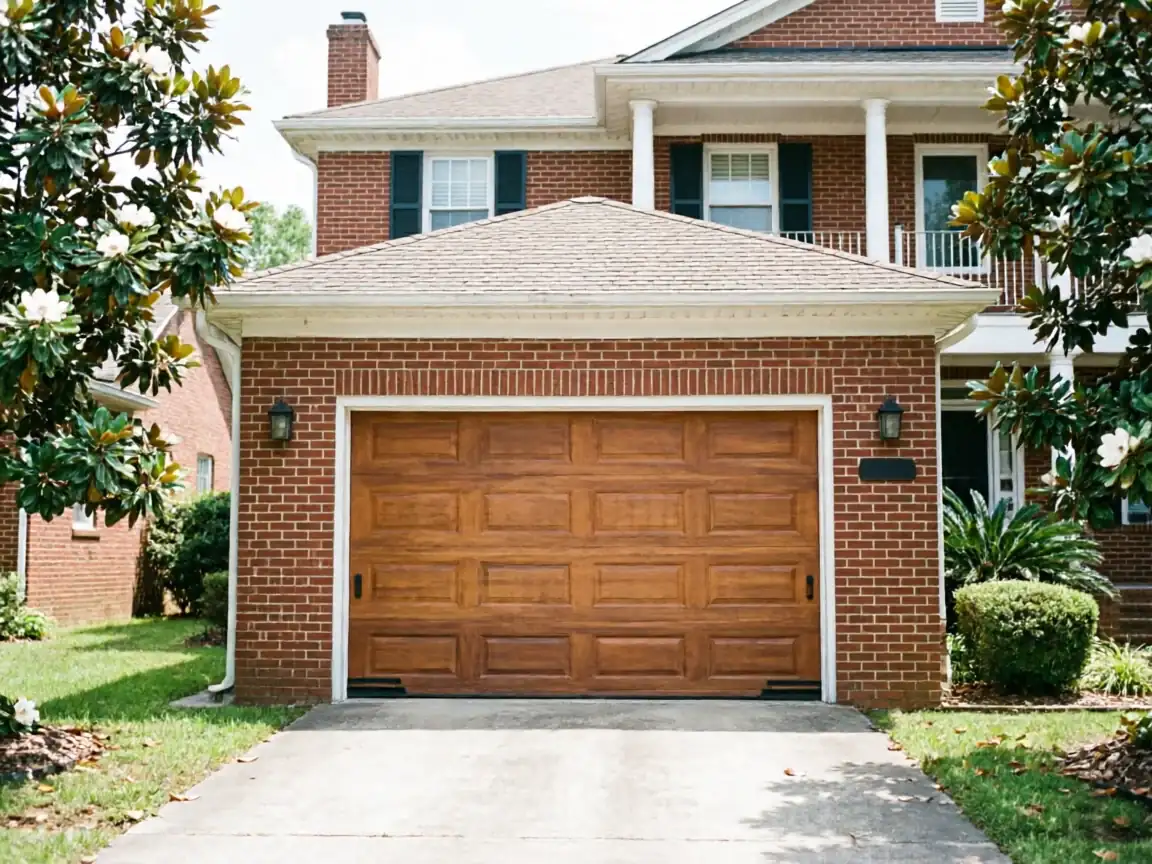
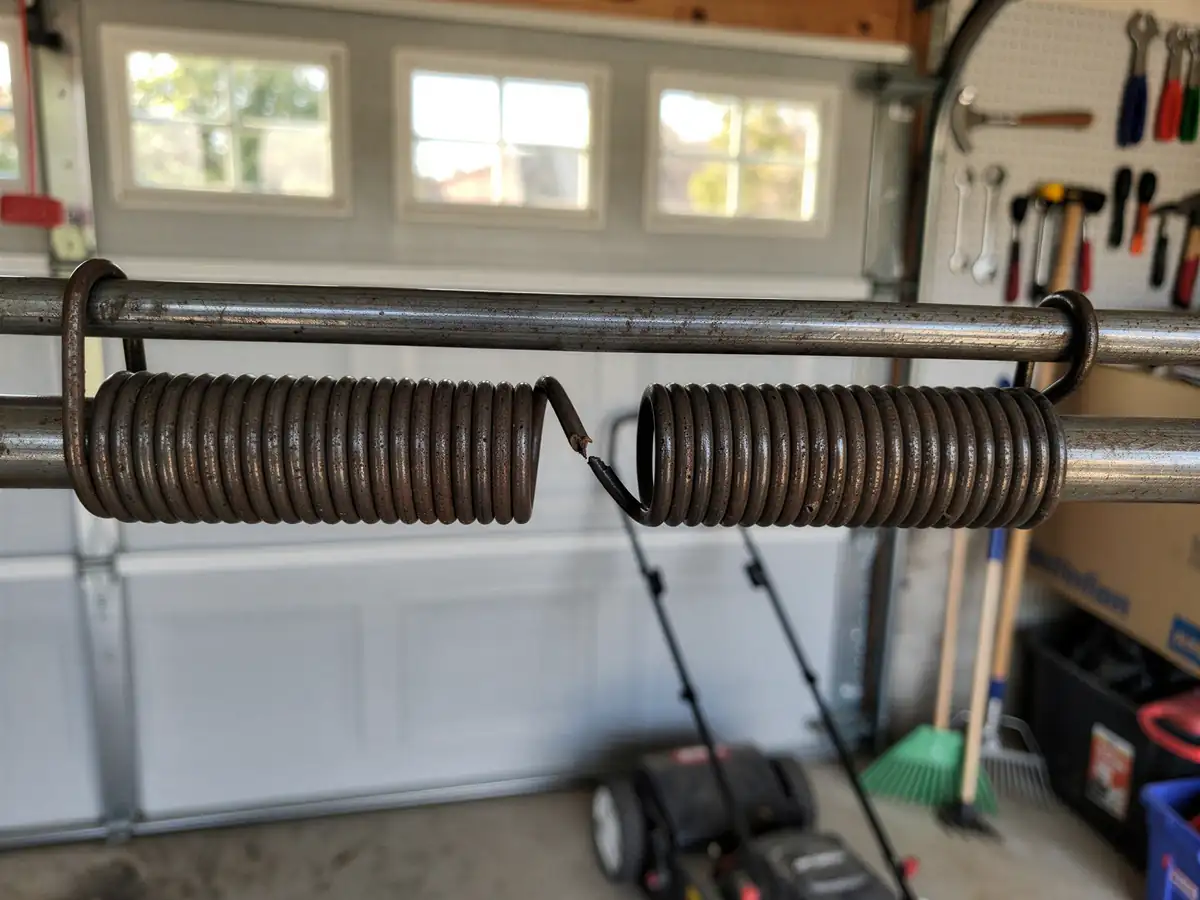
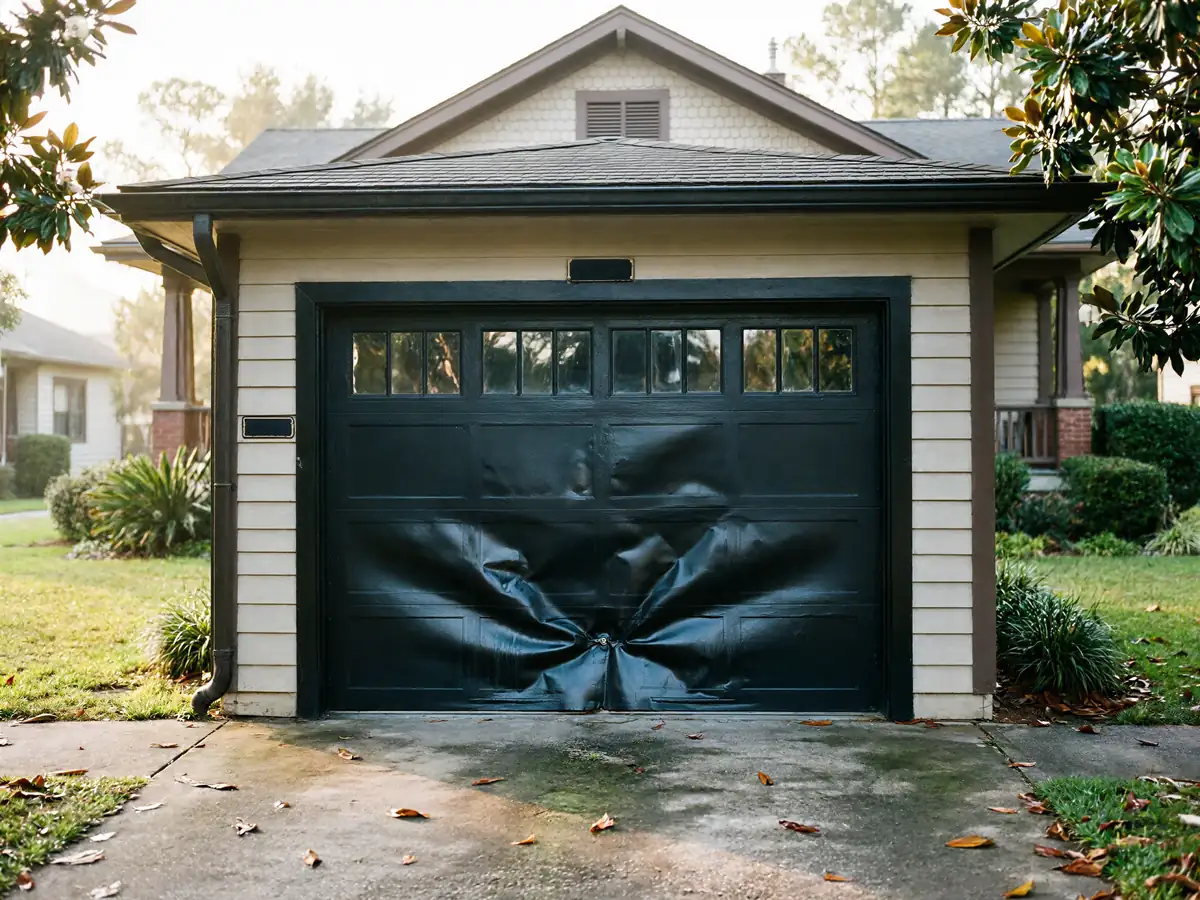
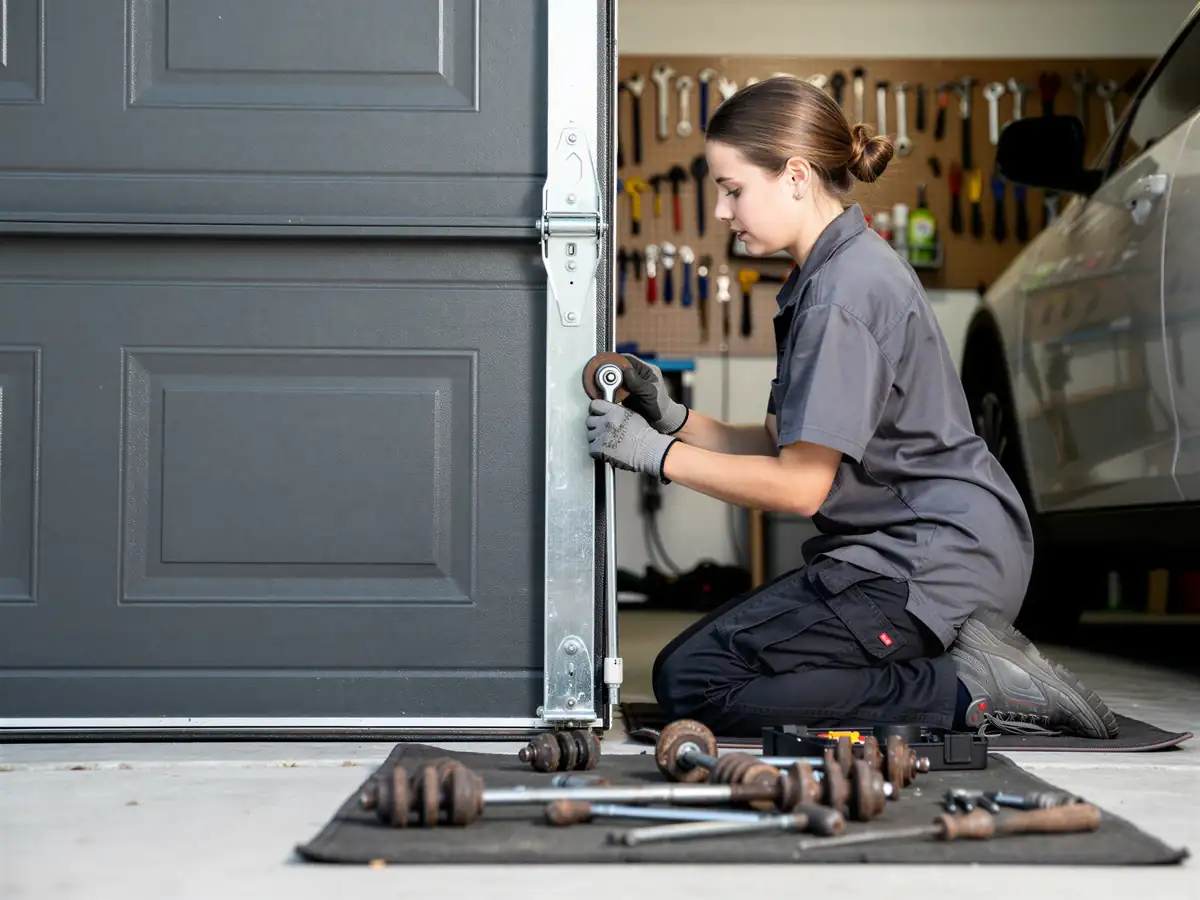
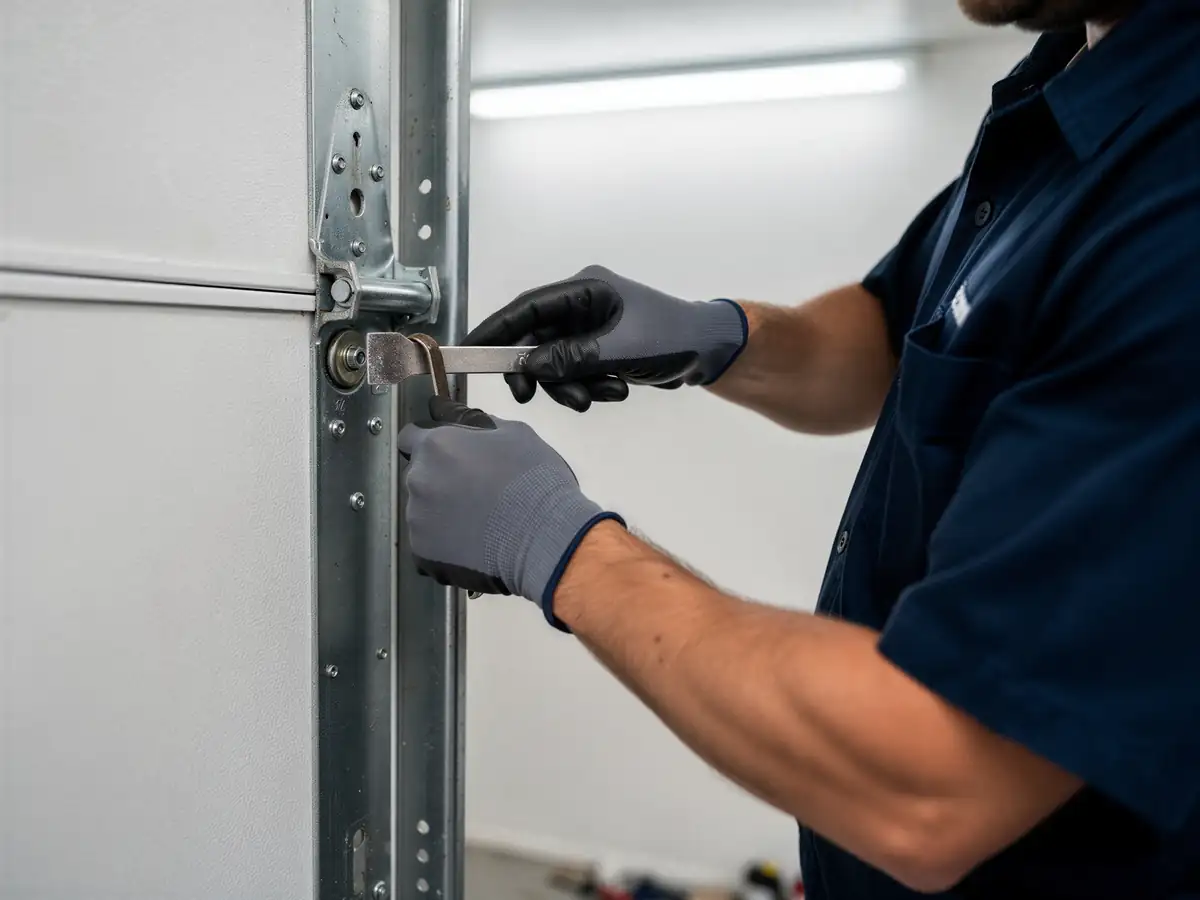
The complaint we hear most from Palmetto is the same one: the door rolls a few inches, then jumps sideways out of the track instead of going up. That's almost never a mystery once you look at the hardware. Most houses in this part of the service area went up around 1989, and builders that year leaned on light-gauge steel roller track bolted to the jamb with a handful of lag screws rather than the heavier reinforced track you see in newer construction. Over three decades those screws work loose in the framing, the track walks a few degrees out of plumb, and the rollers start riding the edge instead of the channel. One hard gust, one quick close, and the door pops free. Extension-spring setups common to that build era make it worse, because the cables that should keep tension even on both sides have more room to go slack when a bracket shifts. None of this is a defect in the door itself. It's wear in hardware that was never meant to last forever, meeting a house that's now old enough for it to show.
How Long You Are Without the Door
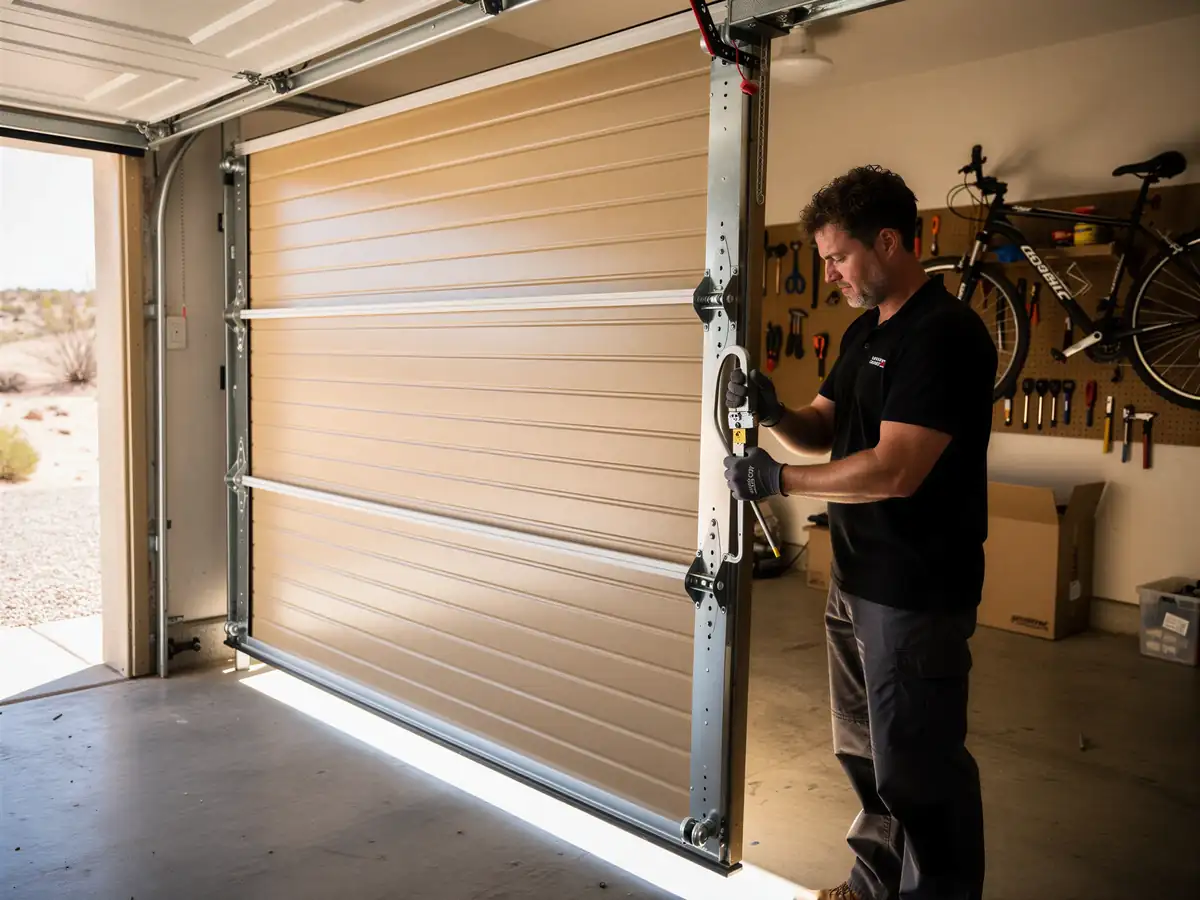
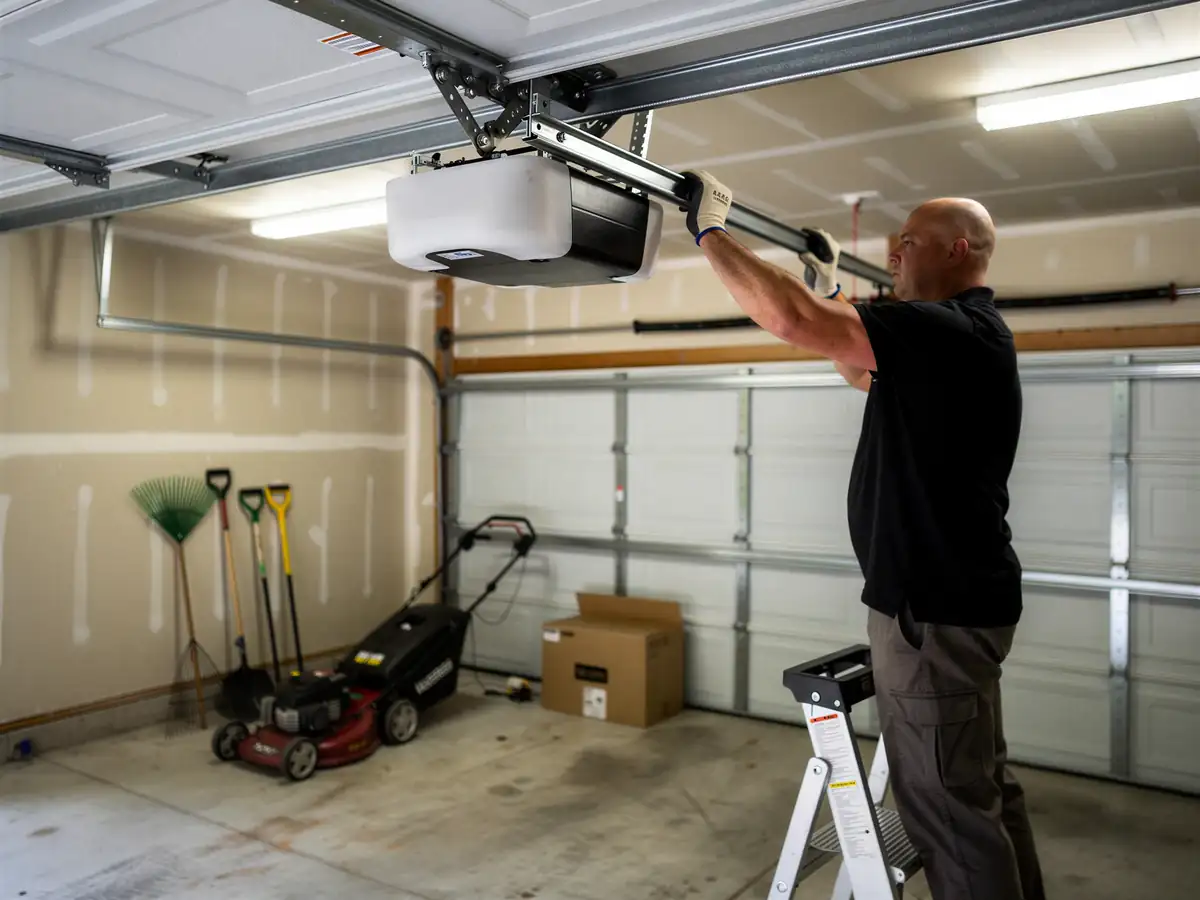
We don't keep a crew stationed in Palmetto. The truck comes from Newnan, about 12 miles up the road, so the honest answer is that your wait includes drive time before any wrench touches the track. That's not a response-time promise, it's just the geography of how this area gets covered. Once the truck is on site, an off-track repair on a single door is usually the fastest job in the van, assuming the track itself isn't bent beyond re-aligning. A door that's been forced back onto a bent track by someone in a hurry, or left hanging on one cable while the other let go, takes longer because we're now also checking the panel for stress damage. If you can safely get the car out and leave the door where it sits, do that and call rather than keep running the opener against a jammed track.
Can You Do This Yourself
If the door is off the track but the springs are still intact and under tension, leave it alone and call. That's the one situation where a homeowner can genuinely get hurt, because a spring under load behaves like a loaded wrench if the wrong bracket gets removed first. If the door is fully down, the opener disconnected, and there's no visible tension left in the system, you can sometimes walk the roller back into the channel by hand and check the track screws with a screwdriver. What you shouldn't do is force the door up and down on a track you know is bent, hoping it seats itself. It won't, and you'll usually turn a bracket repair into a bent-rail replacement. Our limitation here is the same one any honest shop has: we can't tell you over the phone whether your track is bent or just knocked loose, and guessing wrong before we see it risks a second trip.