Can You Do This Yourself
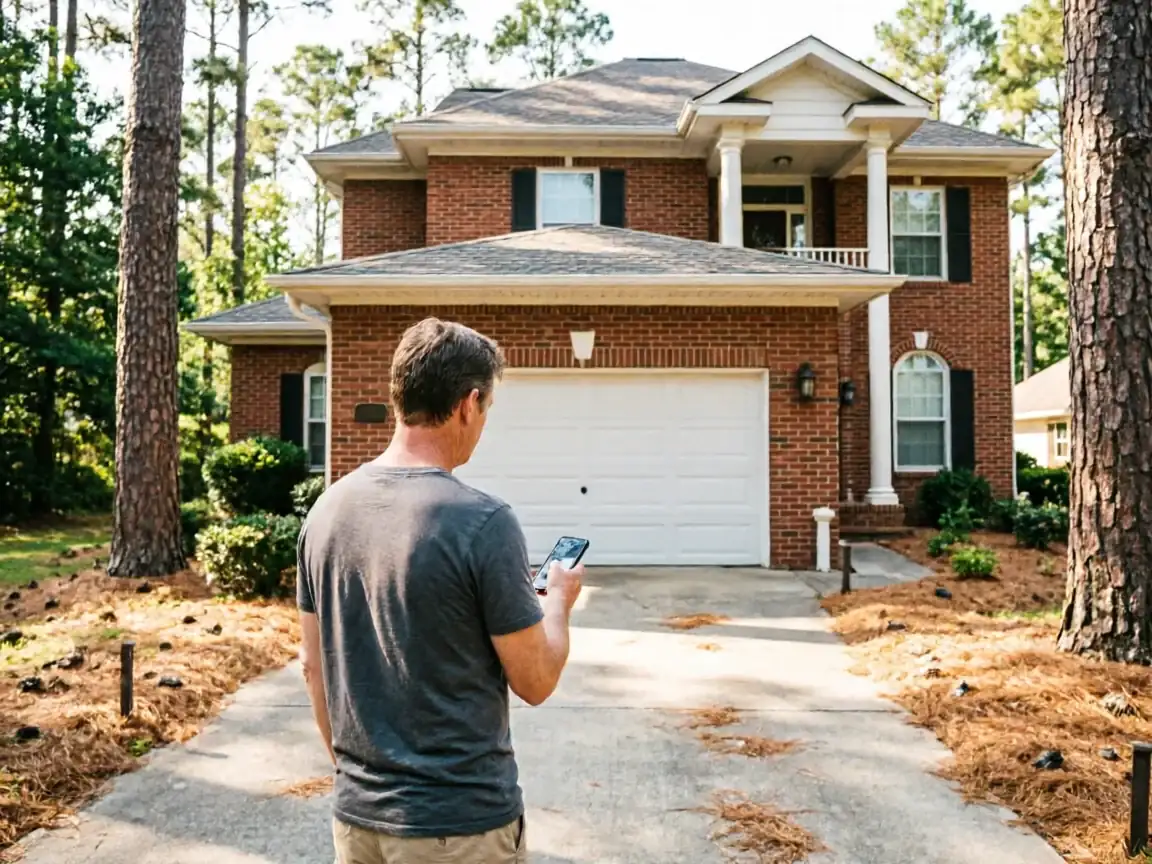
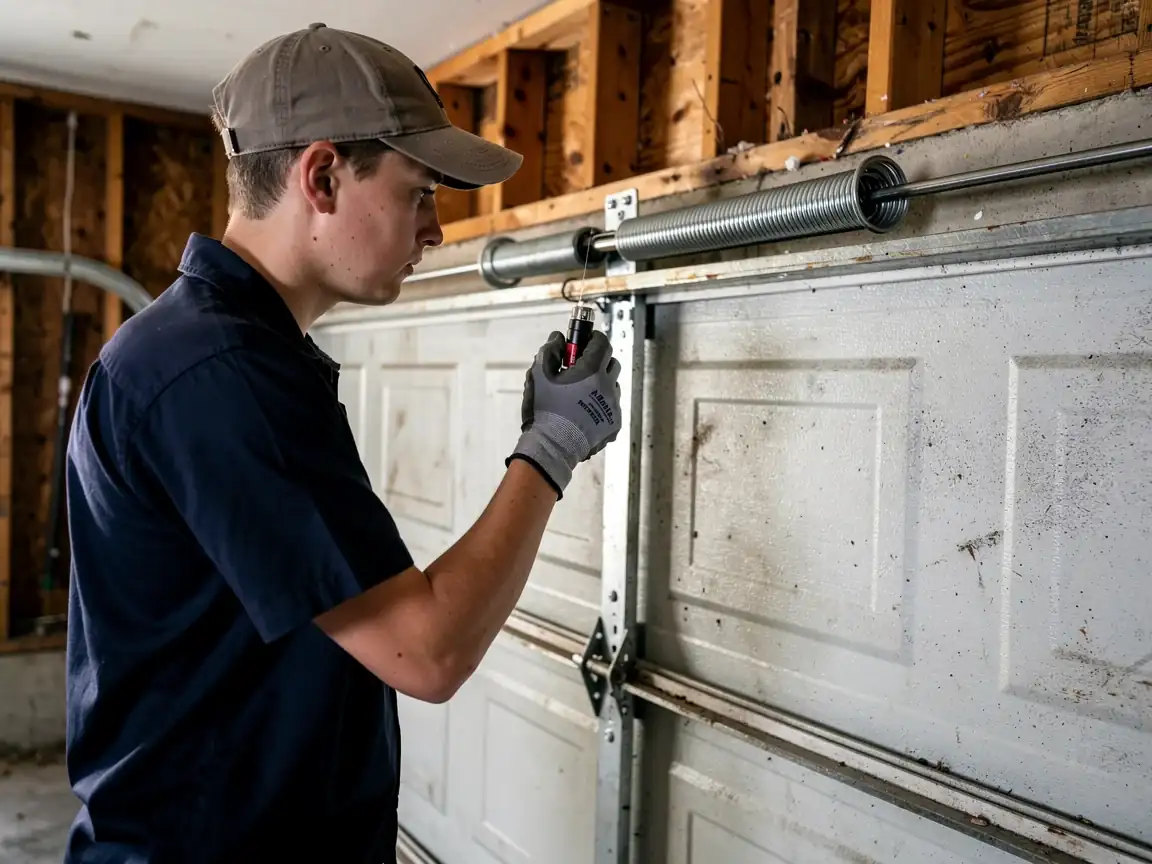
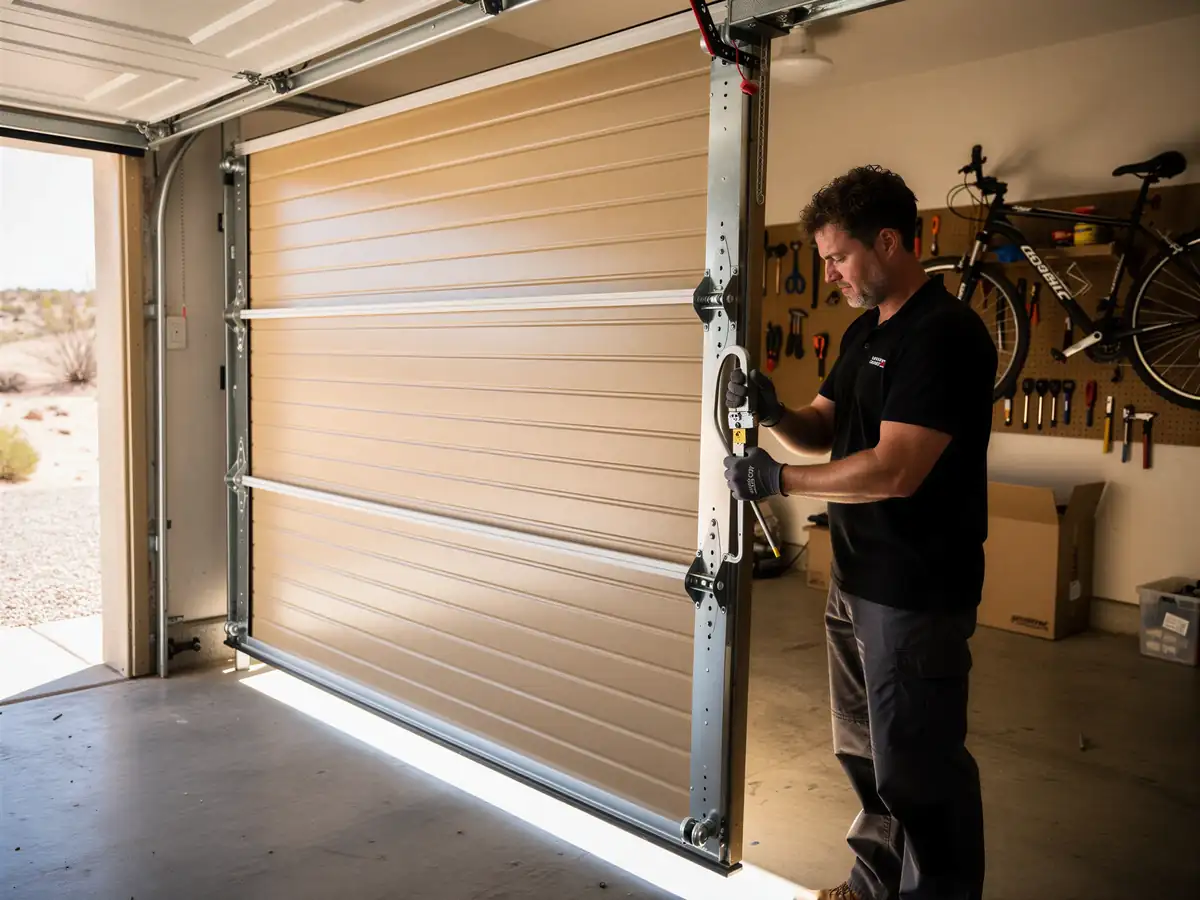
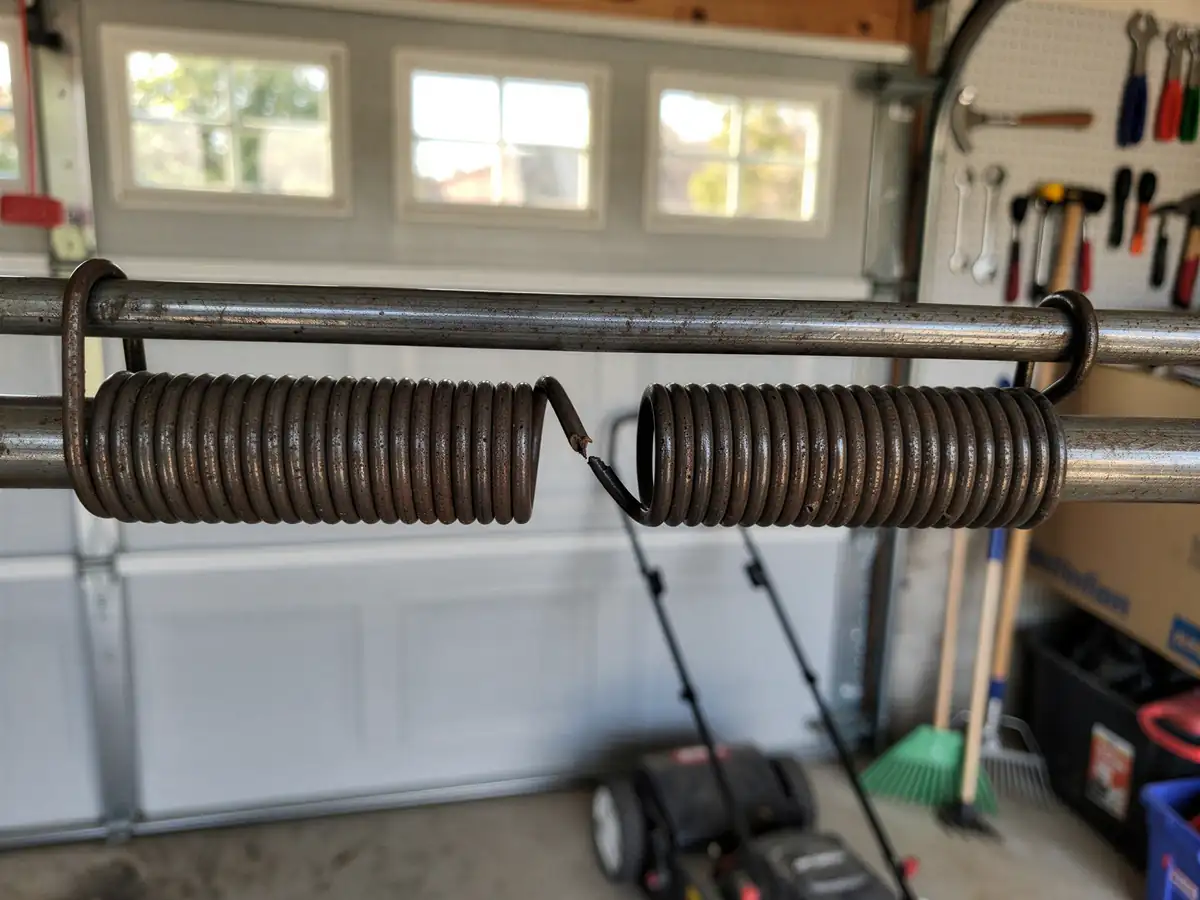
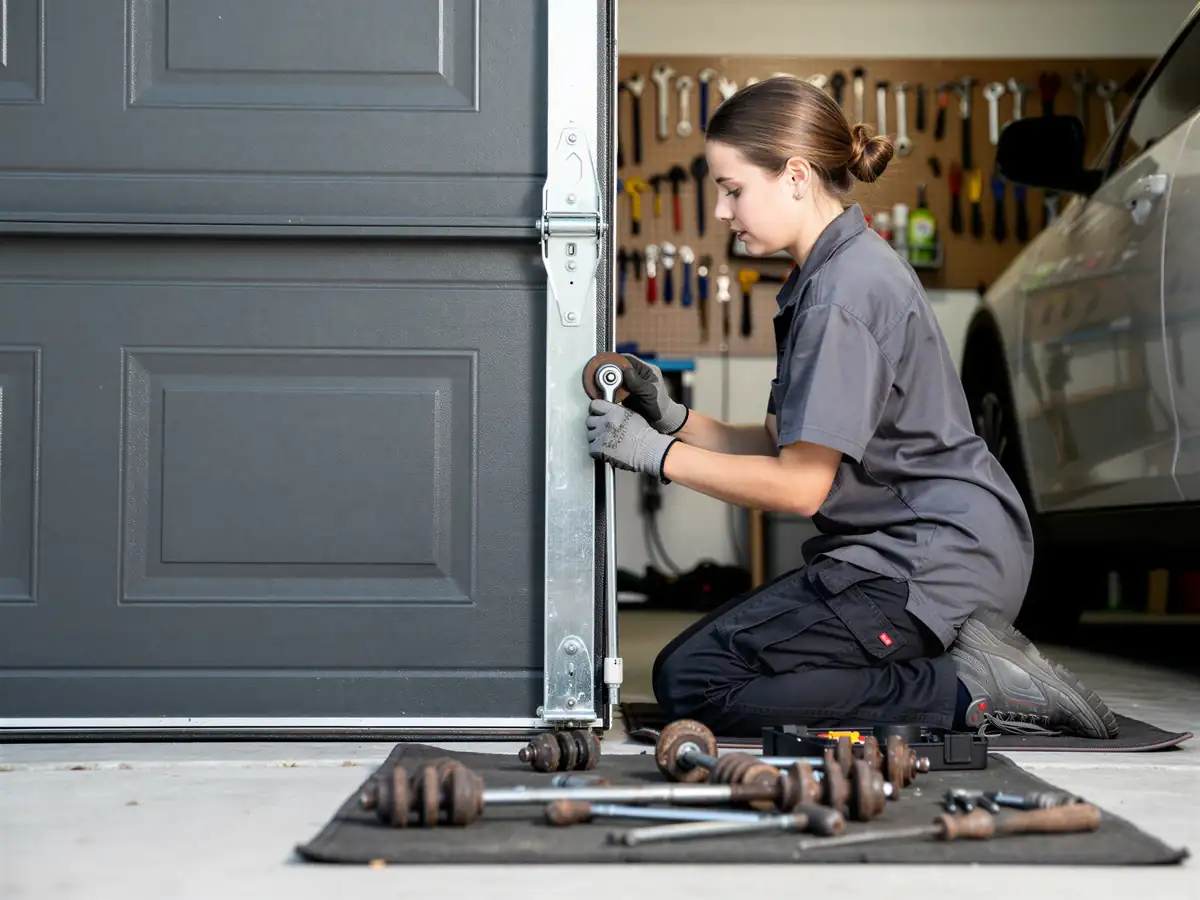
A lot of East Newnan is built around 1964, which puts the doors here at the old end of what we see across the rest of the service area, where the median build year runs closer to 1994. That matters because a door from the mid-60s is usually a single-layer steel or wood-composite slab on simple track, not the foam-core sandwich doors that came later. Tightening hinge bolts, clearing a track of leaves, or lubricating rollers is fine to do yourself with the power unplugged and the door down. Torsion springs are not. A door this old is wound tight enough to break a wrist or worse if the winding bars slip, and the hardware on a house from 1964 has often been re-tensioned or swapped out piecemeal over sixty years, so you can't assume it matches a modern spring chart. If the door won't move, is off-track, or the spring is visibly split, that's a call, not a weekend project. One honest note: if you've already pulled the release cord and the door is jammed half-open, don't force it further - you can bend the track in a way that turns a spring job into a track-and-panel job.
What Is on the Truck
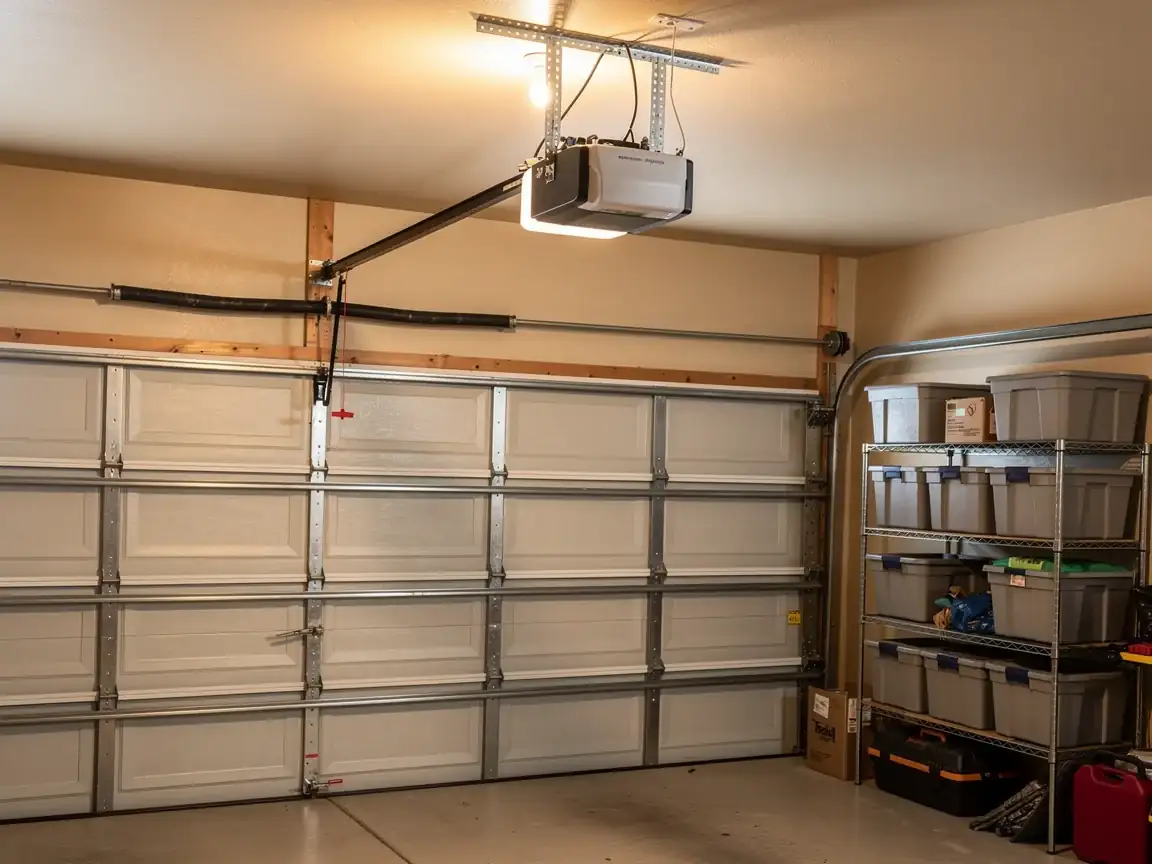
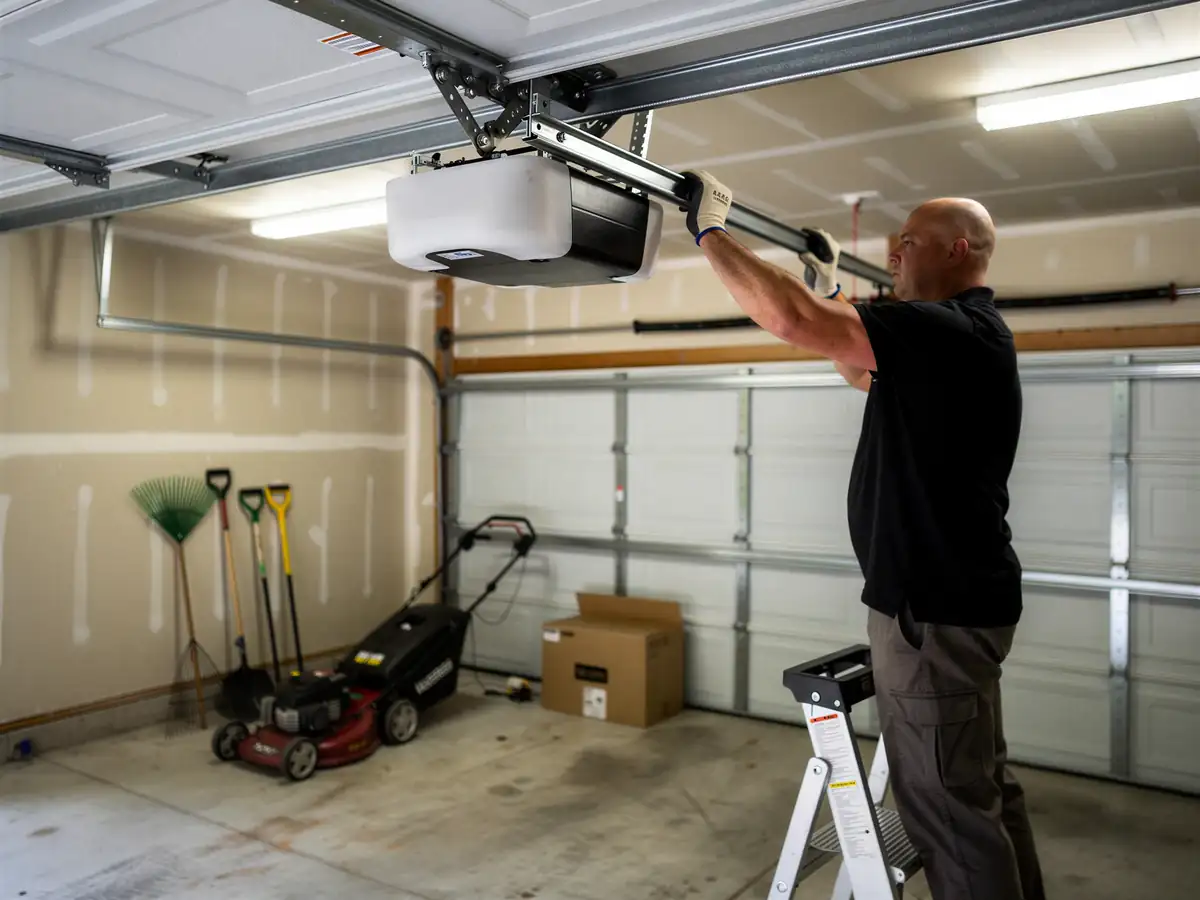
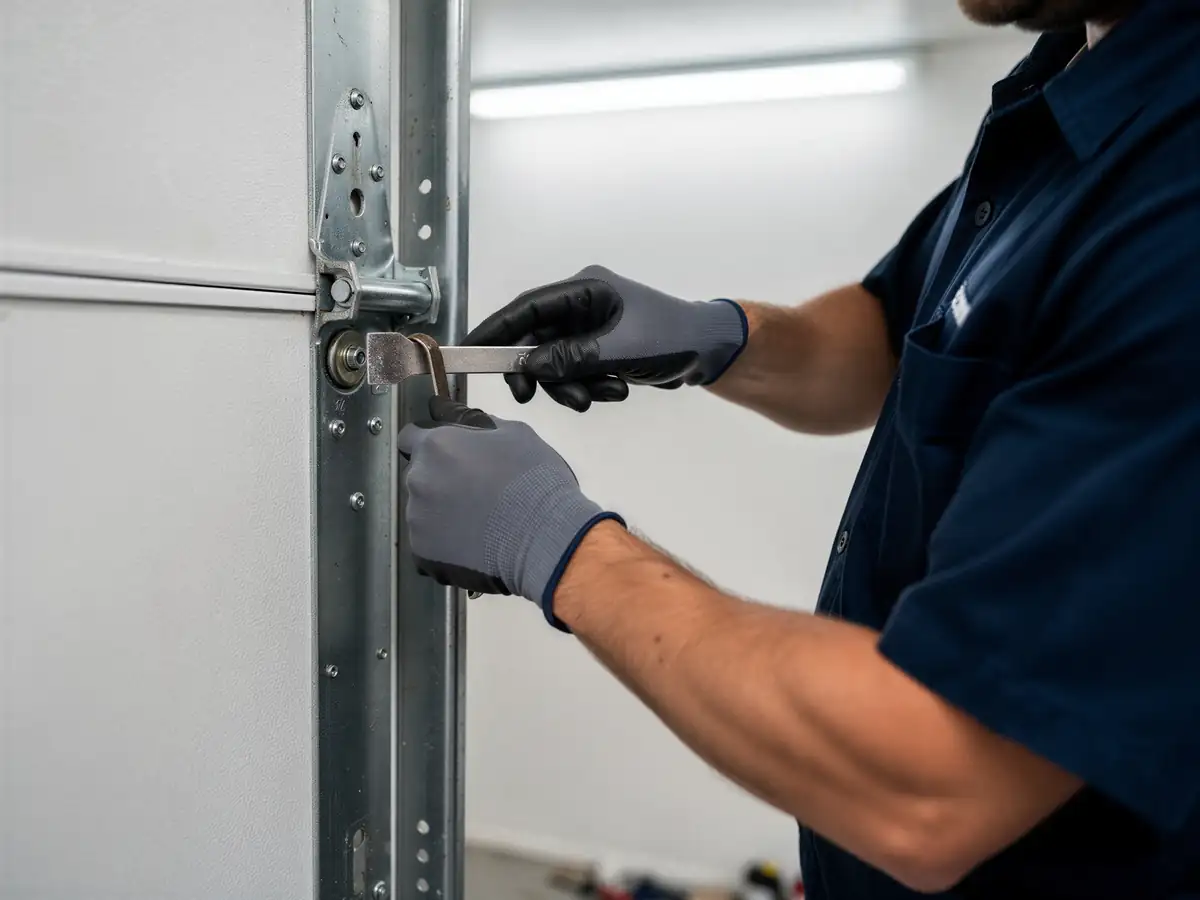
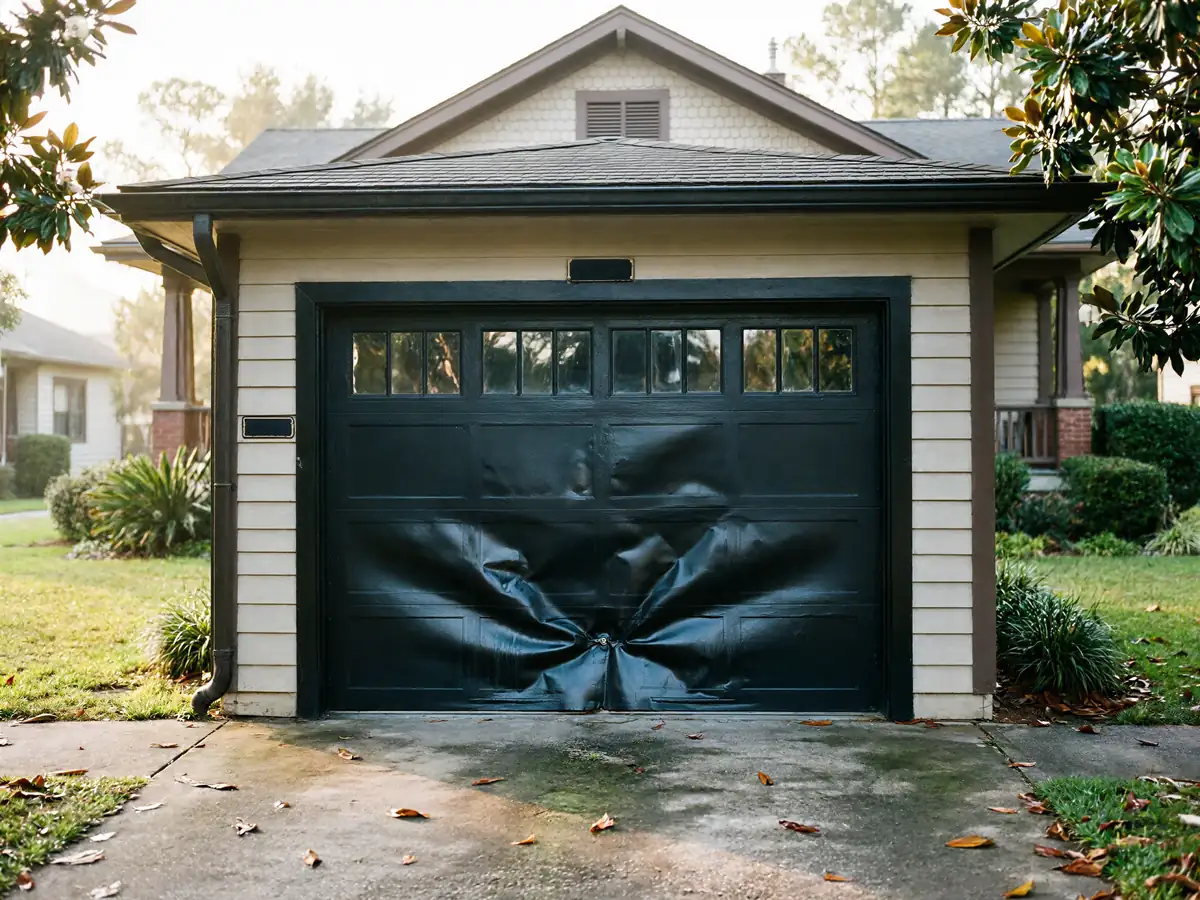
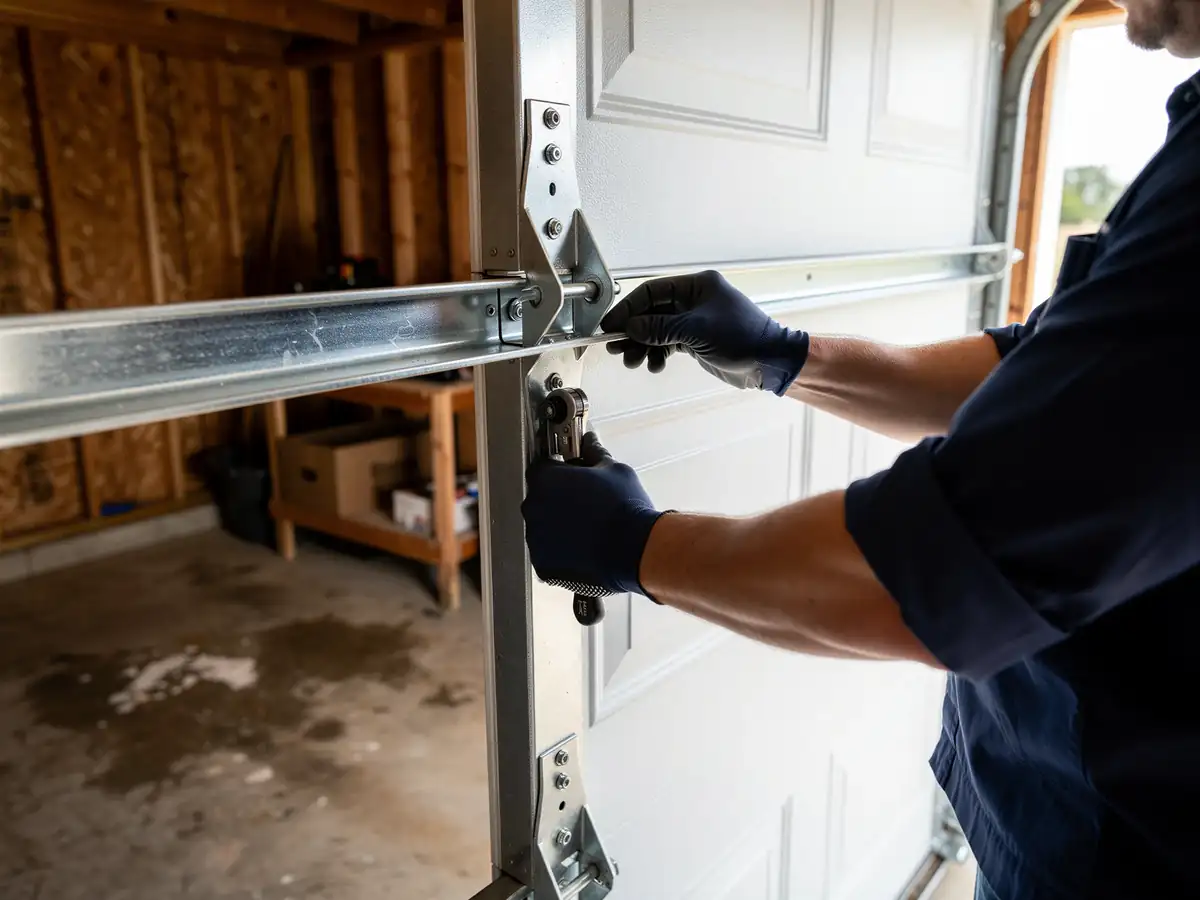
For a neighborhood built mostly in the 1964 era, the truck carries parts sized for older single-layer steel doors as often as modern insulated ones: standard-lift torsion and extension springs in the sizes that fit mid-century track widths, galvanized cable, and replacement hinges and rollers that match the lighter-gauge steel common on doors from that period. We also carry weatherstripping and bottom seals, which matters in a cold-moderate climate where an old, warped door frame lets in more draft than it should. Openers get stocked too - chain-drive units mostly, since that's what fits the headroom and bracket style on garages built before modern insulated doors became standard. What we don't carry on every run are oddball panel sizes. If a door from 1964 has a bent or rusted-through section and the manufacturer stopped making that exact panel decades ago, we may need to order it or replace the whole door rather than patch one piece, and that can mean a short wait instead of a same-visit fix. We tell owners that up front rather than promise a panel match we can't deliver that day.
What the Fix Involves
Most calls here start with us checking whether the door and hardware are even original to the 1964 build or whether a prior owner replaced the opener or spring at some point - that changes what parts we're matching. If it's a spring job, we measure the door's actual weight rather than assume a size, since older doors vary more than newer standardized ones. If it's a seal and weatherstrip job, we replace the full bottom seal and often the side stop molding too, since on a door this old the wood framing has usually shrunk enough that stripping alone won't stop the draft. Given a median household income of $41,080 in East Newnan, well under the broader area's $71,597, we try to repair rather than replace wherever the door and track are still sound, and we say so plainly when a full replacement really is the cheaper long-term option instead of patching a door that's past it. At two miles out, East Newnan is one of the closer stops we make, so getting a second look at a borderline repair doesn't add much to the job.