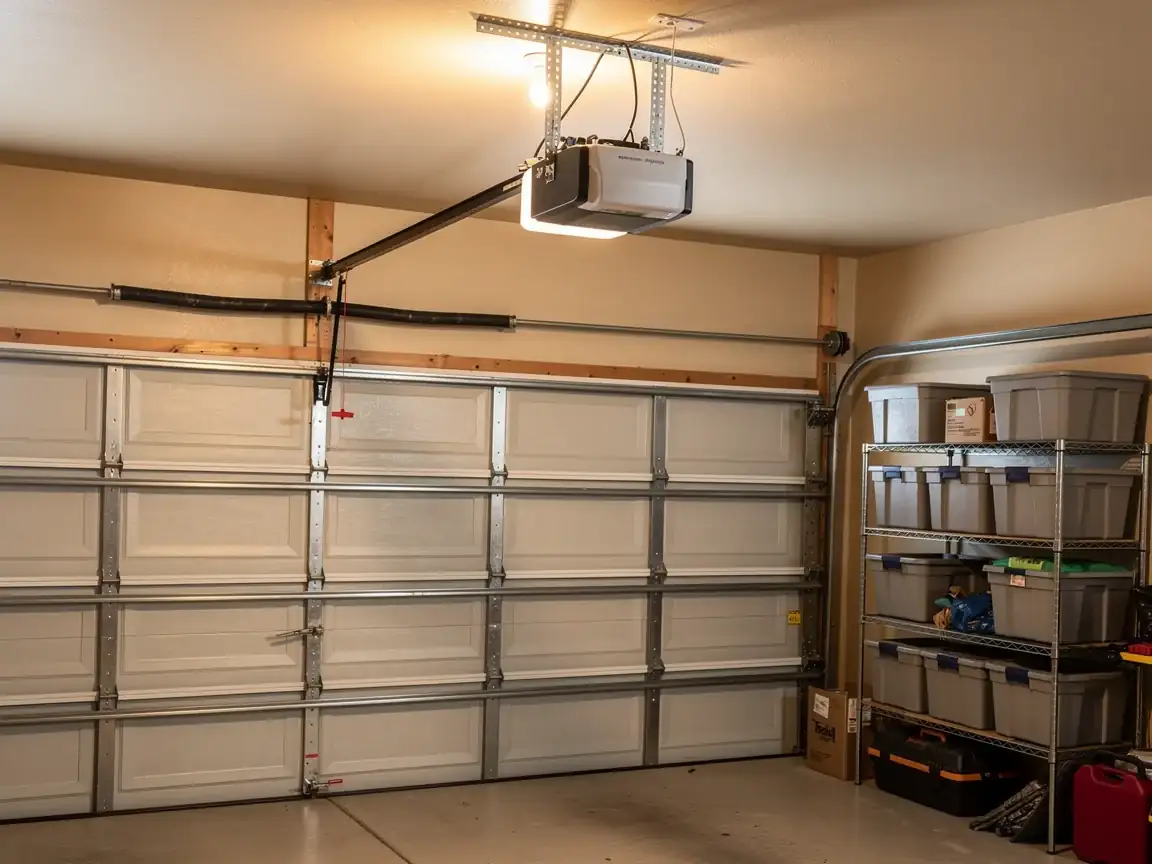
What the Fix Involves
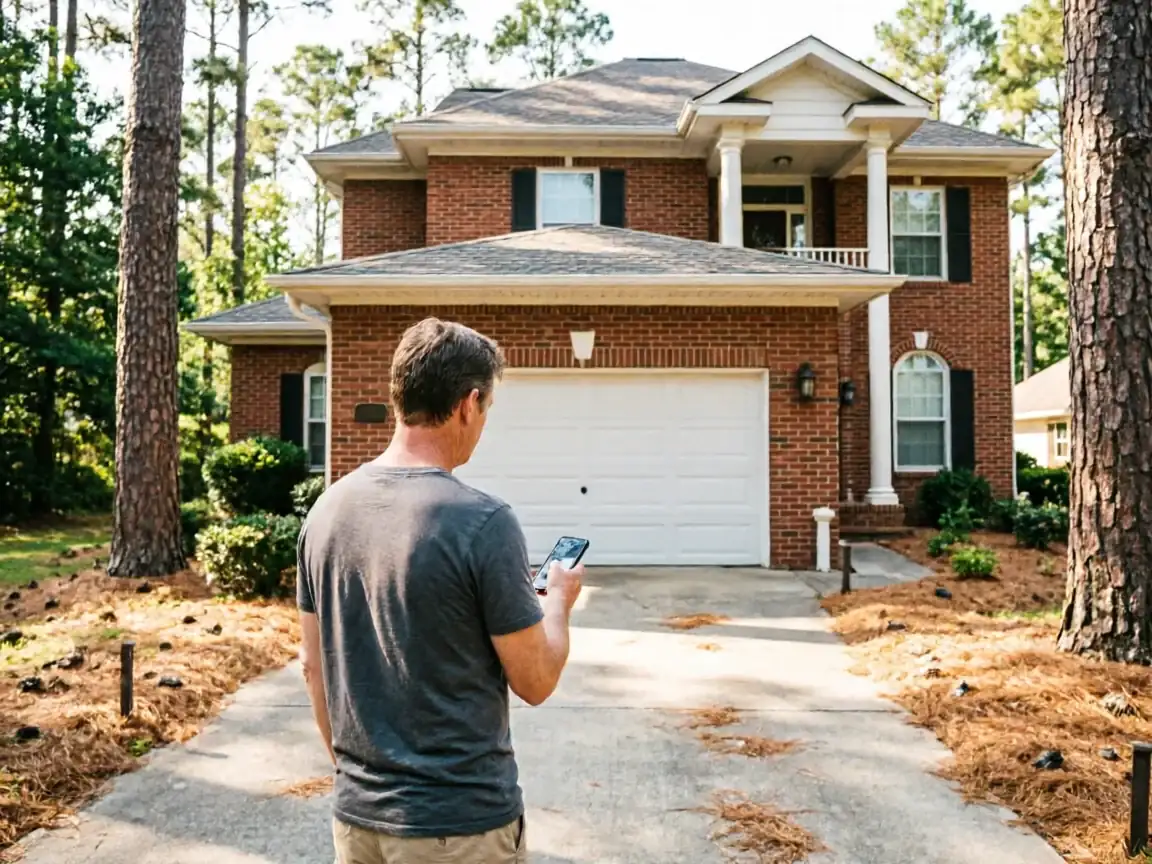
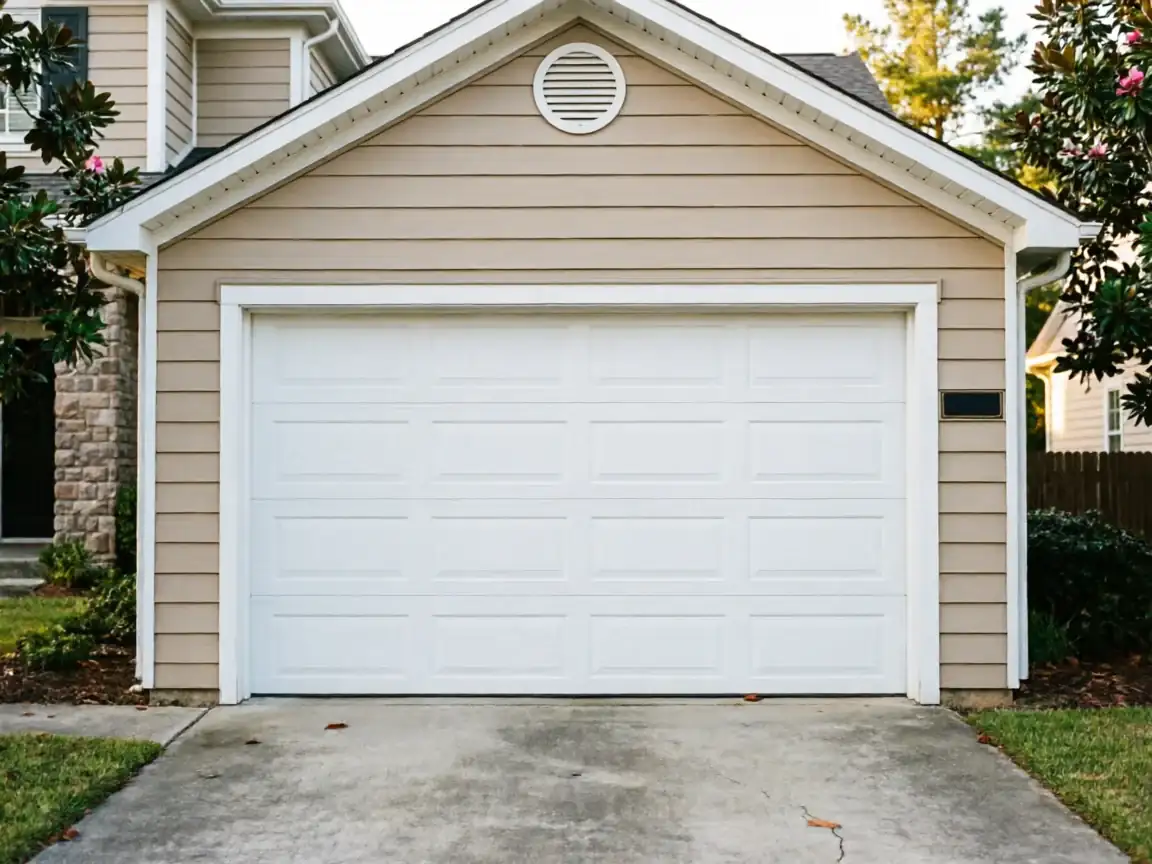
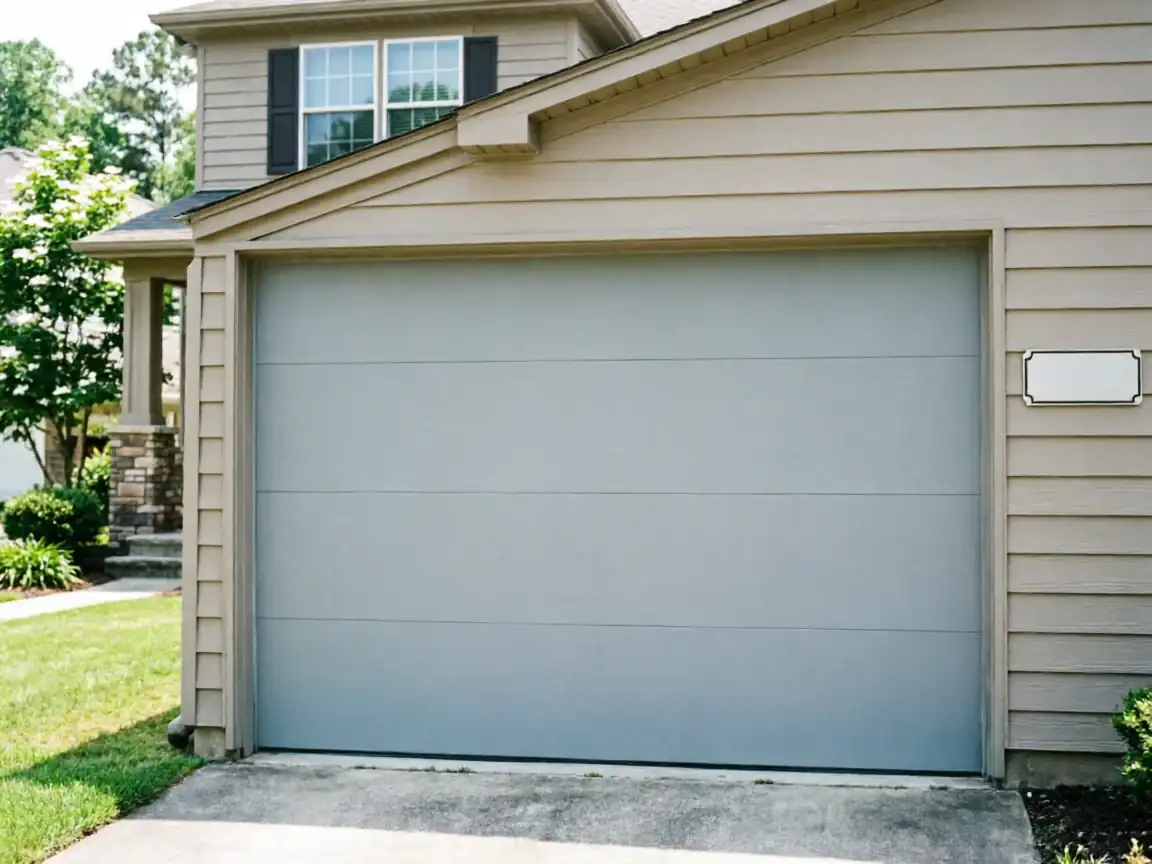
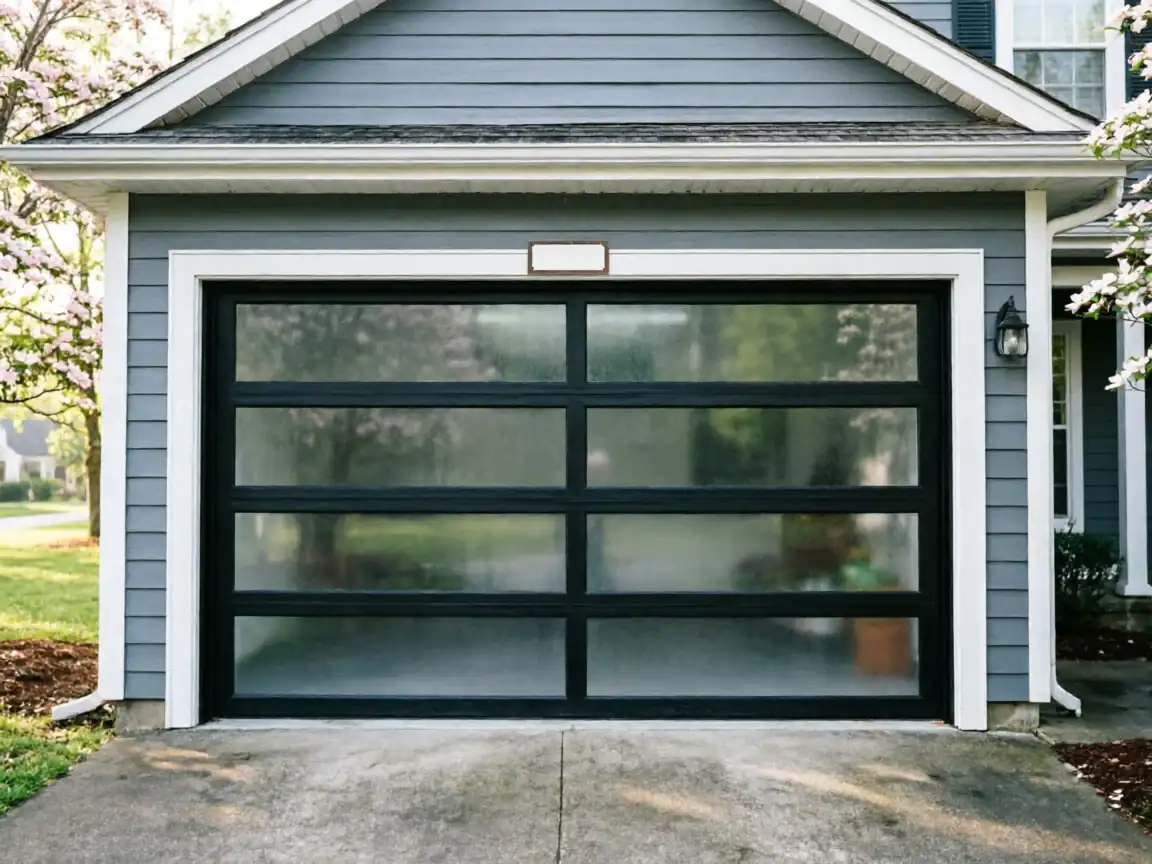
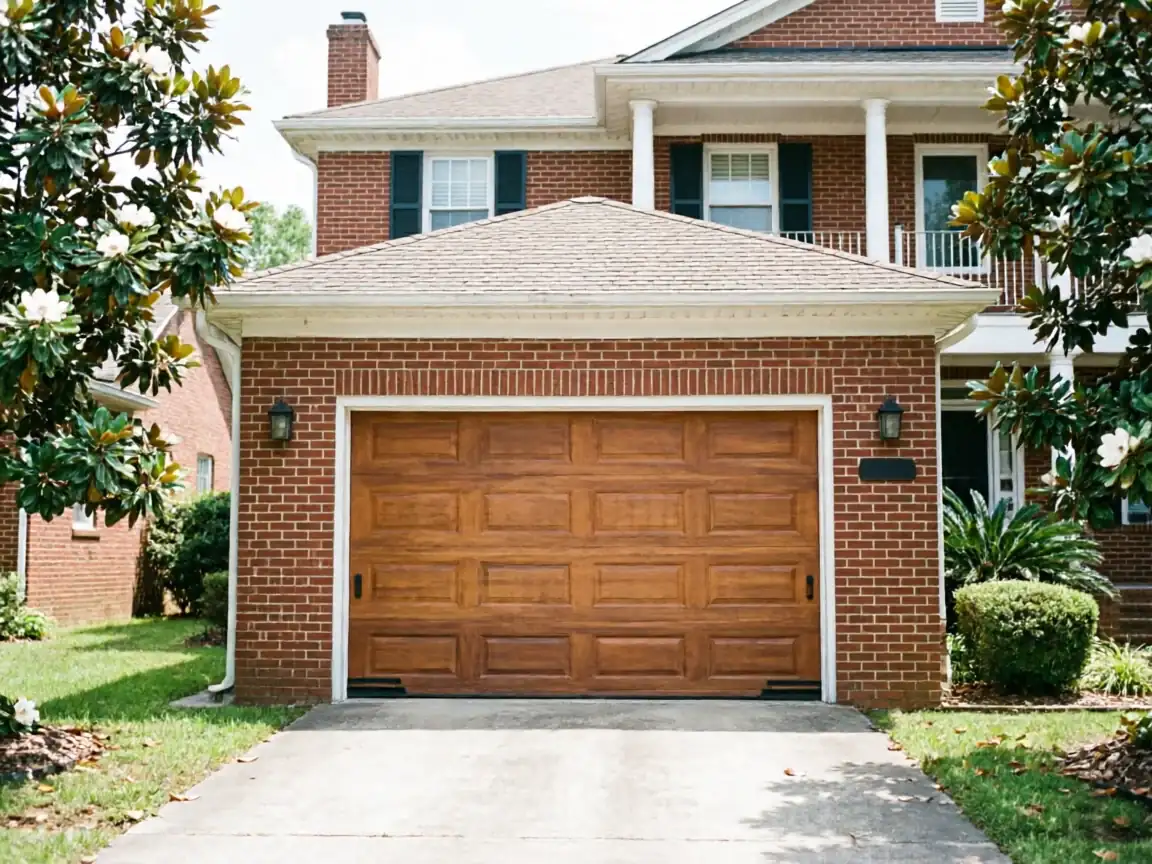
Fairburn sits about 16 miles from our Newnan shop, and the houses out here skew newer than a lot of what we see closer in. At a median household income of $89,276, most Fairburn owners are looking at a door and opener system installed sometime after 2004 - current enough that the repair-or-replace line usually falls on the side of fixing it, not swapping the whole unit. An off-track door on a 2004-or-later build is almost always a roller problem, a bent track section, or a hinge that's pulled loose from the panel, not a structural failure of the door itself.
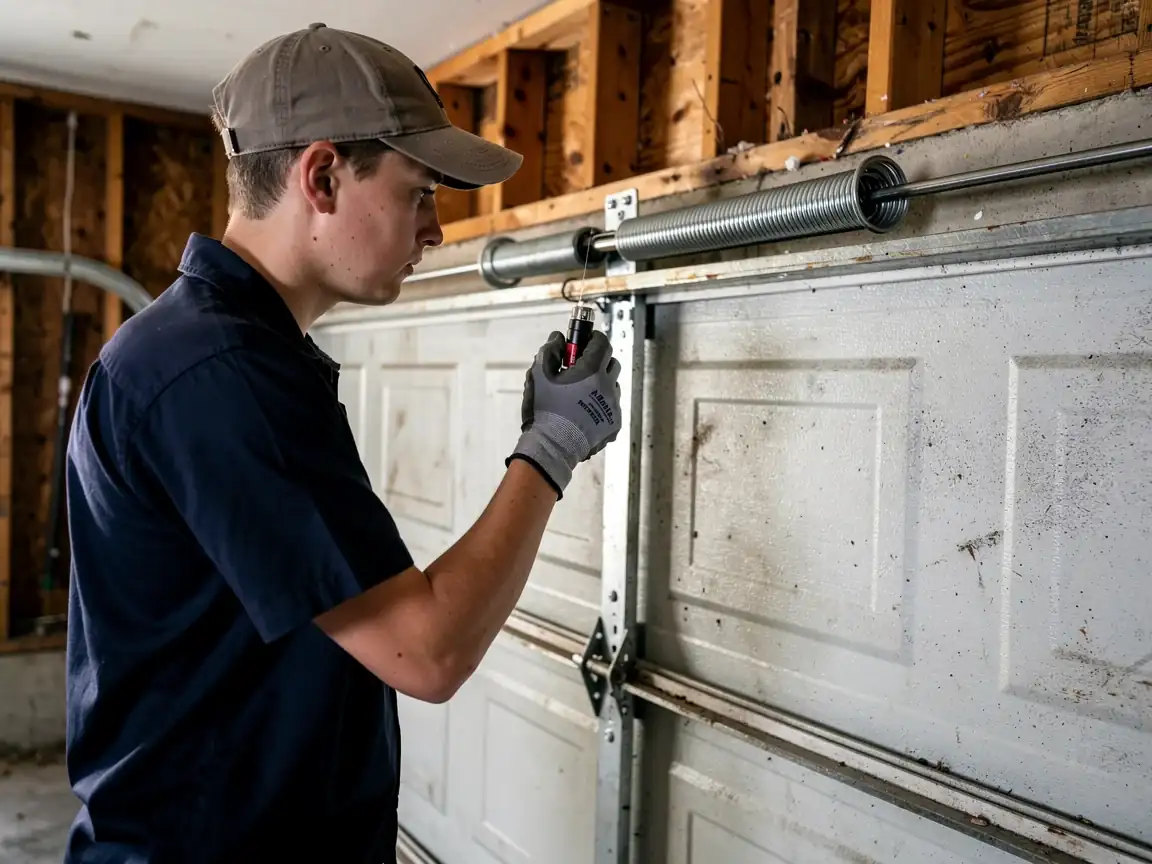
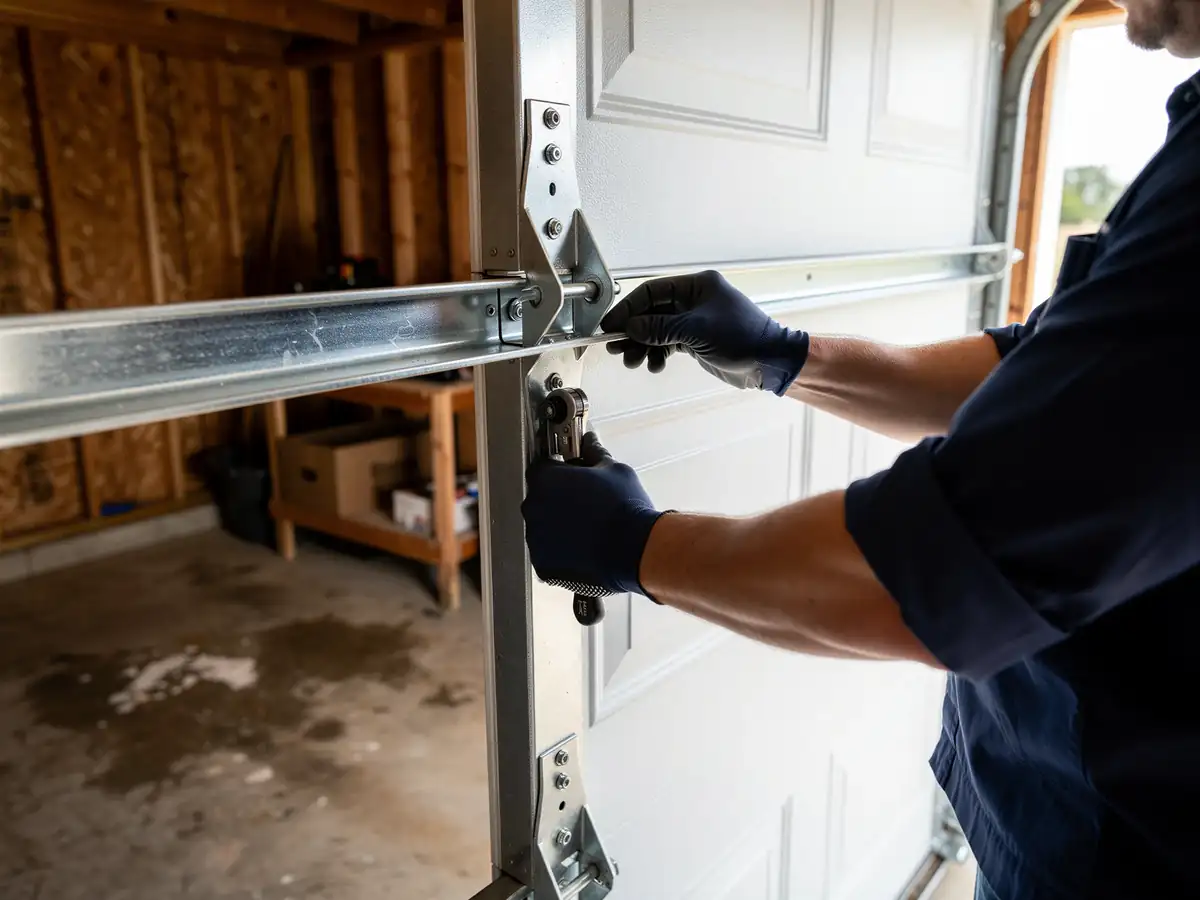
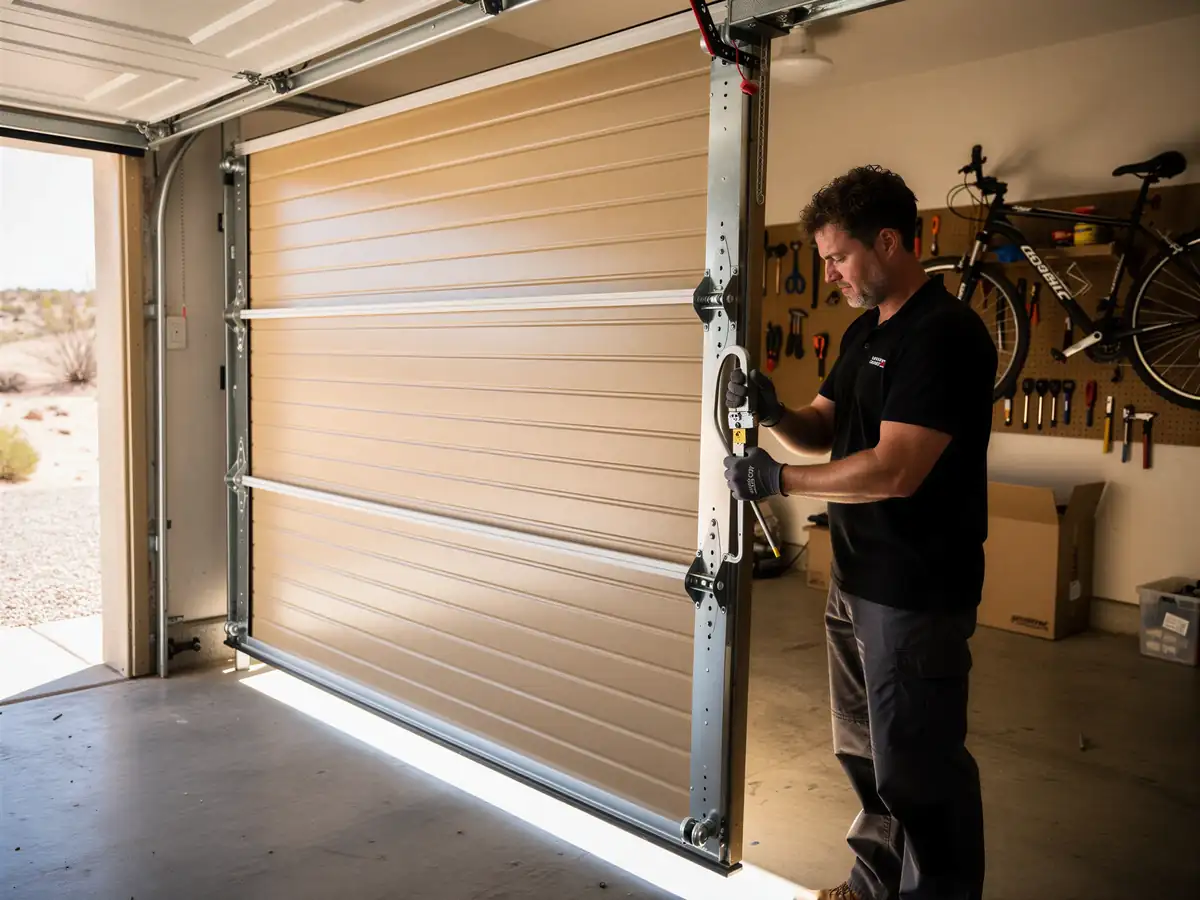
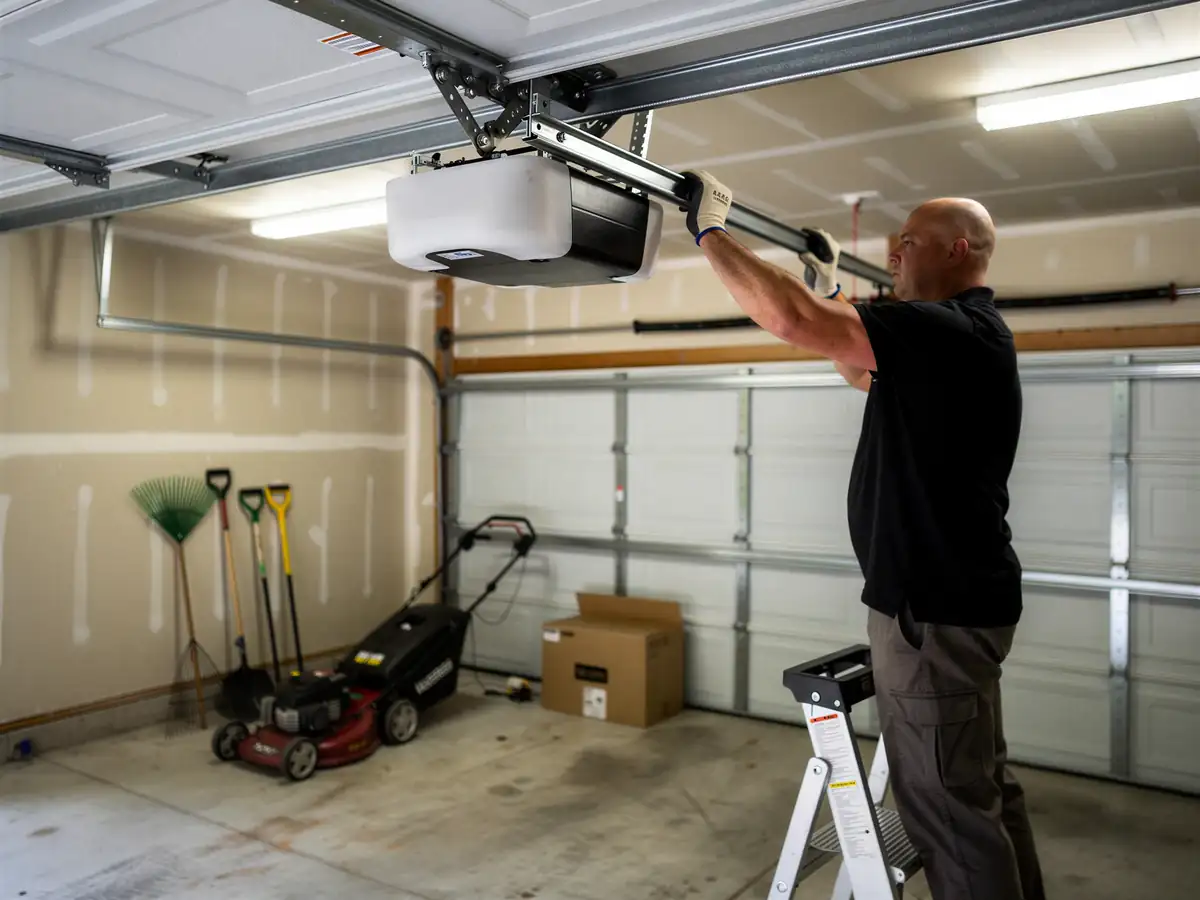
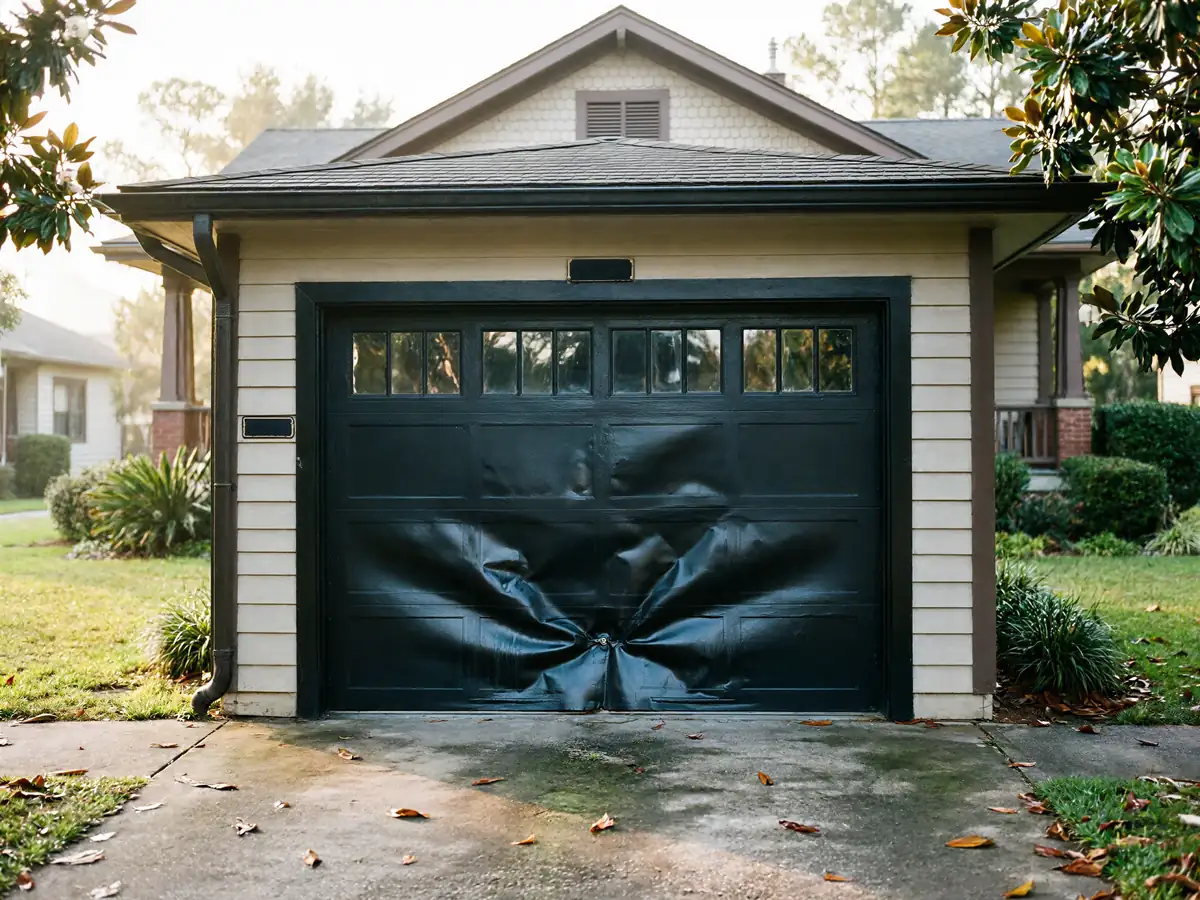
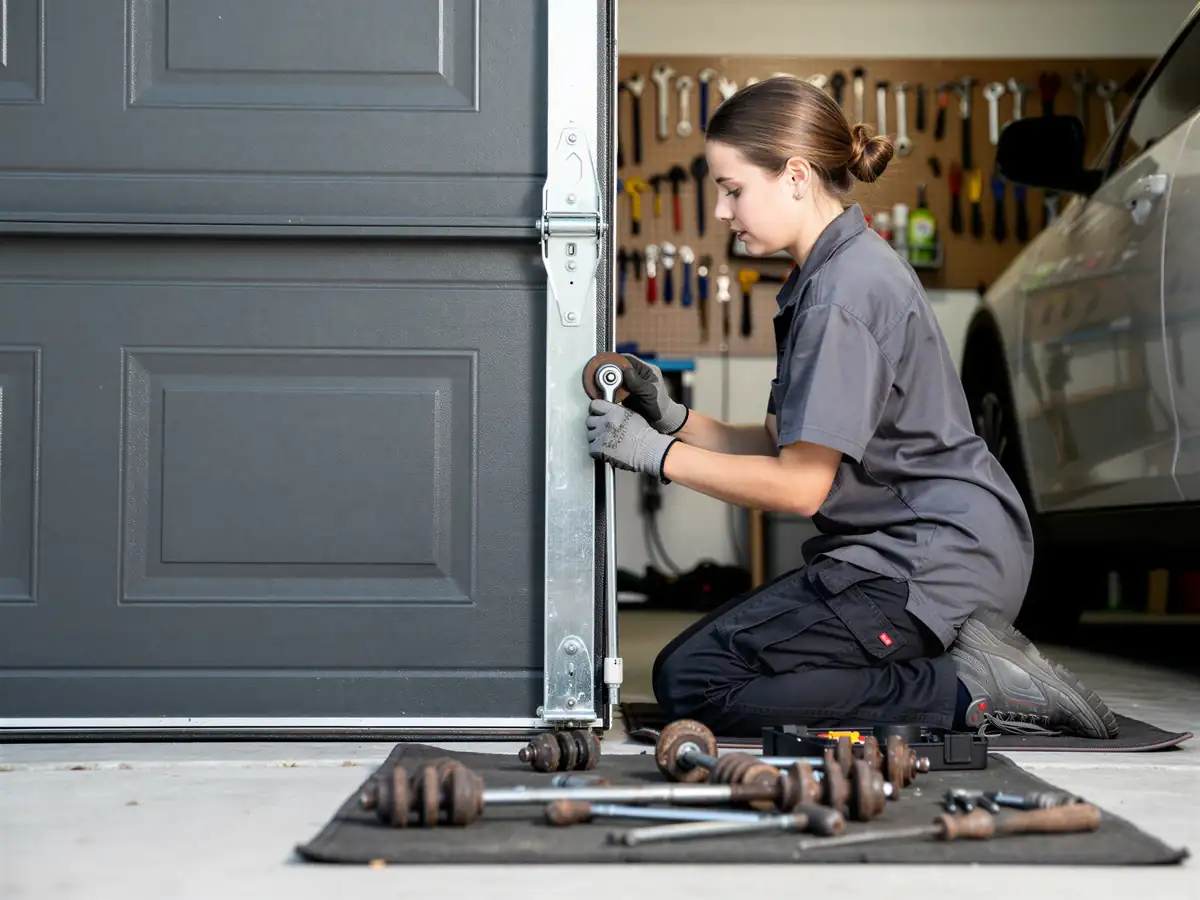
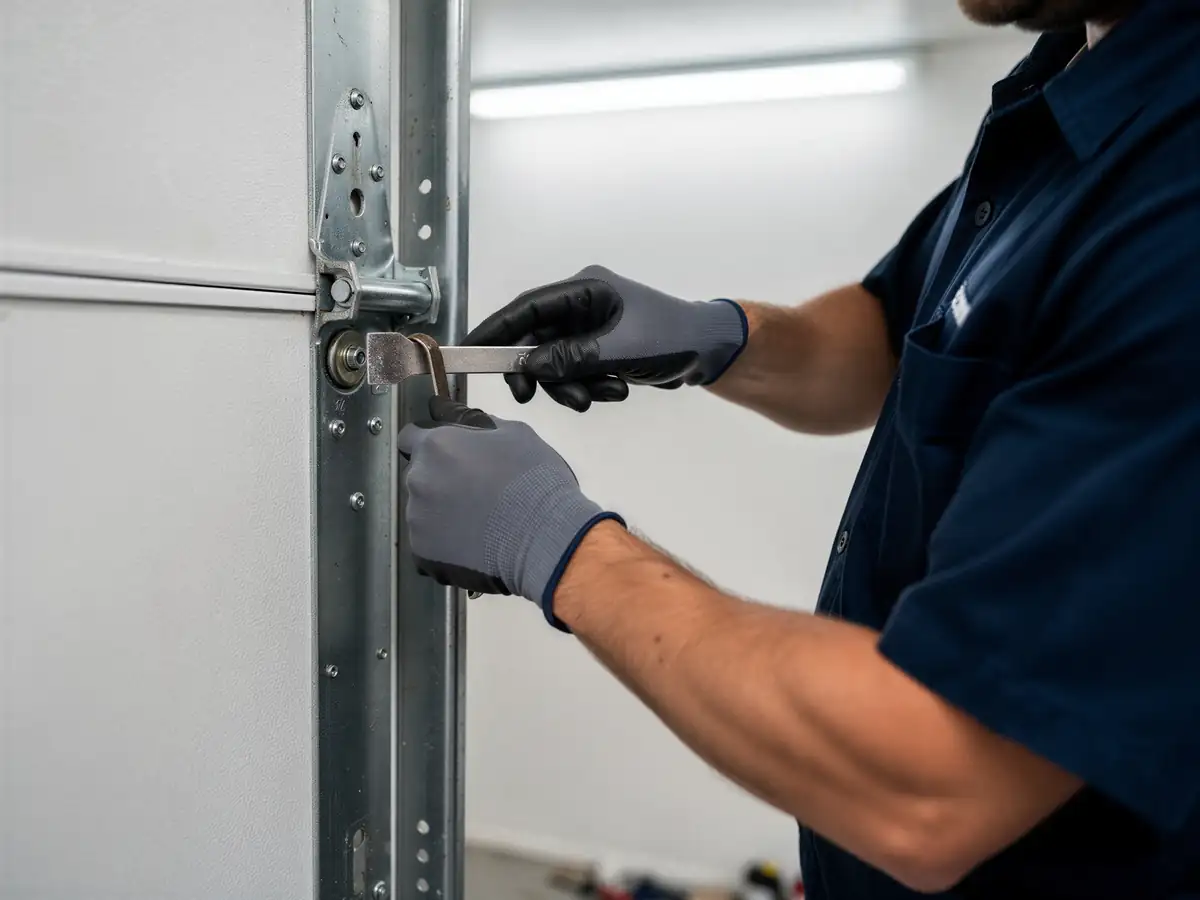
The job starts the same way every time: disconnect the opener, check whether the door is safe to move by hand, and find where the roller actually left the track. On newer sectional steel doors that's usually near a bottom corner, where a stuck roller gets forced sideways until the track bows. We straighten or replace the bent section, reseat or swap the roller, and square the whole run before we reconnect power. If the cable jumped the drum at the same time, that gets fixed before the door moves again - running a door with a loose cable is how a simple track repair turns into a cracked panel.
Why It Happens Here
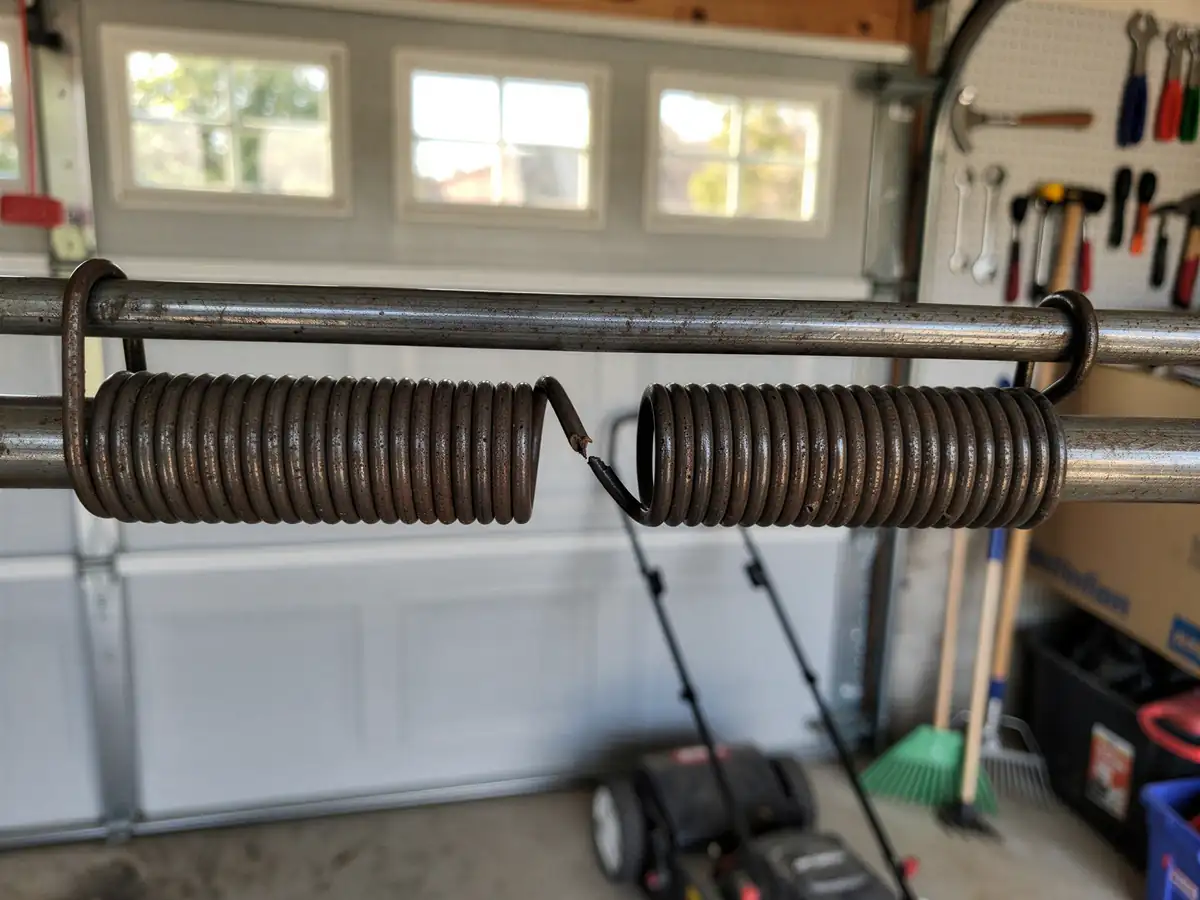
This area sits in a moderate-cold climate band, which matters less for off-track faults than it does for springs, but it still plays a part. Cold mornings stiffen opener belts and grease on rollers, and a roller that's slow to turn is a roller that's more likely to bind and jump the track the next time the door cycles. In a housing stock built mostly from 2004 forward, we're not dealing with the worn-out single-piece doors and side-mount hardware you'd find on older stock - we're dealing with newer sectional doors and newer openers, where the usual off-track cause is a misaligned track bracket from the original install or an impact, not decades of wear.
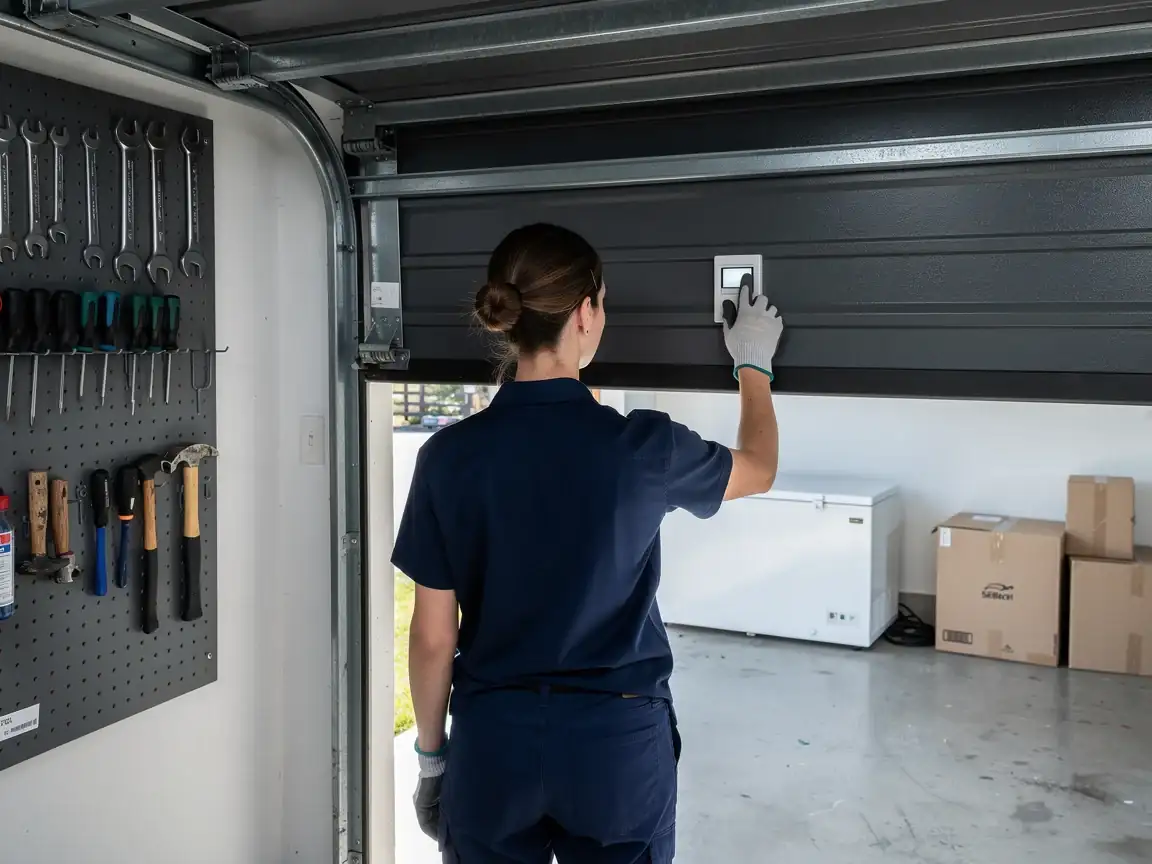
A kid's bike, a car bumper tapping the bottom panel, or a garage door hit while half-open - any of these can knock a bracket loose on a door that's otherwise in good shape. On newer builds we also see off-track calls tied to a opener's travel limits being set wrong after a DIY adjustment, which lets the door slam the track at the top or bottom of its run until something gives.
What Is on the Truck
For an off-track call on a house in this part of the service area
The truck carries replacement nylon and steel rollers, short and long track sections in standard widths, hinges for both ends of a sectional panel, and lift cable sized for double and single doors. We also carry track brackets and the lag bolts and fasteners that hold them to the frame, since a stripped bracket is as common a cause as a bent track.
What we don't carry for every job is a matching panel
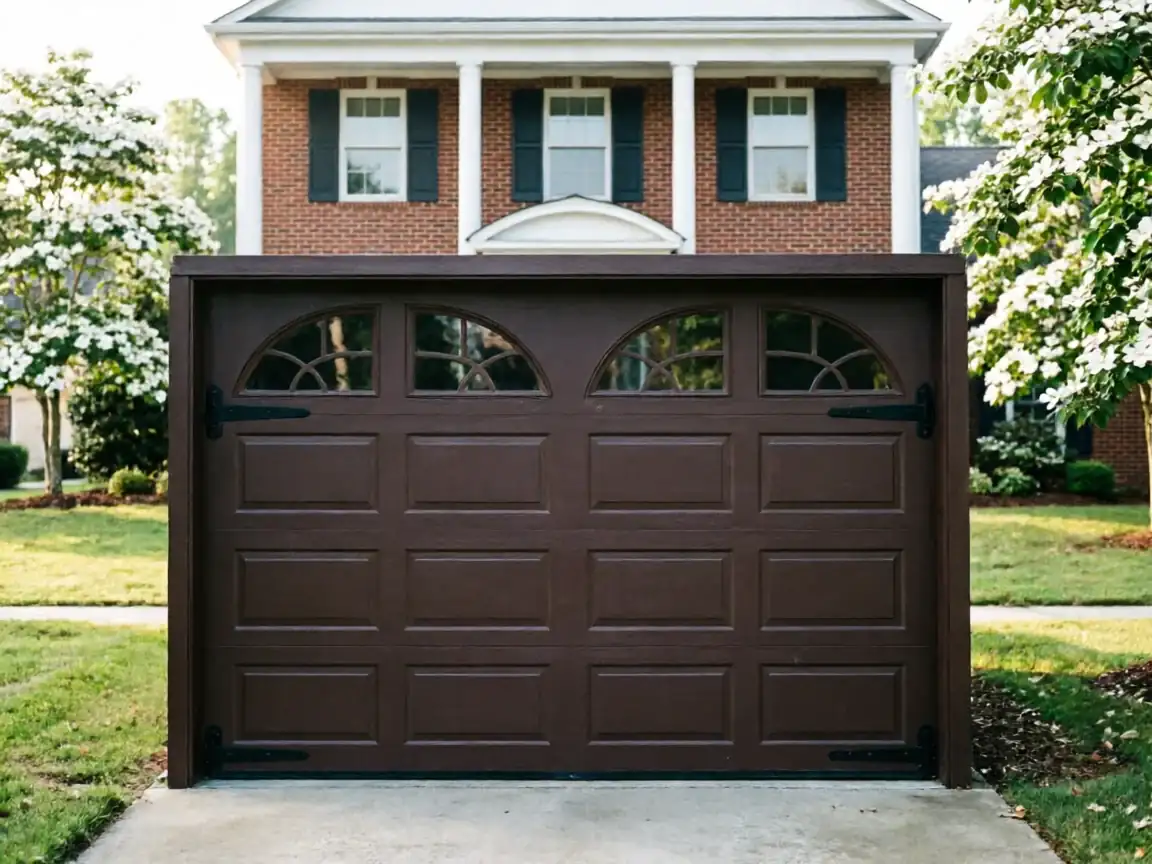
If the off-track event cracked or dented a section badly enough that it needs replacing, that panel has to be ordered to match the existing door - color, panel style, window layout - and that's not a same-visit part. We'll tell you on site whether that's likely before we start, not after.
What Can Go Wrong
Most off-track repairs on newer Fairburn doors are straightforward: track, roller, hinge, done. The complication shows up when the door has been run off-track more than once, or run with the opener still trying to pull it. Each time that happens, the track mounting holes get a little more stripped out and the panel seams take a little more stress. At some point the frame itself is the problem, not the track - and no amount of track replacement fixes a bent jamb.
The other honest limitation: because we run this out of Newnan, 16 miles out, we don't offer a guaranteed same-hour window for Fairburn calls the way a shop based in town could. We'll give you a realistic arrival estimate when you call, but if you need someone standing in your driveway within the hour, say so up front so we can tell you plainly whether that's realistic that day.